How Out-of-Bounds Estimates Expose Hidden Complexities and Systemic Gaps
The Mid-Sprint Collapse
It is Tuesday morning, midway through Sprint 14. The engineering team sits in a quiet room, facing a burndown chart that looks less like a smooth downward slope and more like a flat line hovering near the top margin.
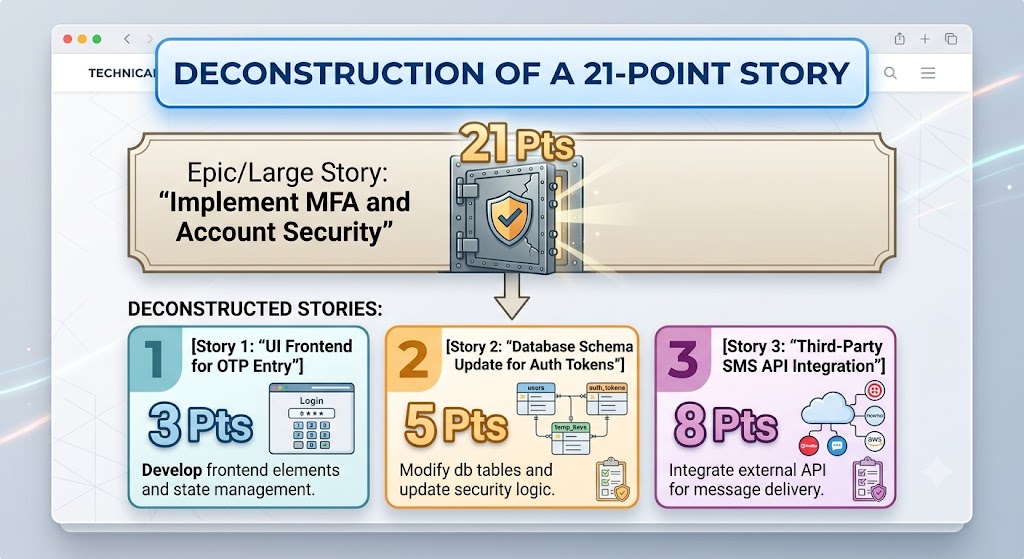
Three sprints ago, the team committed to delivered work using relative story point sizing. Among the backlogs sat a critical infrastructure item: integrating a multi-factor authentication (MFA) service. During the initial sizing session, five developers estimated the story at 3 story points, assuming it was a straightforward UI task with an established library. One senior engineer silently voted 21 story points, suspecting legacy database constraints and third-party API rate limits.
The compromise? The team logged it as an 8, averaged the numbers, and moved on.
Now, mid-sprint, the ticket is completely blocked. The legacy database schema lacks support for asynchronous token storage, and the external API documentation is three years out of date. The 8-point estimate has swallowed sixty engineering hours, two developers are burned out, and the product owner is forced to inform stakeholders that the release date will slip by a month.
The Great Corporate Myth
In corporate environments, project leaders frequently view wide estimation variances as an inconvenience or an indication of team incompetence. When one developer estimates a feature at 3 points and another estimates it at 21, standard operating procedure often pushes for a quick middle ground:
The Averaging Fallacy: Adding 3 and 21 to settle on 12 or 13 story points.
The Seniority Bias: Automatically deferring to the highest-ranking engineer’s number without probing the underlying reasoning.
The Compromise Trap: Pressure from project managers to round down to fit sprint capacity constraints.
The Reality: Estimation disparities are not errors to be smoothed over: they are valuable diagnostic signals. A wide gap in story point estimates indicates that team members are evaluating fundamentally different scopes, technical assumptions, or risk profiles.
Decoding Sizing Mechanics and Reference Baselines
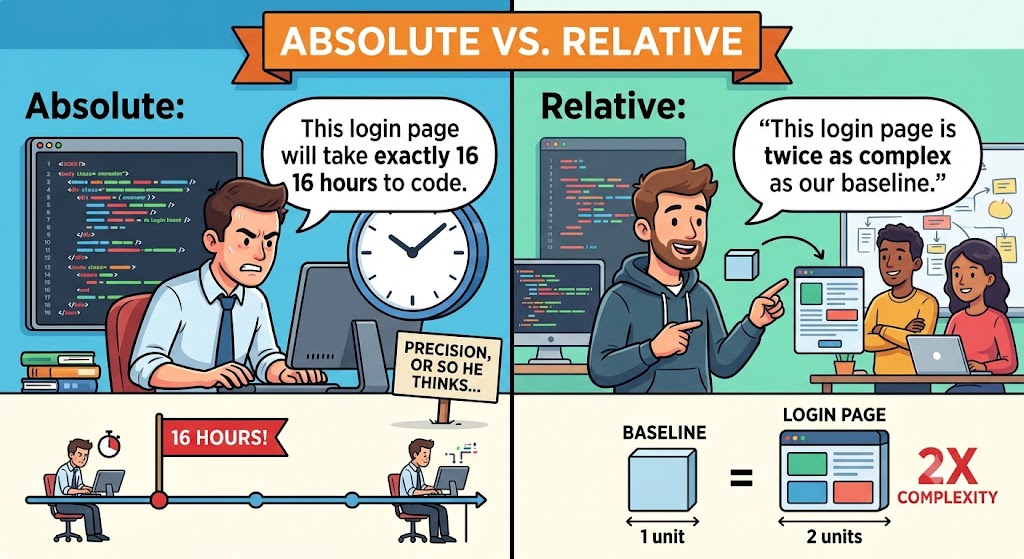
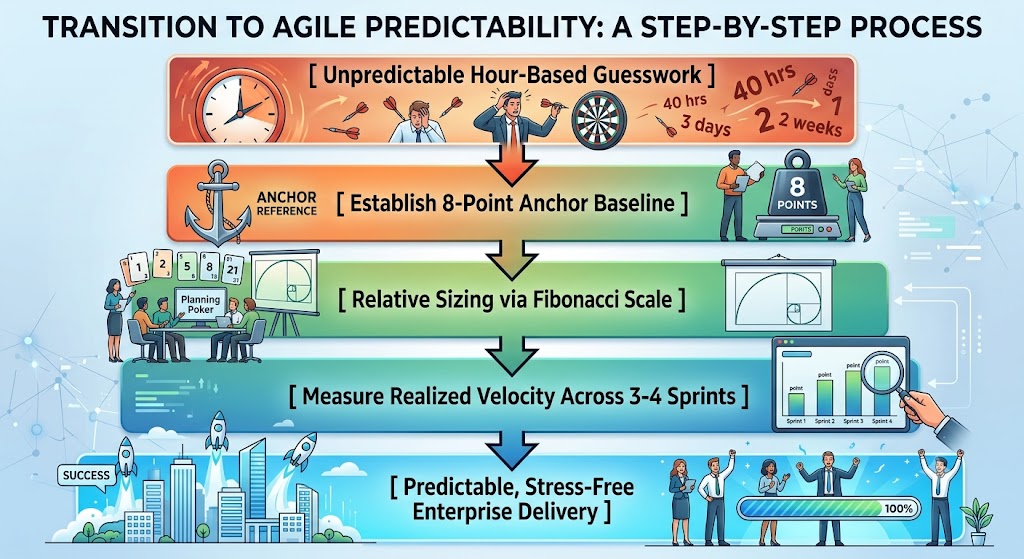
To handle estimation disparities, a project manager must first understand the mechanics of relative estimation. Traditional project management attempts to measure work in absolute time units such as hours or days. Agile methodologies shift to relative sizing, measuring effort, complexity, and risk against a stable reference baseline.
The Foundation: Fibonacci and Cognitive Load
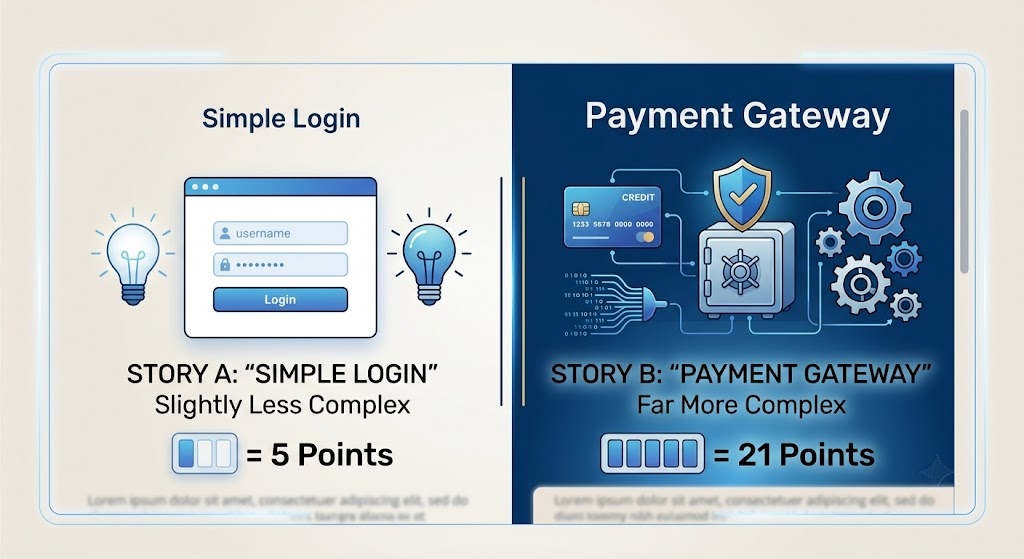
Agile teams use the modified Fibonacci sequence (1, 2, 3, 5, 8, 13, 21, 34, 55, 89) for story points because human brains struggle to evaluate absolute scale as numbers grow larger. Distinguishing between 13 and 14 points is nearly impossible; distinguishing between 13 and 21 is straightforward. The non-linear gap forces the mind to recognize significant jumps in complexity and uncertainty.
The Anchoring Role of the Reference Baseline
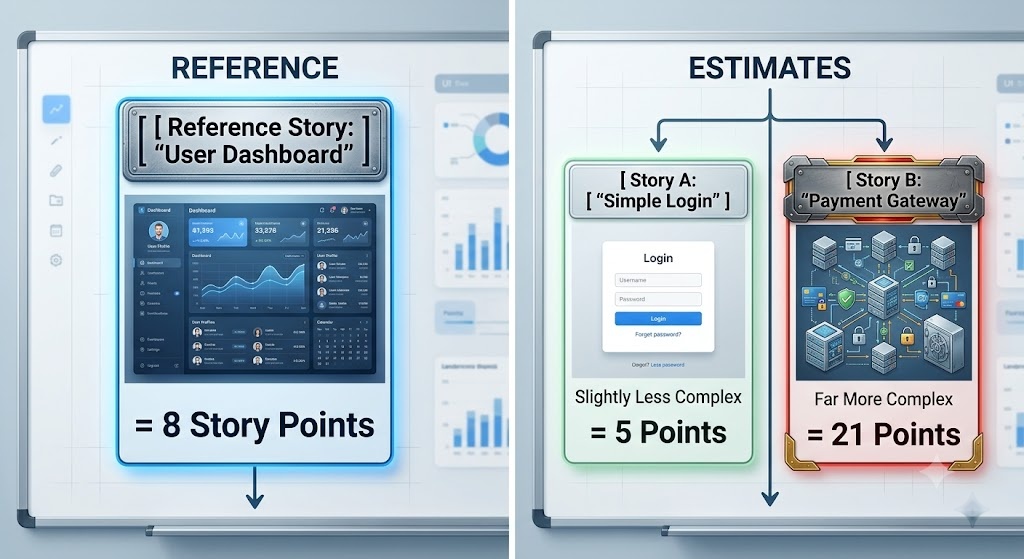
Relative estimation fails without a fixed reference baseline. In the initial planning cycle of a project, the team selects a medium-complexity, well-understood user story from the backlog and assigns it a fixed point value, such as 5 or 8 points.
This reference story remains frozen across future sprint cycles. Every new item is measured exclusively against this baseline rather than against shifting memories or individual coding speeds.
Diagnosing Out-of-Bounds Estimates
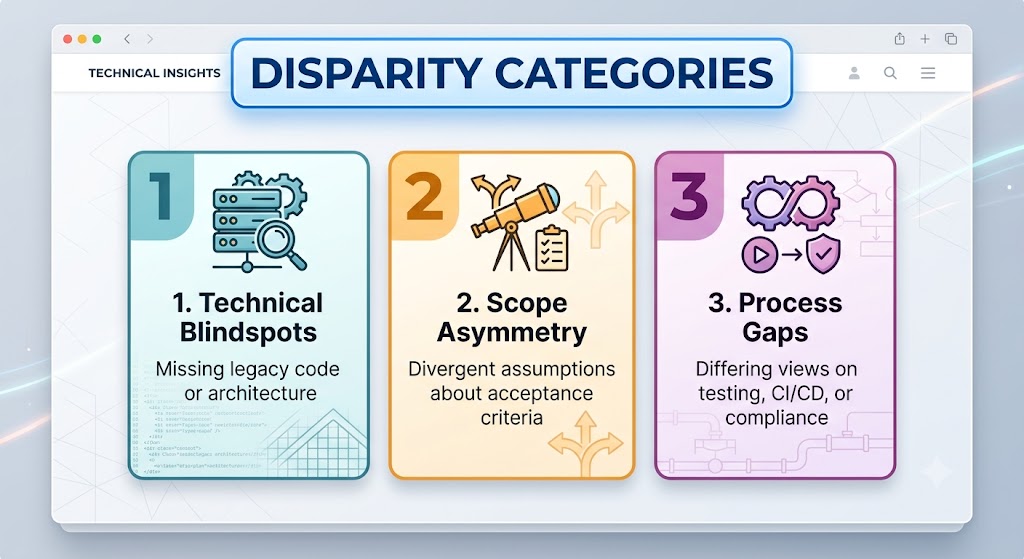
When sizing disparities occur, out-of-bounds estimates generally fall into three primary categories:
Technical Blindspots: A developer voting high often sees hidden architectural debt, missing APIs, or complex data migrations that others missed. Conversely, a high vote might mean the developer lacks familiarity with an existing internal library that solves the problem in minutes.
Scope Asymmetry: Team members may interpret the user story differently. One developer assumes a basic static form; another assumes full internationalization, edge-case validation, and automated integration tests.
Skill and Process Gaps: Disparities often highlight differences in how team members view the Definition of Done (DoD). One estimate might cover only writing code, while another includes unit testing, peer review, documentation, and staging deployment.
Step-by-Step Framework for Resolving Sizing Disparities
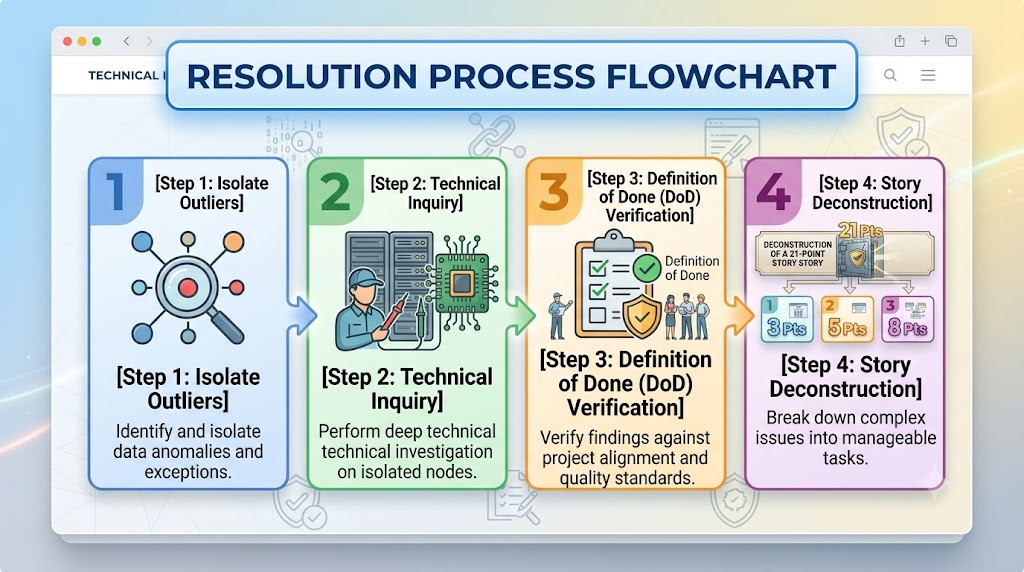
When out-of-bounds estimates appear during Planning Poker or estimation sessions, use this four-step resolution framework:
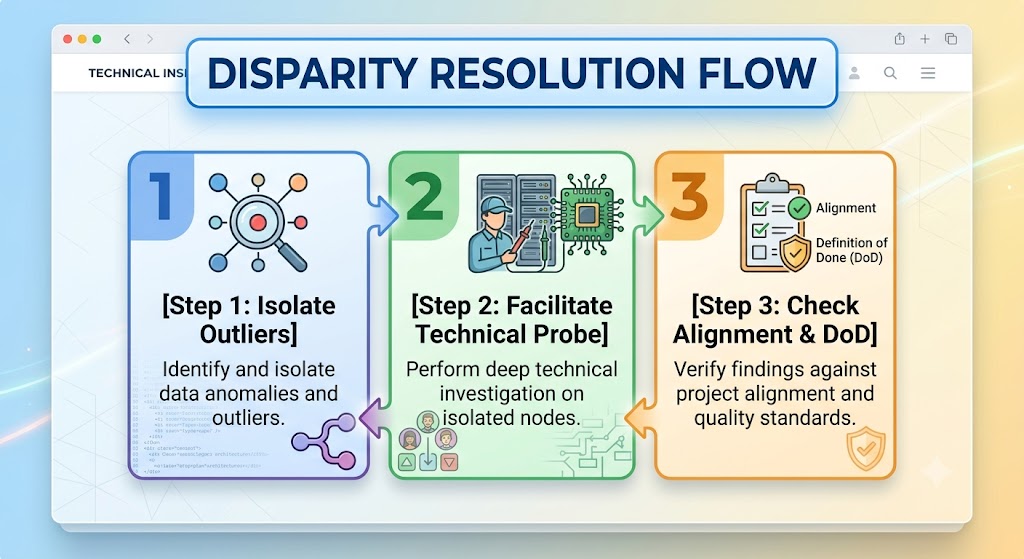
Step 1: Isolate the Outliers
When the team reveals their estimation cards, identify the extreme high and extreme low estimators. Pause the session immediately. Do not average the numbers, and do not let the product owner debate the timeline yet.
Step 2: Facilitate the Technical Inquiry
Ask the lowest estimator to explain their perspective first, followed by the highest estimator.
Prompt for Low Estimator: “What existing frameworks, simple paths, or assumptions make this feel straightforward to implement?”
Prompt for High Estimator: “What edge cases, architectural blockers, or security requirements are driving the higher complexity score?”
Step 3: Verify Requirements and the Definition of Done
Evaluate whether the variance stems from ambiguous user story details or different interpretations of done.
Are external dependencies included in this story?
Is non-functional testing (e.g., load testing, security scans) required within the sprint?
Are there undocumented integration points?
Step 4: Re-Vote or Deconstruct
After the outliers present their rationale and the product owner clarifies the scope, conduct a second round of silent voting.
If the story remains at 13 points or higher, treat the size as a signal that the story is too large. Break the item down into smaller, discrete user stories that each map back to the reference baseline.
Moving from Project Chaos to Predictable Delivery
Treating estimation disparities as valuable signals changes how teams deliver software:
Predictable Sprint Velocity: By resolving hidden technical complexities before work begins, sprint commitments reflect actual capacity rather than optimistic guesses.
Proactive Risk Mitigation: Out-of-bounds votes surface architectural debt, missing environments, and compliance gaps weeks before they impact production.
Shared Technical Understanding: Forcing discussions between senior and junior developers transfers domain knowledge naturally across the team during planning sessions.
Elimination of Scope Creep: Clarifying acceptance criteria during estimation prevents silent feature additions during implementation.
Career Impact for Project Managers
Mastering the mechanics of story point baselines and sizing mechanics transforms a project manager’s role in an organization:
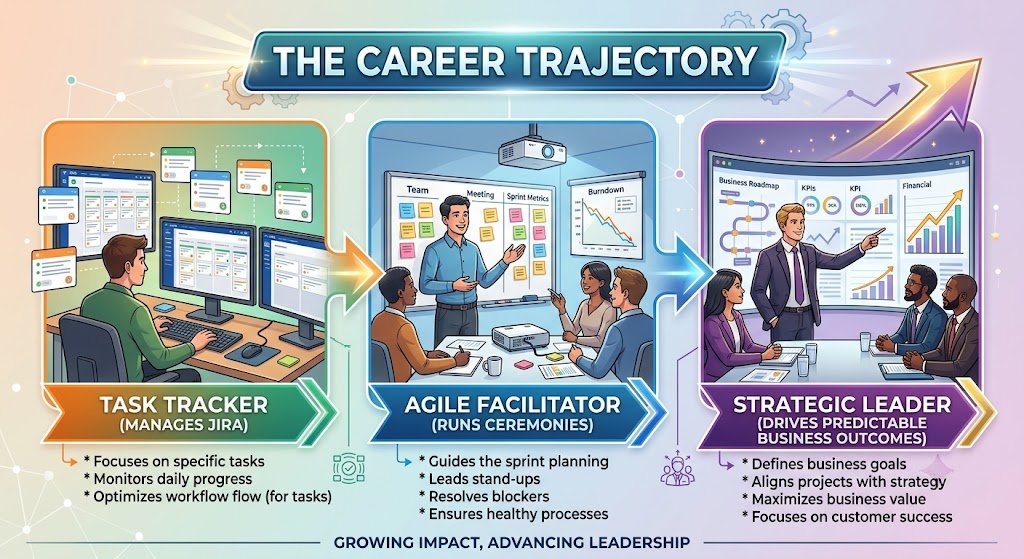
Project managers who simply log hours and average story points often remain stuck in administrative roles. Leaders who understand how to use estimation metrics to diagnose systemic delivery risks build high-performing teams, maintain predictable delivery pipelines, and communicate clearly with executive leadership.
Master the Craft with Skillsetify
Sizing disparities are not metric errors: they are early indicators of hidden technical debt, unclear scope, and mismatched expectations. By freezing a solid reference baseline, avoiding the trap of averaging estimates, and investigating outlier perspectives, project leaders convert planning friction into delivery predictability.
If you are ready to move past superficial framework implementations, elevate your leadership capabilities, and build a high-impact career in project management, Skillsetify provides structured learning paths to guide your professional development. We go beyond basic frameworks to provide clear, actionable career growth trajectories.
Take the Next Step in Your Career
Explore Skillsetify’s Advanced Project Management Programs Today.