Navigating the Invisible Divide Between Complicated Tech and Complex Ecosystems
The late-night emergency page lands in your inbox with a sickening ping. The multi-million dollar software migration, estimated by your brightest subject matter experts as a straightforward two-week development effort, has completely stalled. The engineering team insists the code is flawless. They are right: from a technical standpoint, the code is elegant and mathematically optimal. Yet, the product is dead on arrival.
Three regional marketing heads are threatening to pull their funding because a localized data privacy constraint was ignored. An overlapping system managed by an legacy team in another country just crashed due to an unannounced API change. Meanwhile, the steering committee is demanding a root-cause analysis by morning.
How did a task cleanly scoped and sized by technical masters morph into a career-threatening crisis?
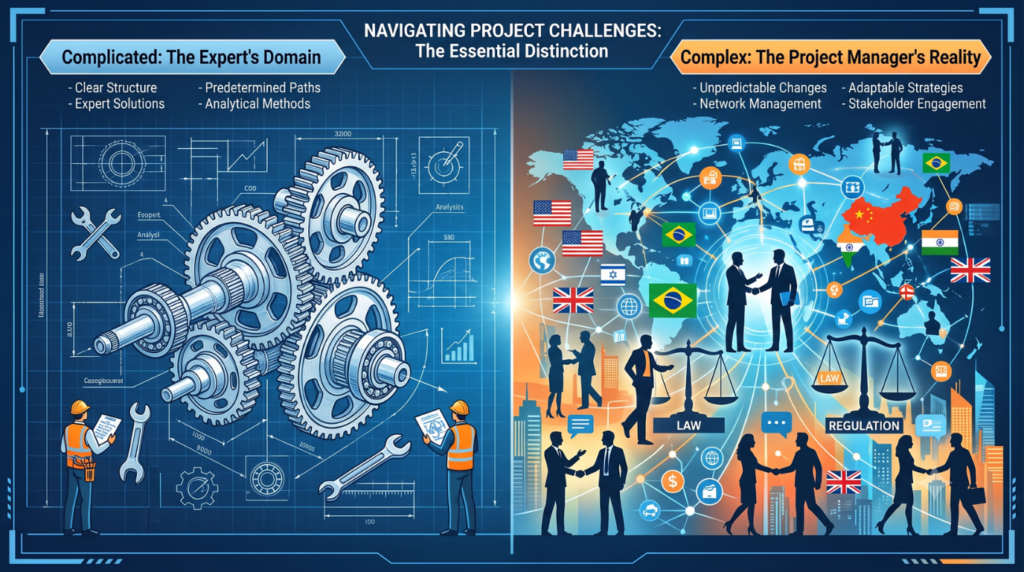
The answer lies in a foundational truth that many project leaders discover only after painful failure: there is a catastrophic, hidden difference between a system that is complicated and one that is complex. In the high-stakes arena of enterprise delivery, mixing up these terms is not an academic error. It is the primary engine of scope creep, budget overruns, and team burnout.
The Core Education: Slicing the Anatomy of Project Variance
To build highly accurate estimation models and establish absolute delivery predictability, a Project Manager must isolate technical challenges from environmental stakeholder dynamics. Let us break down the exact operational parameters of both domains.
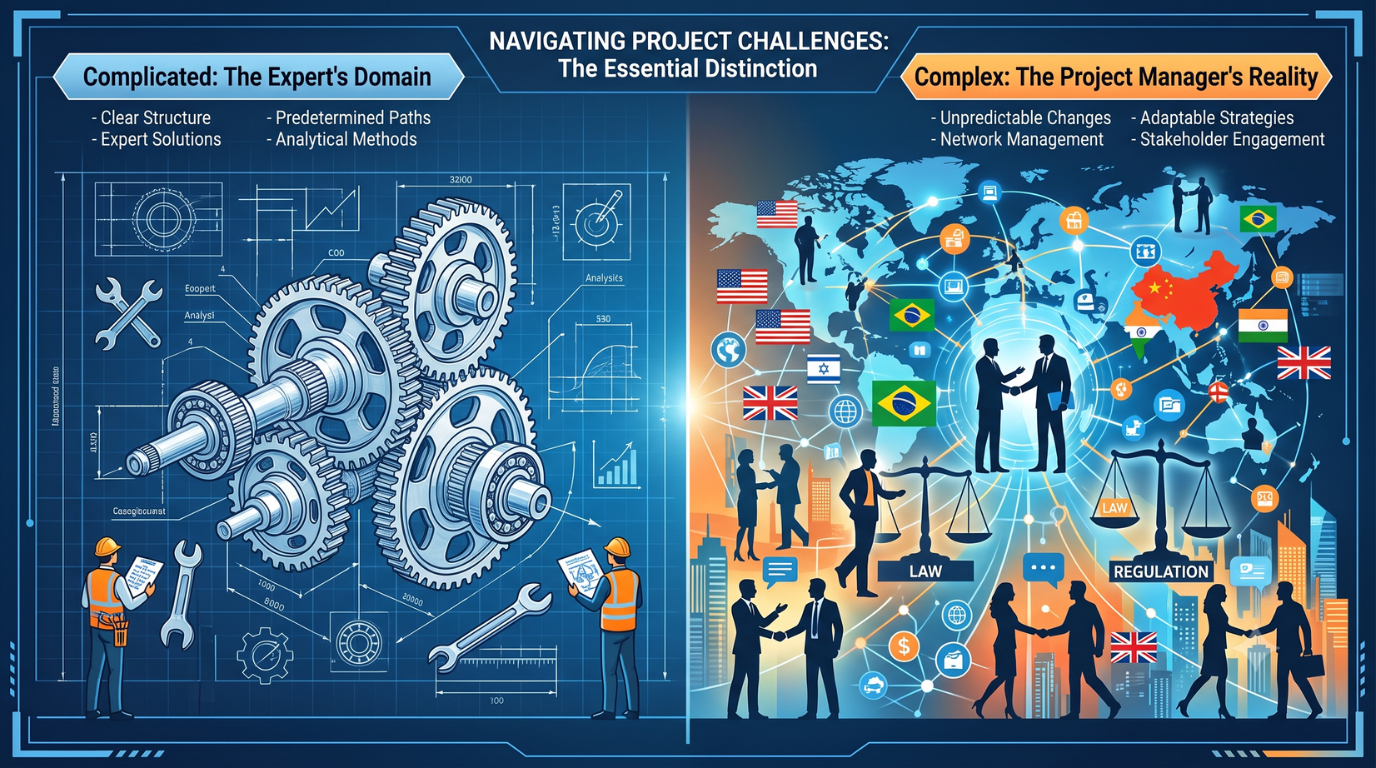
What is Complicated? (The Domain of the Technical Expert)
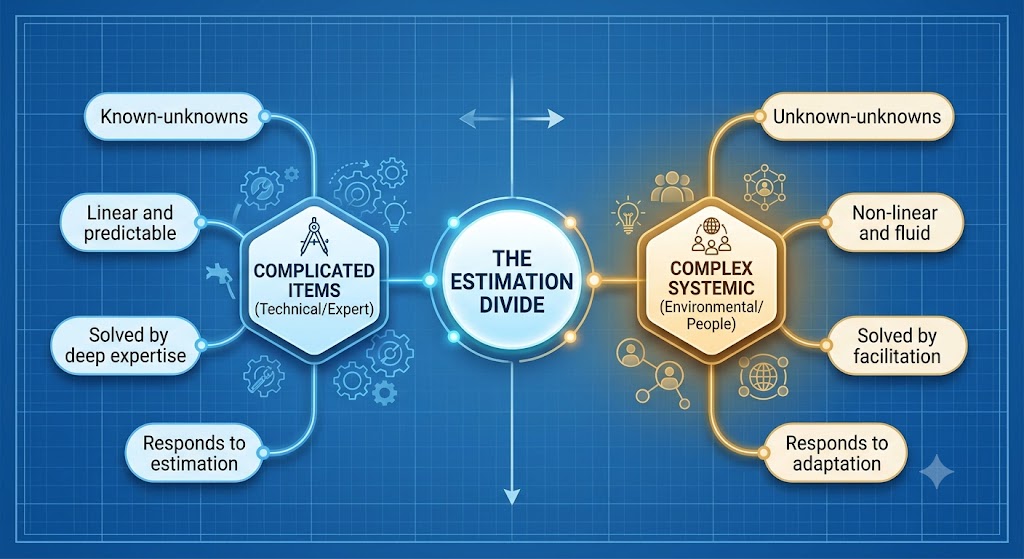
A complicated problem contains high structural detail and an intricate web of cause and effect relationships. However, these relationships are entirely linear, logical, and repeatable.
Think of building a high-frequency trading algorithm or configuring a multi-tenant enterprise resource planning server environment. These tasks are exceptionally hard. They require elite training and deep academic knowledge. Yet, because they operate on logical rules, a true subject matter expert can look at the requirements, diagnose the architecture, and map out a precise sequence of tasks to achieve a predictable outcome.
Complicated items are highly receptive to traditional estimation matrices and relative sizing models. If an expert has done it before, they can calculate the scope with a low variance threshold.
What is Complex? (The Domain of the Environmental Stakeholder)
A complex challenge operates in a dynamic environment where the components are non-linear, unpredictable, and constantly interacting. In modern project leadership, complexity is rarely born from technology: it is born from people, politics, and environment.
When a project features massive stakeholder groups, multi-regional rollouts, shifting regulatory frameworks, and fluid corporate priorities, it enters a complex domain. If you adjust an interface for an operation in London, you might inadvertently break a cultural workflow constraint for a business unit in Tokyo.
Complex issues trigger continuous surprises because cause and effect are only visible in hindsight. No single expert can sit down and resolve a complex problem via an architectural blueprint. Instead, it must be managed through continuous observation, elite communication mechanisms, and systematic alignment frameworks.
The Strategic Framework: Slicing Complexity and Sizing Complicated Items
To prevent environmental complexity from mutating your predictable software estimations into a chaotic guess game, you must deploy a structured framework that categorizes requirements into actionable, scannable horizons.
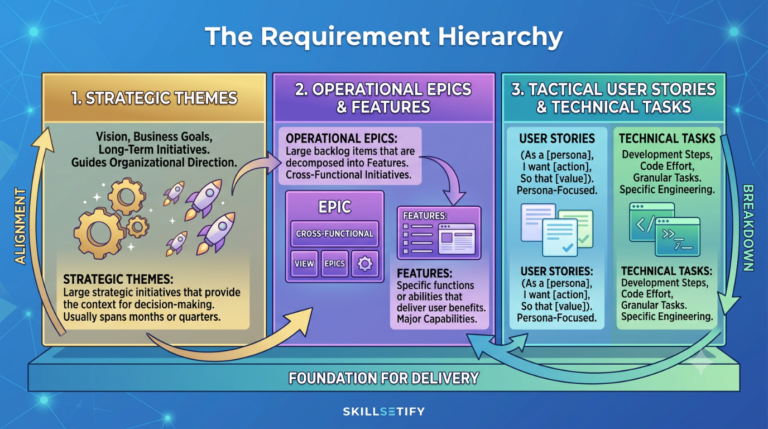
Step 1: Establish a Robust Requirement Hierarchy
Before asking your engineers to estimate a single line of effort, structure raw stakeholder data into a disciplined delivery funnel:
Strategic Themes: Broad organizational objectives or budget buckets focused on enterprise transformation.
Operational Epics: Large, functional, and distinct blocks of requirements that capture big systemic needs across multiple regions.
Features: Distinct components or software modules that deliver tangible business utility.
User Stories: Small, customer-centric statements structured perfectly from the persona’s viewpoint, detailing actionable micro-requirements.
Tasks: The granular, highly technical, and discrete engineering steps necessary to build the software layer.
Step 2: Implement Multi-Dimensional Complexity Sizing
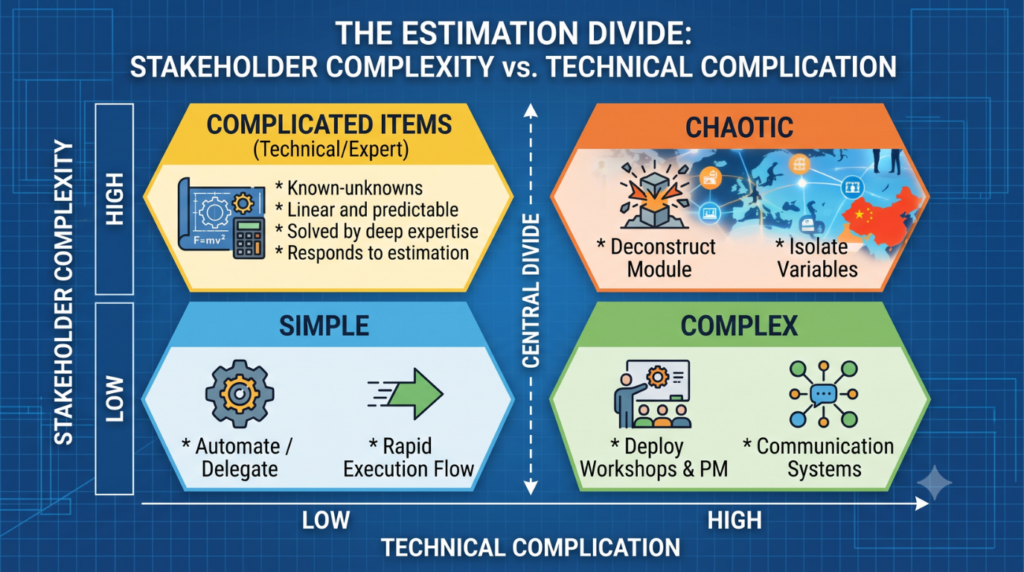
Do not run standard story point estimation sessions on raw, unrefined backlogs. Instead, require your team to isolate technical effort from systemic environmental friction using a multi-bucket complexity grid:
Low Technical + Low Stakeholder Friction: Straightforward execution items. Ideal for rapid iteration.
High Technical + Low Stakeholder Friction: Highly complicated items. Hand these directly to your internal subject matter experts and rely explicitly on their linear estimation parameters.
Low Technical + High Stakeholder Friction: Highly complex items. These require intensive communication management and cross-functional workshops.
High Technical + High Stakeholder Friction: High-risk vectors. Break these down immediately into smaller micro-stories to isolate the structural complications from the ecosystem chaos.
Step 3: Run Progressive Discovery Sessions
Never rely on a single, static product backlog estimate. Deploy affinity estimation tools early in the initialization phase to understand the general depth of the water and provide the leadership team with high-level, macro-range forecasts.
As the project advances into localized sprint execution phases, utilize detailed sizing matrices to protect your delivery speed and team health from sudden adjustments.
The Professional Transformation: Shifting from Project Chaos to Elite Elite Delivery
When you intentionally decouple technical complications from ecosystem complexity, your professional reality undergoes a radical evolution:
Scope Creep Neutralization: You stop treating shifting stakeholder feedback as engineering failures. By managing stakeholder alignment as a distinct, complex workstream, your technical scope remains crisp and predictable.
Elimination of Team Burnout: Engineers are no longer blamed for delivery delays caused by corporate politics or sudden regional data privacy updates. This clarity creates an environment of absolute psychological safety, boosting retention and velocity.
Unshakeable Executive Trust: Instead of presenting defensive, unstable variance reports to leadership, you convey progress through clear, scannable data. Your charts communicate structural realities rather than aspirational hopes.
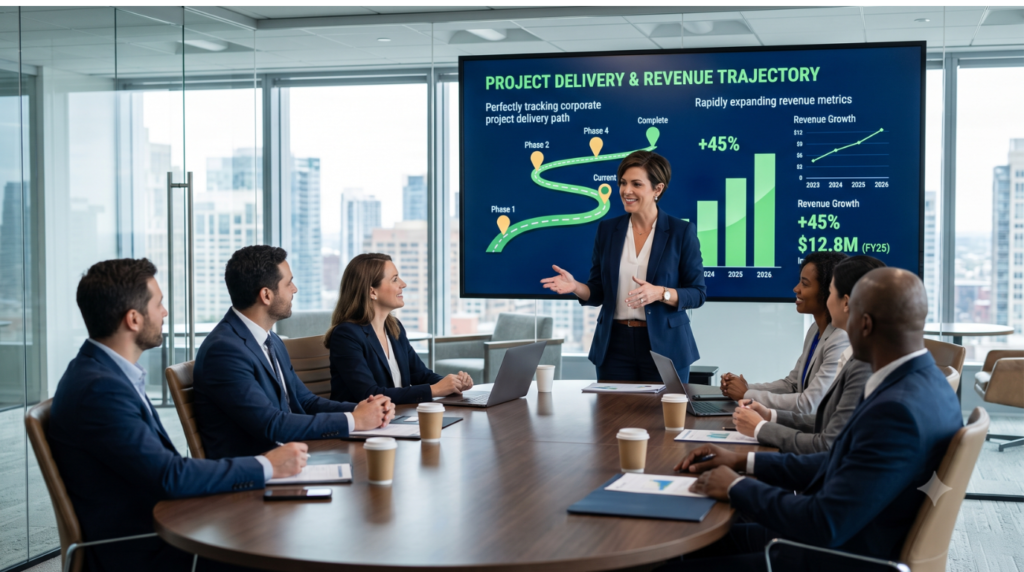
For an ambitious project manager, mastering this differentiation is the explicit pivot point to senior corporate leadership. It transforms you from a clerical task tracker into a strategic organizational leader capable of piloting high-value initiatives through complex human and systemic terrain.
Secure Your Seat at the Leadership Table with Skillsetify
The difference between an average project manager and an elite director is not the mastery of a software tracking tool or the memorization of a structural framework. It is the sophisticated ability to diagnose project realities, isolate risks, and build stable frameworks that navigate corporate environments flawlessly.
If you are ready to stop guessing at your estimations, dismantle project chaos, and accelerate your executive career path, it is time to learn project management the right way.
At Skillsetify, we go far beyond standard framework definitions. We equip you with deeply researched, real-world execution methodologies and work directly with you to outline your exact career growth trajectory.
Take control of your professional evolution. Contact Skillsetify today to step cleanly into your true leadership potential.