Why Flawless Code Fails When Stakeholder Expectations Aren't Managed
The engineering team has just deployed Sprint 12. Every user story was marked “Done,” code coverage hit 94 percent, and automated deployment pipelines passed without a single error. The Project Manager steps into the executive steering committee meeting expecting applause. Instead, the Chief Product Officer looks at the demo, folds their arms, and asks a single devastating question: “Where is the automated export feature we agreed on three months ago?”
The Project Manager stammers, explaining that the export feature was deprioritized during back-log refinement to build foundational API infrastructure. The technical execution was flawless, but in the eyes of executive leadership, the delivery was a catastrophic failure. The product release is halted, trust dissolves, and the team faces an emergency weekend retrospective to clean up the fallout.
This scenario plays out across enterprise organizations every single week. Businesses invest millions in digital transformations, mandate Jira workflows, certify their staff as Scrum Masters, and run daily stand-ups. Yet, high-stakes initiatives continue to crash. Why? Because organizations fall victim to a dangerous corporate myth: Agile delivery is purely about engineering velocity and output.
The reality is stark. Project delivery rarely fails because of bad code, poor architecture, or technical incompetence. It fails because stakeholder perception and expectations are mismanaged. Agile is not merely a software delivery engine: it is an expectation-management philosophy designed to continuously reconcile reality with perception.
The Mechanics of the Agile Mindset: Aligning Delivery with Perception
o break the cycle of project failure, project leaders must embrace the true philosophy of Agile: delivering customer-centric value through continuous, transparent feedback loops rather than passive, retrospective status reporting.
The Anatomy of the Stakeholder Perception Gap
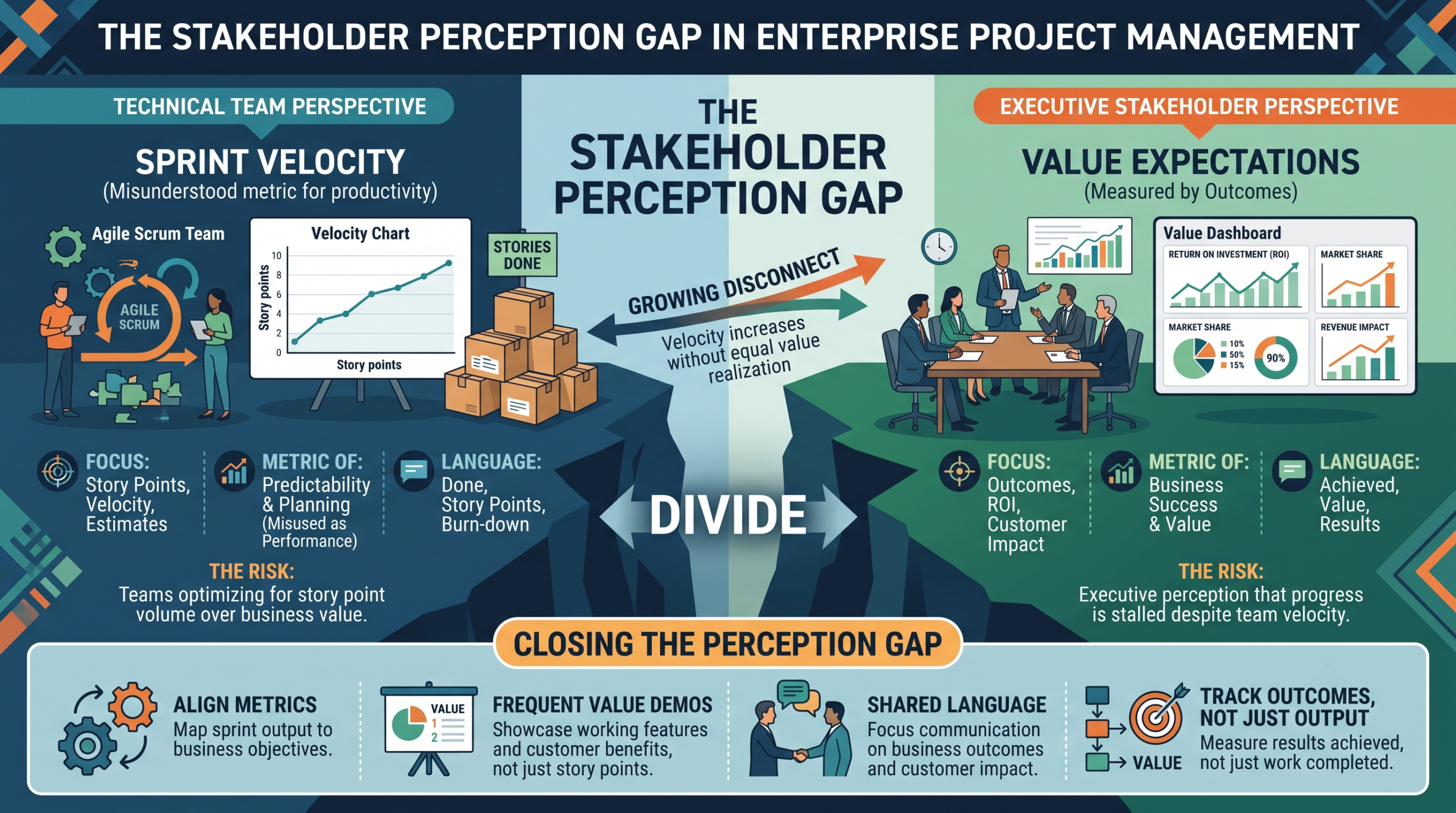
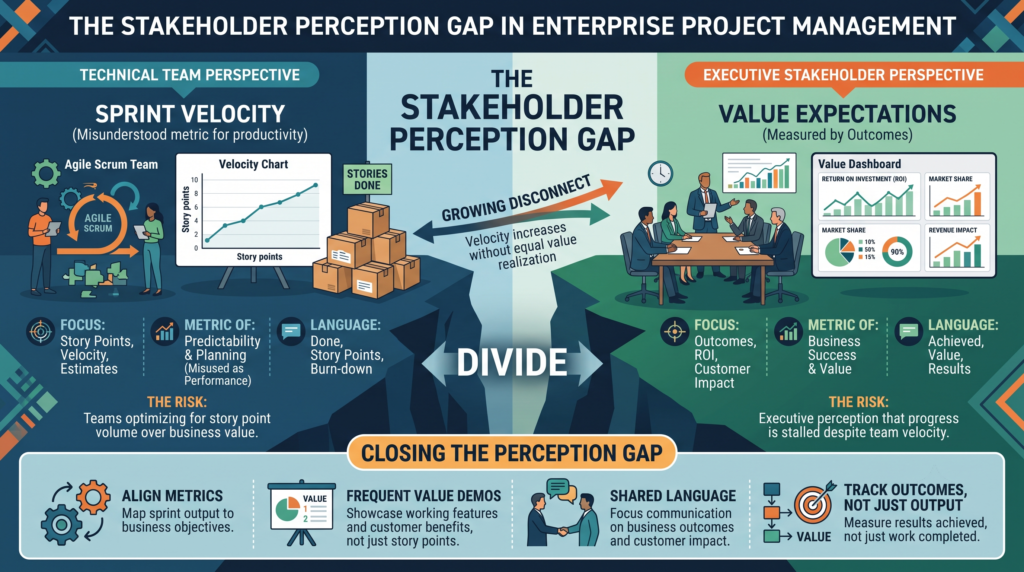
Executive stakeholders judge project success through a completely different lens than technical delivery teams. While developers monitor burn-down charts, story points, and commit logs, executives evaluate delivery based on three subjective criteria:
Predictability: Can leadership rely on the promises and roadmaps communicated by the project team?
Business Relevance: Is the team building software that solves active operational problems right now?
Strategic Transparency: Are risks, trade-offs, and scope adjustments communicated before they become budget-draining emergencies?
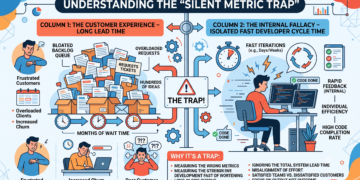
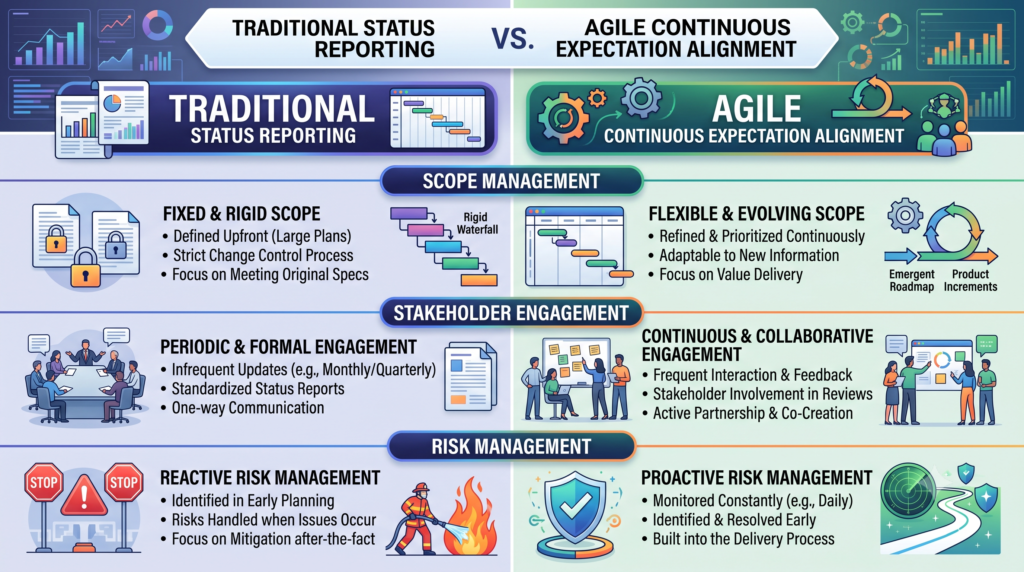
When an Agile team operates in an engineering vacuum, ignoring external stakeholder alignment to focus solely on internal sprint artifacts, the Perception Gap widens. Traditional project management attempts to bridge this gap with static monthly status reports that offer a false sense of security. An authentic Agile mindset bridges this gap through continuous co-creation and real-time expectation alignment.
| Delivery Dimension | Traditional Project Management | Agile Mindset & Philosophy |
| Scope Management | Fixed upfront baselines; changes managed through formal change requests. | Dynamic backlog; continuous re-prioritization based on evolving business value. |
| Stakeholder Engagement | Periodic milestone reviews and formal sign-offs. | Continuous collaboration via sprint reviews, backlog refinement, and open demos. |
| Value Definition | Delivering pre-planned deliverables on time and within budget constraints. | Delivering working, high-impact features that solve active operational bottlenecks. |
| Risk Visibility | Escalated late during major phase gates or deployment audits. | Exposed early through short iteration loops and real-time information radiators. |
| Leadership Approach | Command and control; directing tasks and strictly enforcing original timelines. | Servant and adaptive leadership; shielding teams while maintaining radical transparency. |
The 4-Step Framework for Stakeholder Expectation Alignment
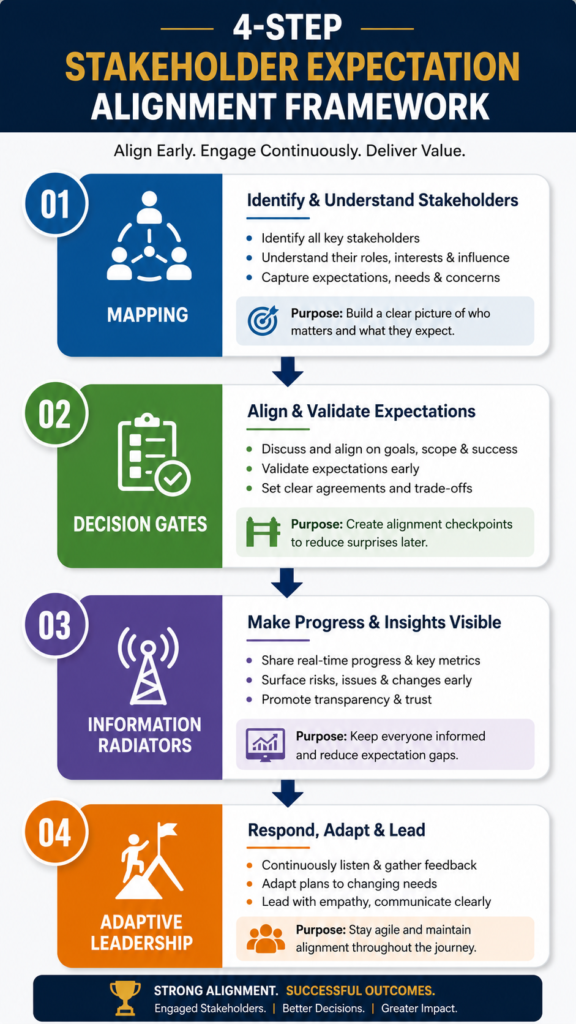
Elite project managers do not leave stakeholder perception to chance. They deploy a structured framework to govern expectation alignment across every sprint cycle.
Step 1: Continuous Value Mapping Do not treat an initial project charter as a permanent blueprint. At the start of every release cycle, map stakeholders based on influence, interest, and specific value drivers.
Categorize high-power executives who require strategic demo engagements versus operational users who need tactical walk-throughs.
Establish explicit “Definition of Value” criteria for each key stakeholder group alongside standard technical acceptance criteria.
Define communication cadences tailored to executive consumption, ensuring critical decision-makers are never surprised by scope adjustments.
Step 2: Transform Sprint Reviews into Decision Gates
Sprint reviews must never degenerate into passive show-and-tell demos. They should operate as working sessions where stakeholder feedback actively reshapes the product backlog.
Demonstrate working software increments directly tied to business outcomes rather than technical sub-tasks.
Explicitly highlight trade-offs made during the sprint to achieve the current goal.
Force prioritization decisions on the spot by asking stakeholders: “Based on what was delivered today, should Feature A or Feature B take top priority for the next iteration?”
Step 3: Deploy Information Radiators for Radical Transparency
Hidden information breeds toxic assumptions. Replace buried email status updates with active information radiators, including Cumulative Flow Diagrams, Burn-Up Charts, and physical or digital Kanban boards.
Make capacity constraints and work-in-progress limits visible to executive leadership.
When new scope requests arise mid-sprint, visually show stakeholders which current backlog item must be displaced.
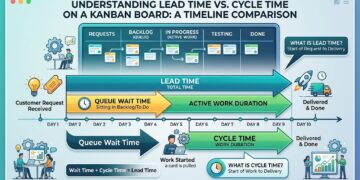
Use objective historical data, such as team velocity and cycle time, to ground delivery discussions in reality rather than wishful thinking.
Step 4: Practice Adaptive Leadership and Boundary Management
Agile project leaders must balance two essential leadership traits: servant leadership and firm boundary management.
Protect the Team: Shield engineers from direct external pressure, random mid-sprint scope injection, and executive micro-management.
Maintain Soft-and-Firm Communication: Be transparent with the team about executive pressure while setting clear boundaries with leadership. Clearly articulate trade-offs: “If we pull in this executive feature today, release module Z will be delayed by two sprints.”
From Reactive Firefighter to Strategic Delivery Leader
Imagine walking into your next executive steering committee meeting completely in control. There are no sudden outbursts over missing functionality, no finger-pointing over missed deadlines, and no awkward explanations about unexpected technical debt.
Key stakeholders view you as an indispensable strategic partner. They understand why scope adjustments were made because they actively participated in prioritizing them. They trust your delivery forecasts because your burn-up charts and velocity metrics have provided unfiltered transparency for months. When roadblocks arise, executives do not look for someone to blame: they collaborate with you to clear organizational impediments.
This is the reality of mastering project delivery through an authentic Agile mindset. When you master stakeholder perception management, you transcend the tactical role of a project coordinator who merely moves Jira tickets across a board. You step into the role of a strategic delivery leader who drives predictable business outcomes.
In today’s corporate landscape, executive leadership does not reward project managers who blindly follow rigid methodologies. They promote leaders who navigate ambiguity, align cross-functional teams, and manage executive expectations through complex transformations. Mastering this philosophy accelerates your career trajectory, opening doors to Senior Director of Program Management, VP of Delivery, and Chief Operating Officer roles.
Elevate Your Project Leadership with Skillsetify
Project delivery failure is never inevitable: it is the direct result of unmanaged expectations and outdated mindsets. By shifting your focus from passive status tracking to proactive stakeholder perception management, you protect your team, build executive trust, and guarantee project impact.
If you are ready to stop guessing, move up the corporate ladder, and learn project management the right way, reach out to Skillsetify. We do not just teach frameworks: we show you your exact career growth trajectory.