Why Your Frameworks Are Failing You
It’s Thursday. Your enterprise cloud migration project is four weeks behind schedule, budget variances are trending negative by 18 percent, and key executive stakeholders are demanding emergency sync calls. Your project managers have meticulously charted every milestone in Microsoft Project, mapped dependencies, and set up daily Scrum standups. Yet, deliverables are slipping through the cracks, inter-departmental conflicts are escalating, and scope creep is eroding your margins.
Why do project teams with seasoned talent and expensive software fail to deliver predictable outcomes?
The corporate myth that has infected modern delivery management is the belief that project frameworks are rigid checklists. Organizations often treat project management as either a set of mechanical processes (Waterfall) or an unstructured set of ceremonies (Agile). They mistake holding meetings for driving delivery. In reality, modern project management requires an intentional, multi-layered architecture where high-level strategic alignment translates seamlessly into actionable, daily execution steps.
The Project Management Institute (PMI) codified this reality in its modernized architecture: the Domain, Task, and Enabler Framework.
Domains, Core Tasks, and Actionable Enabler Steps
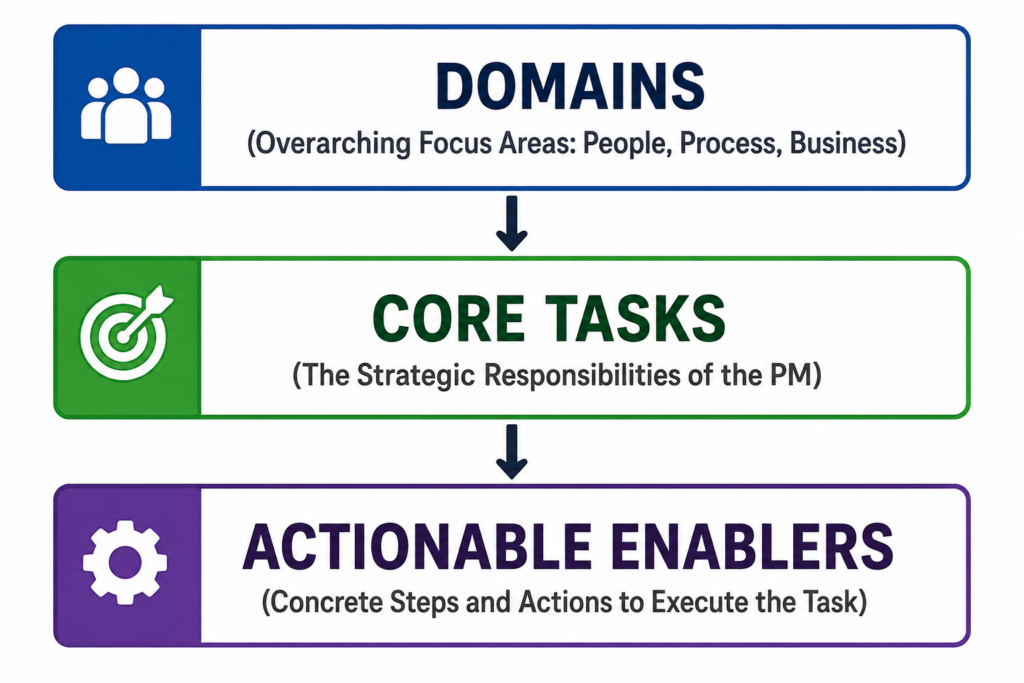
To move away from accidental project management, delivery leaders must master the structural hierarchy of the modern Project Management Body of Knowledge (PMBOK). The framework operates across three interconnected levels:
Domains: High-level knowledge realms that represent the overarching areas of professional focus (People, Process, and Business Environment).
Tasks: The core responsibilities and execution goals of a project manager within each specific domain.
Enablers: The tactical, actionable execution steps used to fulfill and demonstrate a specific task.
The Three Operational Domains
The modern project environment does not treat process in isolation. It anchors execution around three core domains:
People Domain (42% of PMP focus): Centers on soft skills, team dynamics, leadership, conflict resolution, and stakeholder engagement. It addresses how human capital is mobilized and empowered to deliver value.
Process Domain (50% of PMP focus): Covers the technical aspects of project management, including risk mitigation, scope management, schedule management, quality, governance, and budget integration.
Business Environment Domain (8% of PMP focus): Focuses on organizational strategy, compliance, benefit realization, and external environmental factors shaping project alignment.
The Mechanics: Tasks Funnel into Enablers
A Task defines what needs to be accomplished strategically, while an Enabler outlines how that task is practically executed.
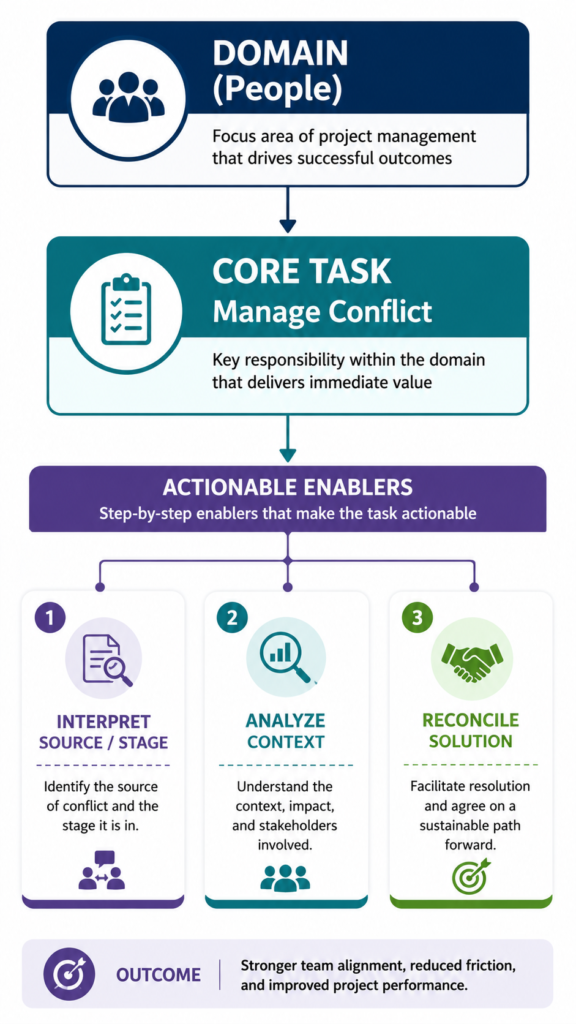
For instance, consider a critical task within the People Domain: Manage Conflict.
Managing conflict is an enterprise expectation, but without tactical steps, it remains a vague concept. The PMBOK Task and Enabler framework breaks down this core task into explicit, actionable enabler steps:
Enabler 1: Interpret the source and stage of the conflict (e.g., schedule constraints, resource competition, or interpersonal friction).
Enabler 2: Analyze the context of the disagreement and evaluate the impact on team performance and project objectives.
Enabler 3: Evaluate, recommend, or reconcile appropriate conflict resolution solutions (e.g., collaborating, compromising, or forcing a decision based on governance).
By converting macro-responsibilities into actionable enablers, project leaders eliminate ambiguity across team workflows.
Practical Implementation Matrix: Translating Framework into Practice
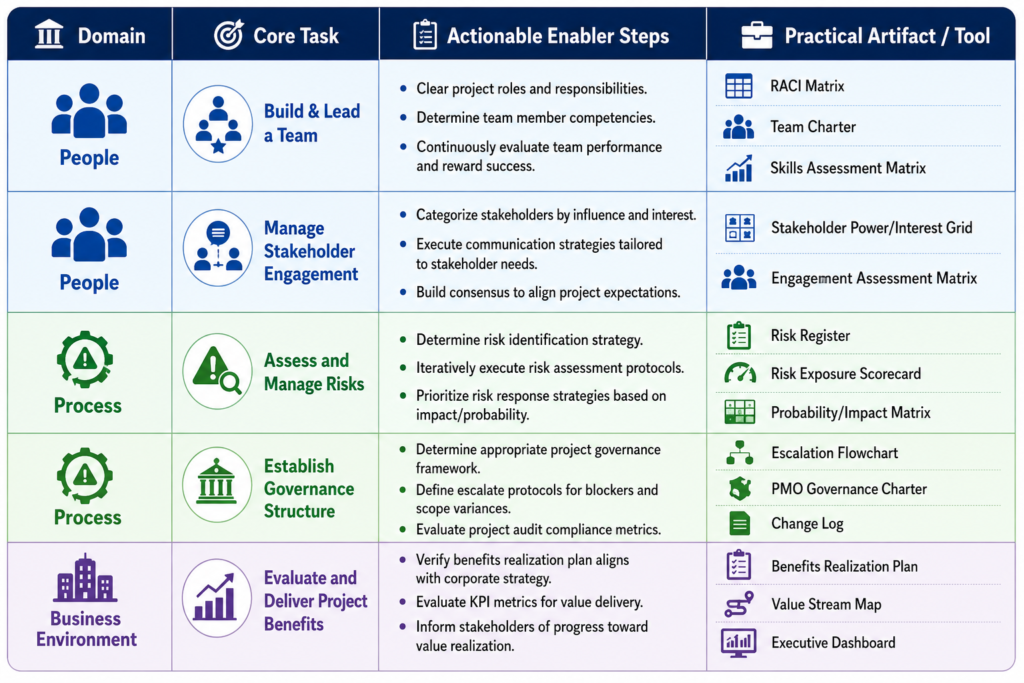
To operationalize the Task and Enabler Framework across your portfolio, project management offices (PMOs) must establish an execution matrix. Below is a detailed, real-world implementation guide demonstrating how core tasks across all three domains map directly to actionable enabler steps and real-world enterprise artifacts.
Step-by-Step Implementation Guide for PMs
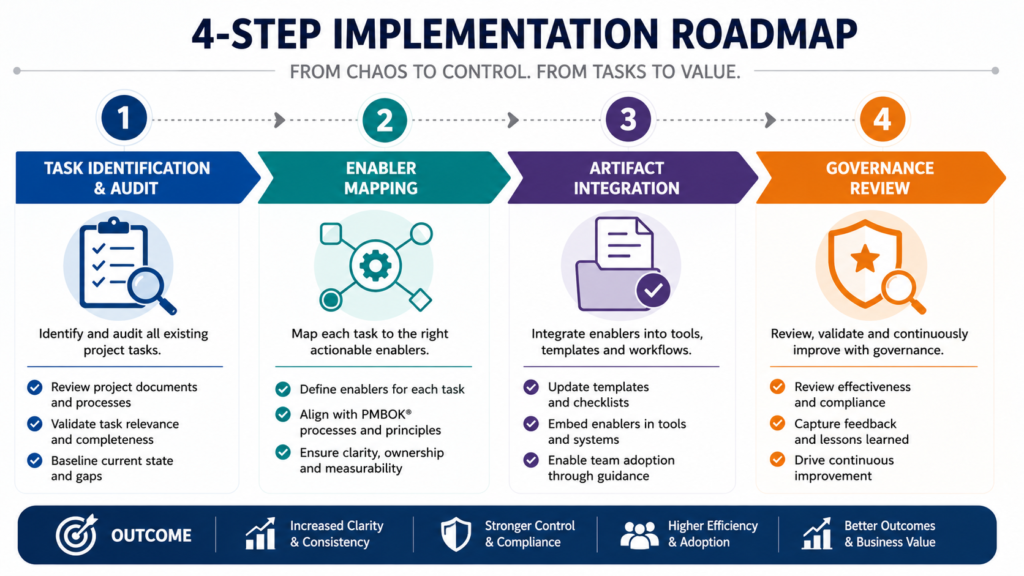
To deploy this architecture within your organization, follow these four sequential phases:
Task Identification & Audit: Review active project initiatives and extract the top core tasks required for immediate execution across People, Process, and Business domains.
Enabler Mapping: For each task, map 3 to 4 concrete enabler actions. Ensure these steps are specific, measurable, and assigned to designated execution leads.
Artifact Integration: Pair every enabler with an enterprise artifact (e.g., Change Log, RACI Matrix, Risk Register). Do not execute an enabler without a standardized mechanism to record its output.
Governance Review & Feedback Loops: Utilize weekly or bi-weekly reviews to audit enabler execution. Adjust enablers dynamically based on team feedback and performance velocity.
Moving from Chaos to Elite Delivery
Mastering the Task and Enabler framework fundamentally transforms your professional capability and enterprise market value.
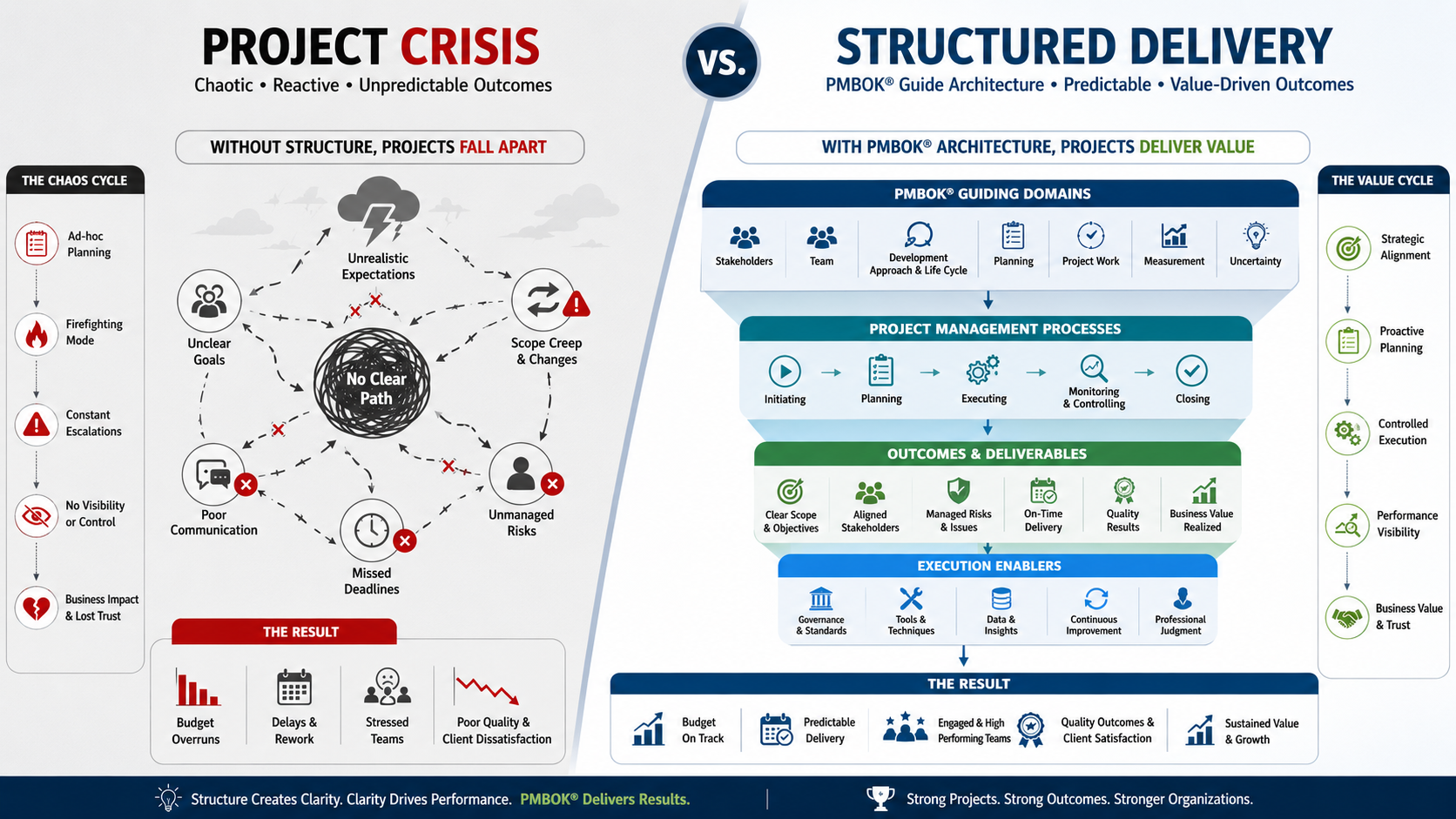
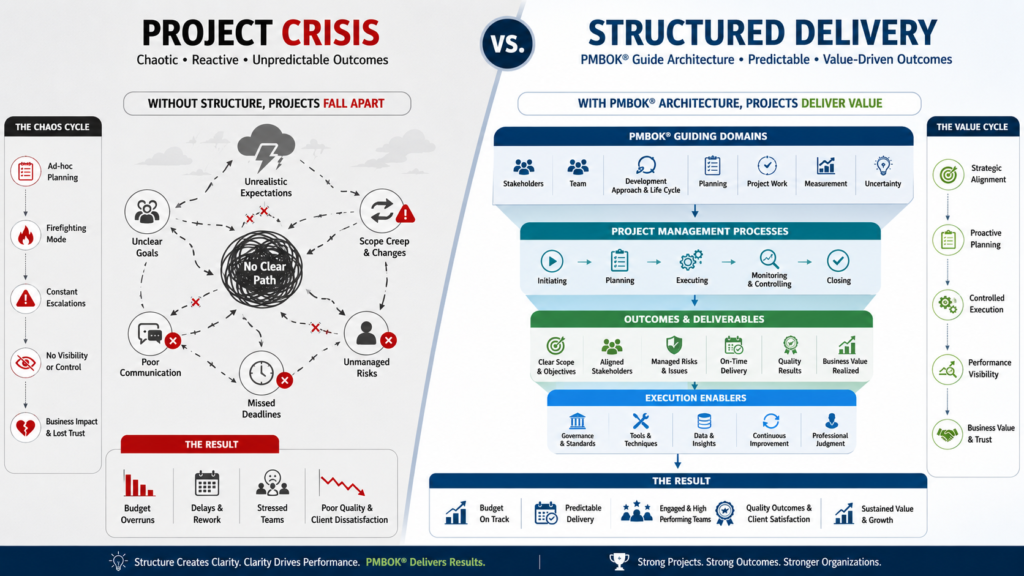
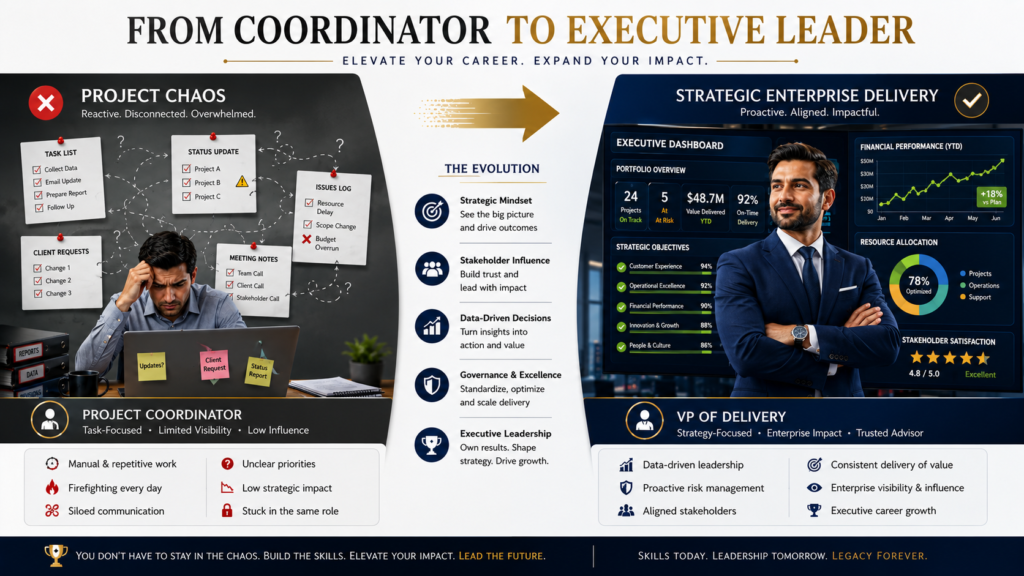
When project managers operate without structural clarity, they spend their days fighting fires, managing scope creep, and justifying schedule delays to frustrated executives. Implementing a precise enabler framework changes your trajectory completely:
From Reactive Firefighter to Strategic Leader: Instead of reacting to scope creep, you systematically execute the process enablers for change control and risk management.
From Blurred Accountabilities to High-Performing Teams: Instead of suffering from misaligned team members, your team operates off explicit RACI expectations and clear conflict-resolution pathways.
Predictable, Scalable Outcomes: Senior leaders value project managers who consistently deliver predictable results. Standardized enablers turn successful project execution into a repeatable science rather than a stroke of luck.
For ambitious professionals, this shift marks the transition from mid-level coordination to strategic program leadership. Executive teams do not promote individuals who merely track tasks; they elevate leaders who build frameworks, manage stakeholder expectations with authority, and drive business value. Learning project management through this framework equips you with the exact executive language and execution rigor needed to command respect in the boardroom.
Elevate Your Career Trajectory with Skillsetify
Navigating modern project complexity requires more than reading theoretical guides or memorizing terms for an exam. To stand out in today’s competitive enterprise landscape, you need real-world application, strategic authority, and expert mentorship.
At Skillsetify, we specialize in transforming ambitious professionals into high-impact delivery leaders. We don’t just teach frameworks: we show you your exact career growth trajectory.
Whether you are looking to step into executive program management, master modern hybrid delivery methodologies, or earn your credentials with absolute confidence, our industry-leading programs provide the exact roadmap you need.
Ready to stop guessing, move up the corporate ladder, and learn project management the right way?
Take the next decisive step in your professional journey. Connect with the leadership team at Skillsetify today and discover how our tailored, deep-dive training programs can accelerate your career trajectory.