Master Scenario Navigation Strategy and Command Executive Authority
A $15M enterprise digital transformation initiative is three weeks out from its flagship release when the Lead Cloud Architect and the Vice President of Sales march into your office, locked in a heated standoff over product architecture. The Architect insists on a four-week deployment delay to resolve severe data latency risks. The VP of Sales refuses, pointing to binding enterprise SLA commitments that carry heavy financial penalties.
Slack messages are blowing up, team morale is cratering, and executive sponsors demand an immediate decision.
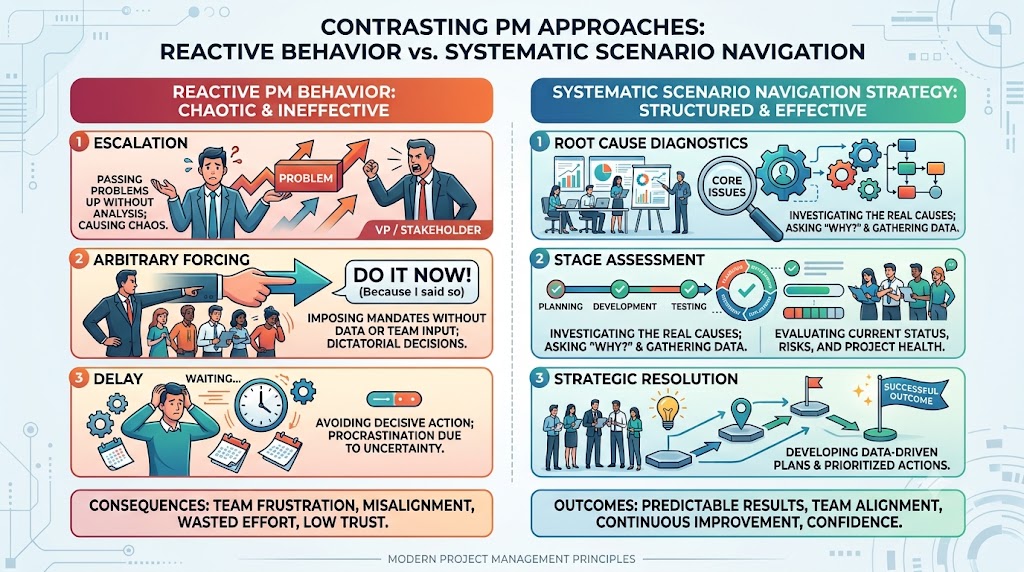
In moments like this, average project managers panic. They fall into reflex traps: either escalating the crisis directly to an executive sponsor to dodge accountability, or imposing a heavy-handed, arbitrary compromise that breaks technical performance while failing to satisfy commercial requirements.
Corporate culture often promotes a dangerous myth: that workplace conflict is an anomalous operational glitch that should be immediately suppressed, smoothed over, or escalated up the management chain. This perspective is completely flawed. Conflict is an inevitable, structural byproduct of project complexity and competing organizational objectives.
When board-level evaluations and high-stakes scenario questions assess your leadership maturity, they do not test how quickly you can make everyone happy. They evaluate your systematic capacity to analyze root sources, diagnose conflict stages, evaluate organizational contexts, and execute mathematically sound resolution strategies under pressure.
Mechanics of Scenario Navigation: Deconstructing Conflict Under Pressure
Scenario-based questions and real-world executive crises share an identical underlying mechanic: they present ambiguous, high-pressure environments where multiple potential paths forward sound plausible. Navigating these scenarios requires moving past emotional instincts and adopting an algorithmic framework. Managing conflict systematically involves analyzing root sources, stages, contexts, and solutions.
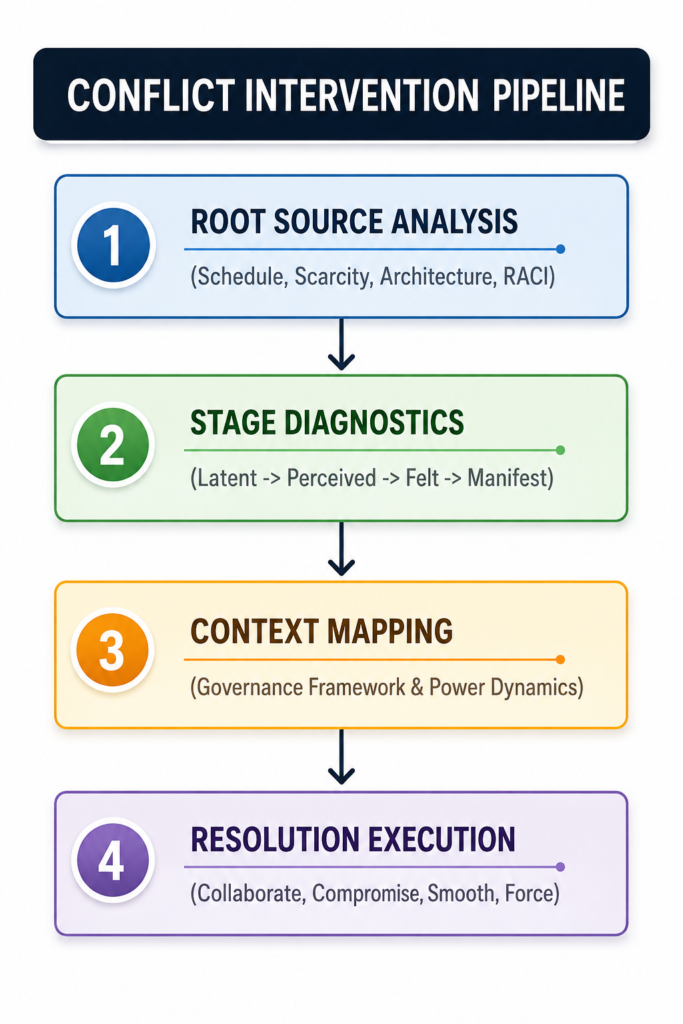
Phase 1: Analyzing Root Sources of Conflict
Conflict rarely stems from genuine interpersonal animosity, even when it manifests as emotional tension. Data across enterprise project environments confirms that over 80% of corporate friction originates from structural ambiguity. To resolve a scenario effectively, you must first isolate its fundamental trigger:
Schedule and Priority Misalignment: Cross-functional teams operating under conflicting operational timelines or competing departmental KPIs.
Resource Scarcity: Competition for high-demand technical talent, budget allocations, or specialized infrastructure environments.
Technical and Architectural Trade-offs: Standoffs between short-term deliverable speed and long-term systemic stability or quality benchmarks.
Governance Ambiguity: Overlapping responsibilities, poorly structured Decision Authority Matrices (RACI/RAM), or ill-defined project scope boundaries.
Personal Work Styles: Differing operational perspectives, communication preferences, or risk tolerances among key contributors.
Phase 2: Diagnosing Conflict Stages
Conflict is dynamic. It evolves through distinct developmental stages, and attempting a resolution without identifying the current stage leads to structural failure:
Latent Stage: Subsurface friction driven by competing incentives, resource constraints, or ambiguous organizational direction.
Perceived Stage: Cognitive awareness of differing goals without active emotional escalation or open friction.
Felt Stage: Personal frustration, defensive positioning, and emotional investment begin to impact team alignment.
Manifest Stage: Open disagreement, visible pushback, operational friction, and stalled project deliverables.
Aftermath Stage: The long-term impact on organizational culture, trust, and delivery velocity following resolution or improper suppression.
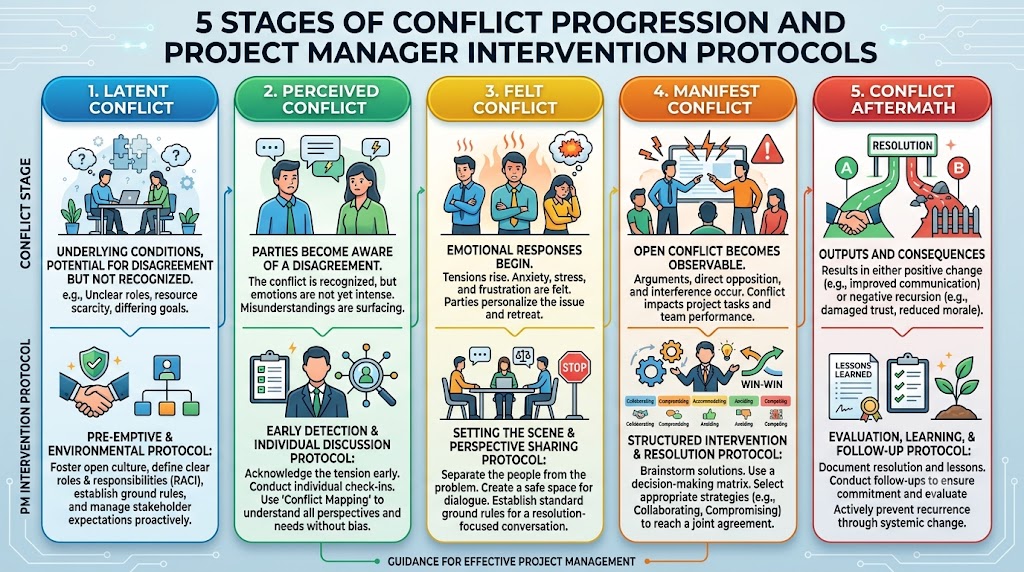
Phase 3: Evaluating Context and Environmental Dynamics
Before executing a resolution, you must assess the operational ecosystem. Is your initiative running under a rigid, predictive waterfall framework, a rapid iterative agile lifecycle, or a complex hybrid structure?
What is the power-versus-interest dynamic among the opposing stakeholders? A collaborative consensus model that succeeds within a self-organizing agile engineering squad will collapse if applied blindly to a heavily regulated, predictive compliance environment with fixed contractual boundaries. Context dictates whether authority should be shared, delegated, or decisively asserted.
Phase 4: Selecting and Executing Resolution Techniques
Once you have analyzed the source, stage, and context, you must deploy the exact resolution technique tailored to the operational scenario:
Collaborating / Problem-Solving (Win-Win): Incorporating multiple viewpoints and consensus building to achieve a durable solution. Required when long-term commitment is essential and schedule float allows for deep root-cause analysis.
Compromising / Reconciling (Lose-Lose): Seeking an intermediate position where both parties yield key aspects of their stance. Ideal as a temporary operational fix under strict time constraints.
Smoothing / Accommodating (Yielding): Emphasizing areas of agreement while deferring core friction to maintain team harmony. Useful when the underlying issue is secondary to relationship preservation.
Forcing / Directing (Win-Lose): Pushing one viewpoint at the expense of another using formal positional authority. Reserved for urgent critical-path deadlines, emergency compliance risks, or safety mandates.
Withdrawing / Avoiding (Postpone): Retreating from the disagreement to allow time for emotional cool-down or additional data gathering. Useful only when immediate action provides zero strategic value.
The Step-by-Step Scenario Navigation Framework
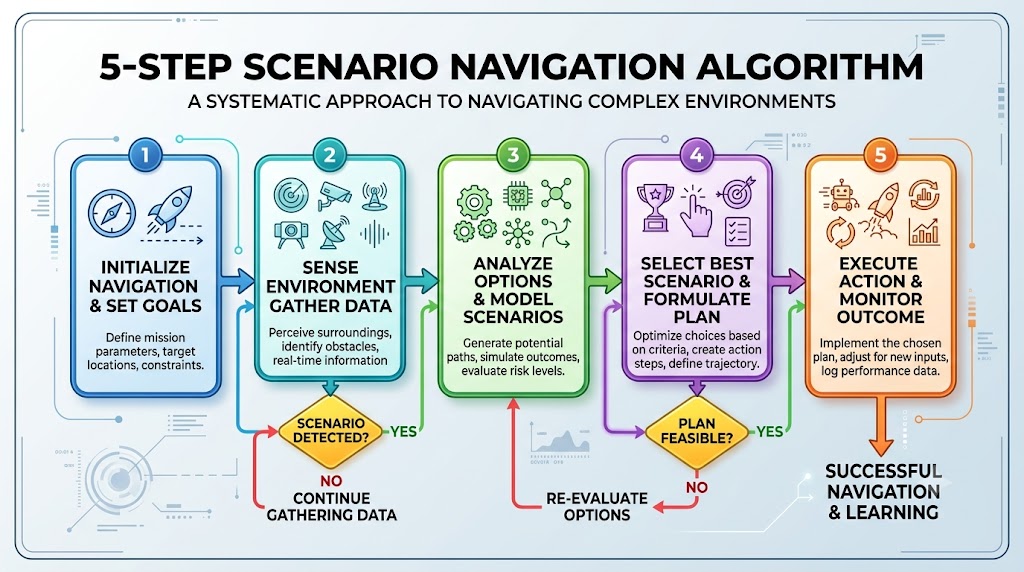
To master scenario navigation under examination conditions or during live enterprise crises, follow this operational framework:
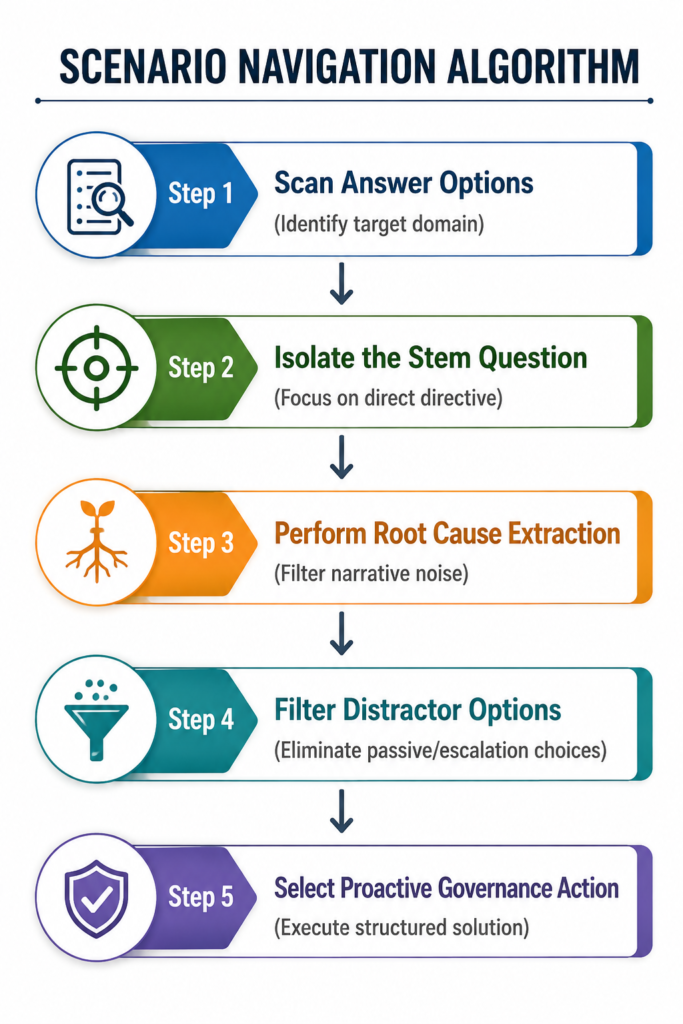
Scan Response Options First: Before reading lengthy scenario descriptions, quickly review the provided choices. This anchors your mind on the core governance categories involved (e.g., Change Control, Stakeholder Engagement, Risk Response, Conflict Management).
Isolate the Stem Question: Read the final sentence of the scenario statement carefully. Identify the exact directive: What should the project manager do FIRST? versus What should the project manager have done to PREVENT this issue?
Perform Root Cause Extraction: Strip away contextual noise, dramatic fluff, and emotional descriptions. Pinpoint whether the core issue is schedule pressure, cost overruns, scope creep, or interpersonal friction.
Filter Out Distractor Options: Automatically eliminate choices that advocate immediate escalation to senior management, arbitrary forcing without investigation, or passive avoidance during active crises.
Select the Proactive Governance Response: Choose the option that performs root-cause analysis, direct stakeholder engagement, and aligns with standard project governance frameworks.
From Reactive Firefighting to Strategic Command
When you master scenario navigation strategy, your professional identity undergoes a profound evolution. You transition from a reactive project coordinator—constantly overwhelmed by scope creep, stakeholder friction, and unexpected delays—into an elite program leader who commands respect across every tier of the organization.
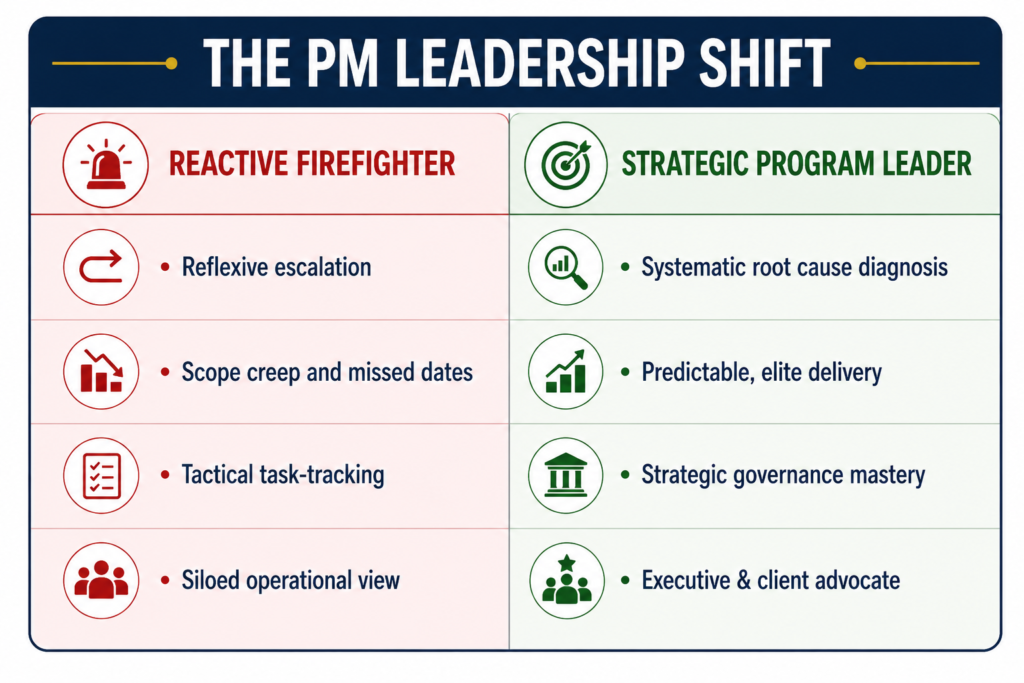
Instead of fearing team friction or stakeholder pushback, you approach operational complexity with structured clarity. You build powerful reputation capital: executive sponsors trust your governance, clients view you as an indispensable advisor, and cross-functional teams depend on your calm authority when high-stakes projects face unexpected turbulence.
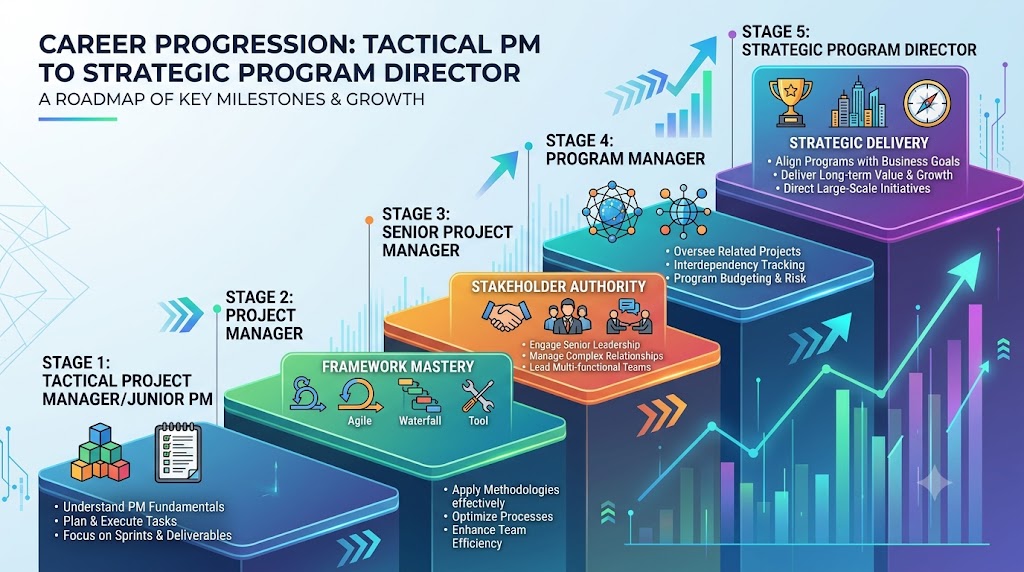
Advancing your career past middle management requires more than basic technical execution. It demands speaking the executive language of governance, business alignment, and strategic risk management.
Mastering scenario navigation mechanics bridges the gap between mid-level project delivery and high-impact program leadership, accelerating your trajectory toward executive responsibility and career growth.
Transform Your Career Trajectory
Navigating high-stakes operational scenarios and resolving complex enterprise conflict are not innate personal talents: they are structured disciplines that can be systematically learned, practiced, and mastered. By analyzing root sources, assessing conflict stages, evaluating organizational contexts, and executing targeted resolution techniques, you position yourself as an indispensable asset to any enterprise organization.
If you are ready to stop guessing, move up the corporate ladder, and learn project management the right way, reach out to Skillsetify. We do not just teach frameworks: we show you your exact career growth trajectory.