Master the Agile Planning Onion to Bridge C-Suite Strategy and Daily Code
The $5 Million Strategy That Died in Jira
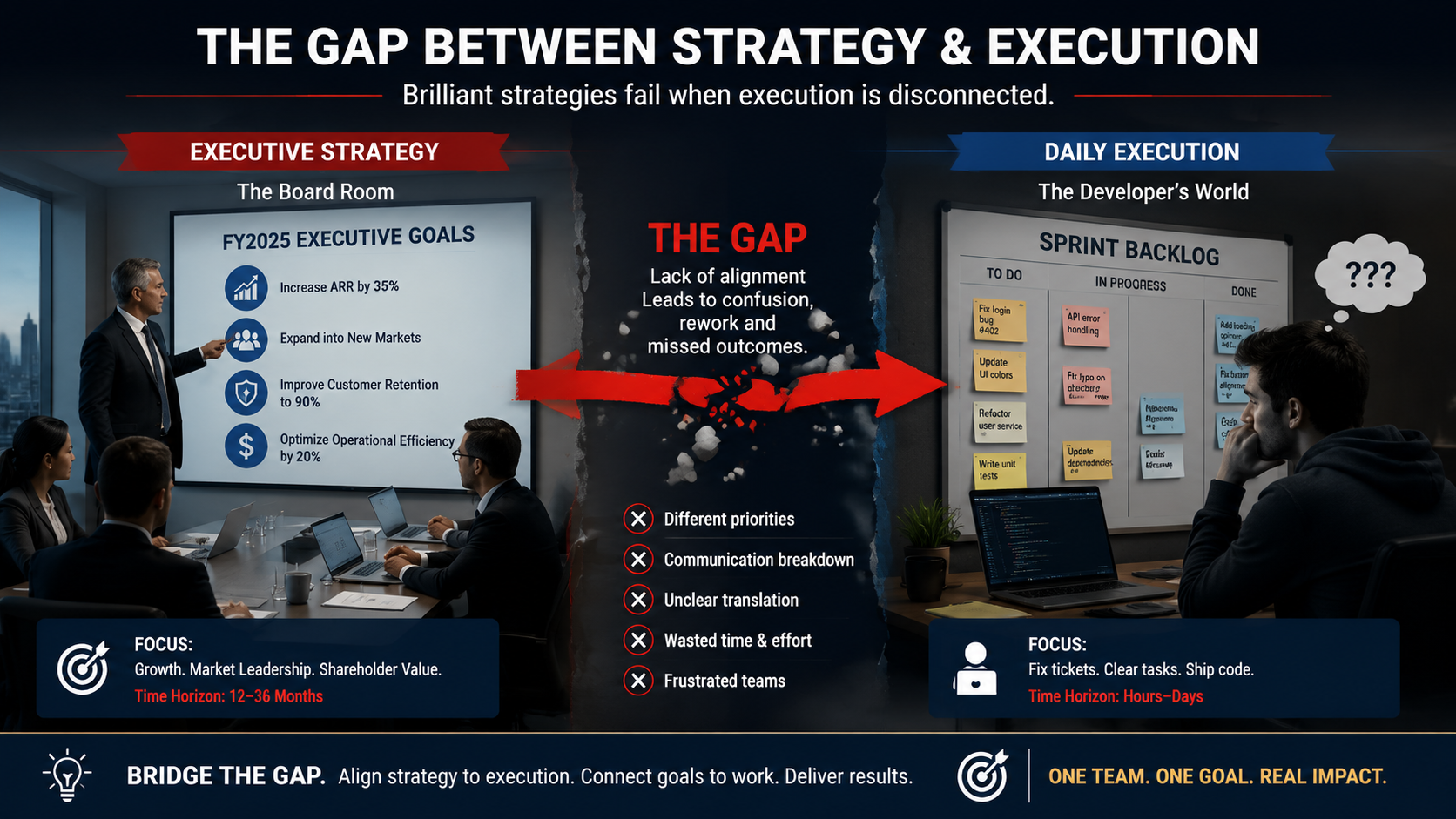
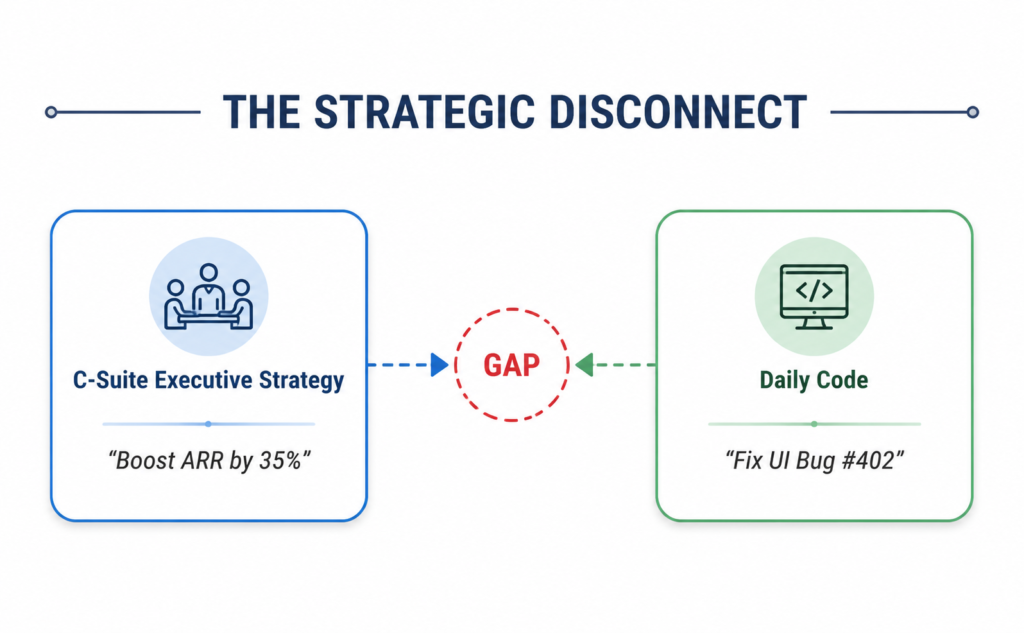
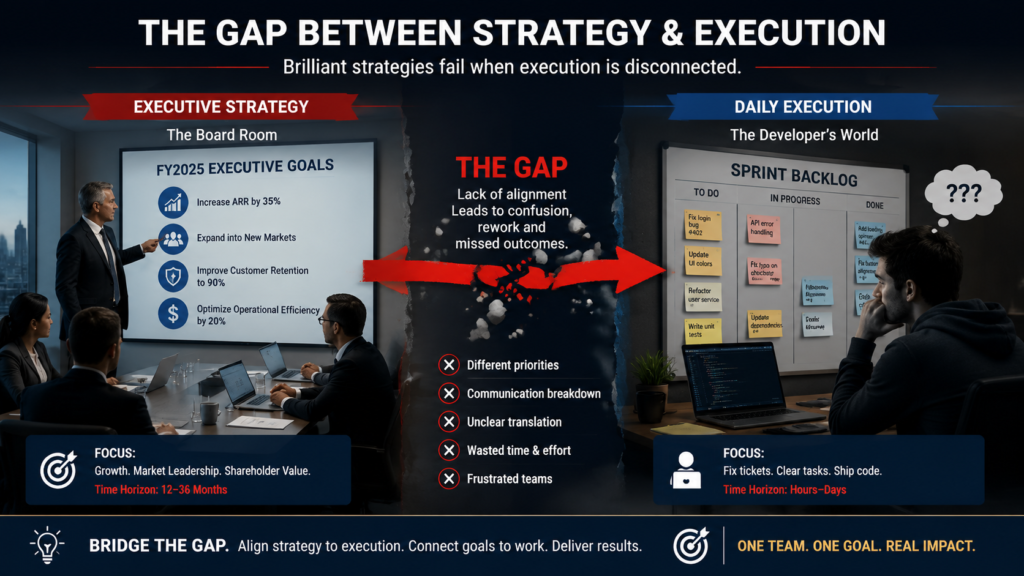
Picture this scenario. It is Monday morning at 9:00 AM. Your executive leadership team just wrapped up an intensive, multi-million-dollar annual strategic retreat. They unveiled an ambitious corporate roadmap designed to capture a brand-new enterprise market, expand regional portfolios, and boost annual recurring revenue by 35%.
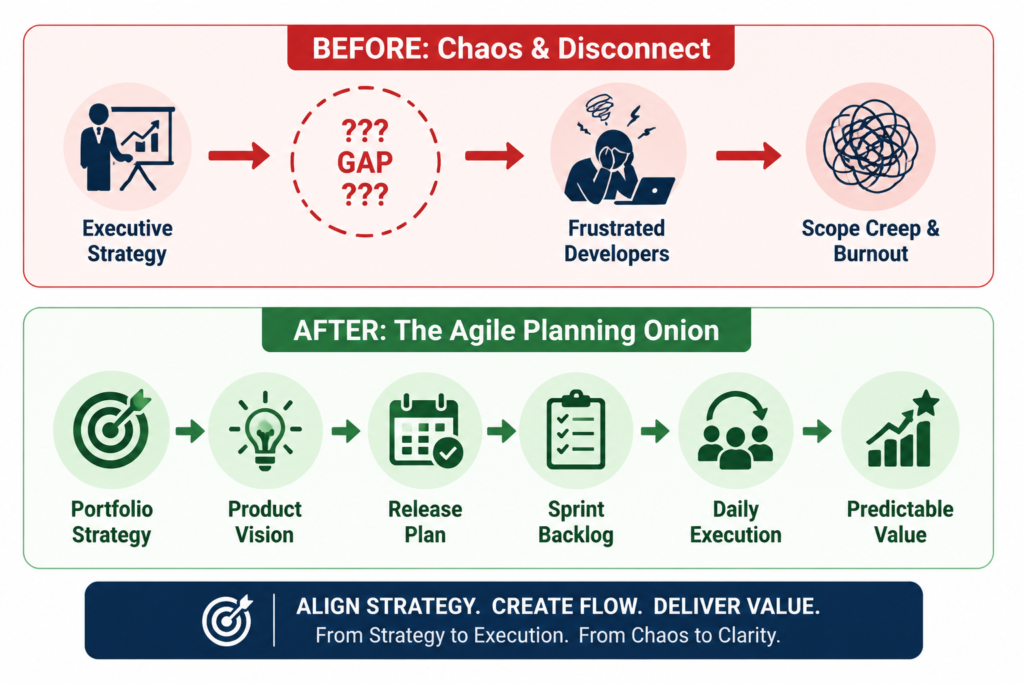
Simultaneously, at 9:30 AM, an engineering team sits in a Sprint Planning meeting. They are arguing over a minor UI bug ticket pulled from a back-logged user story. When asked how this specific task supports the enterprise expansion goal announced an hour earlier, the room goes silent. Nobody knows.
This disconnect is the silent killer of modern enterprises. Millions of dollars in strategic planning evaporate because executive strategy fails to trickle down into daily execution. When high-level portfolio ambitions fail to connect with day-to-day engineering tasks, teams end up building features fast, but building the wrong things.
Busting the Great Agile Myth
A pervasive myth in modern corporate culture claims that adopting Agile means abandoning long-term, top-down planning. Organizations often mistakenly assume that being “Agile” means working sprint-to-sprint without a overarching strategic direction.
This assumption is entirely wrong.
Agile does not eliminate top-down planning: it refines it. Authentic Agile delivery relies on a structured, multi-layered planning system that connects enterprise vision directly to daily development tasks. This structural methodology is known as The Agile Planning Onion.
What is the Agile Planning Onion?
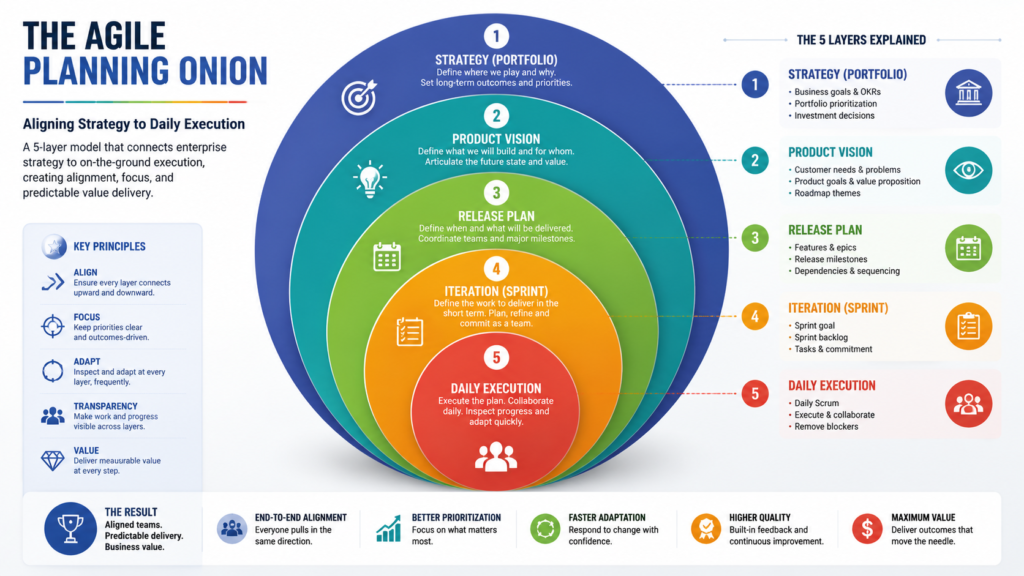
The Agile Planning Onion is a concentric, progressive planning framework that navigates structural planning flows from broad corporate strategies down to individual daily tasks.
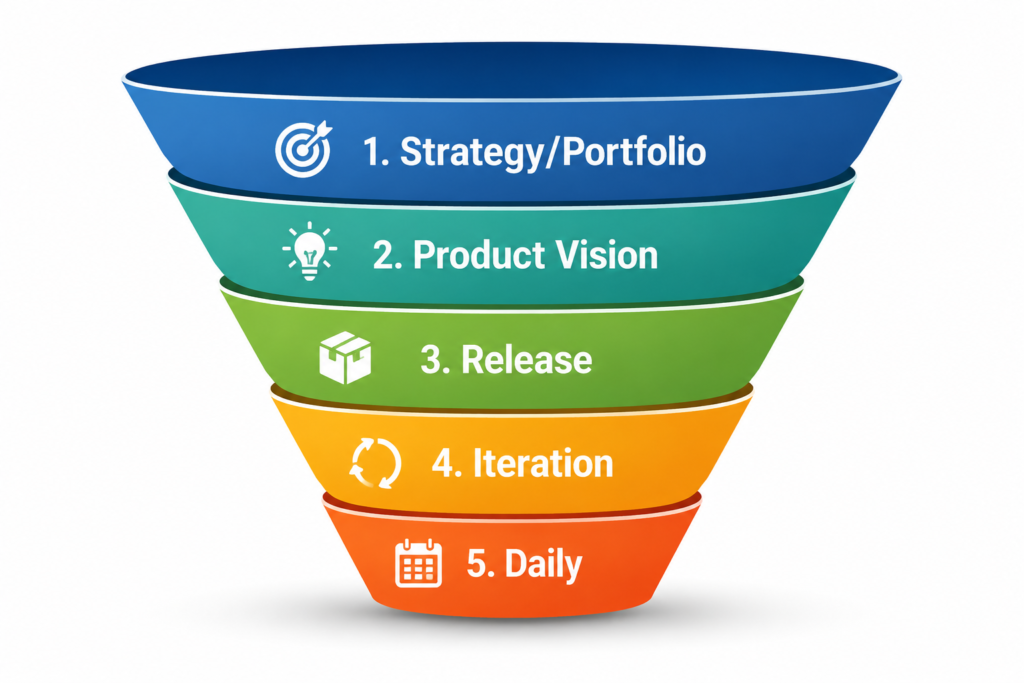
In traditional waterfall environments, teams attempt to plan every detail up front. The Agile Planning Onion replaces this rigid up-front planning with variable planning horizons. Outer layers represent long time horizons with broad detail, while inner layers represent short time horizons with granular detail
Key Mechanics of Progressive Horizons
Outer Layers (Strategy & Product): Focus on long-term intent, market positioning, financial viability, and overall product vision. Planning here happens annually or quarterly.
Inner Layers (Iteration & Daily): Focus on immediate execution, concrete deliverables, definition of ready, and daily unblocking. Planning here happens bi-weekly or daily.
The 5 Layers of Top-Down Agile Planning
To master top-down structural alignment, project managers must understand how value flows through each layer of the onion.
| Planning Layer | Time Horizon | Key Owners | Core Artifacts / Focus |
| 1. Strategy & Portfolio | 1 to 5 Years | C-Suite, Portfolio Managers | Business Cases, Portfolio Allocation, Financial Viability |
| 2. Product Vision & Roadmap | 1 to 3 Years | Product Owners, Program Managers | Product Vision Statements, Quarterly Roadmaps |
| 3. Release Planning | 1 to 4 Quarters | Project Managers, Lead Architects | Strategic Increments, Epics, Release Boundaries |
| 4. Iteration / Sprint Planning | 1 to 4 Weeks | Scrum Masters, Agile Teams | Sprint Backlog, Definition of Ready, User Stories |
| 5. Daily Planning | 24 Hours | Development Teams | Daily Scrums, Micro-commitments, Blocker Removal |
Layer 1: Corporate Strategy & Portfolio Planning
At the outermost layer, executive leadership defines the ultimate direction of the enterprise. Corporate portfolios group investments by product lines, regional markets, or strategic initiatives.
Before any initiative becomes a formal project, it must pass a rigorous Business Case Evaluation. A viable business case evaluates two mandatory criteria:
Technical Feasibility: Can the organization technically build and maintain this solution given current or prospective capabilities?
Financial Viability: Is the project financially sound, providing a positive return on investment (ROI) within an acceptable payback period?
Strategic Rule: If an idea fails either technical feasibility or financial viability, it is rejected immediately before wasting development resources.
Layer 2: Product Vision & Product Roadmap
Once a business case is approved at the portfolio level, it transitions into a concrete product vision. The Product Owner crafts a clear Product Vision Statement to establish the long-term positioning of the product.
A standard corporate Product Vision follows this structured framework:
For: [Target Customer]
Who: [Statement of Need or Opportunity]
The: [Product Name] is a [Product Category]
That: [Major Capabilities, Key Benefits, Compelling Reason to Buy]
Unlike: [Primary Competitive Alternative]
Our Product: [Statement of Primary Differentiation / Unique Selling Proposition]
From the vision, the Product Owner builds the Product Roadmap. The roadmap displays major milestones across time (quarters or years) without locking the team into micro-level scope.
Layer 3: Release Planning
Release planning bridges strategic roadmaps with tactical iteration execution. A release represents a usable, feature-rich increment delivered to end users or internal stakeholders.
In this layer, Project Managers break down broad roadmap themes into concrete epics and features. Release planning answers key operational questions:
What set of features forms a logical strategic increment?
What team capacity and budget are required to deliver this release milestone?
What third-party dependencies or cross-functional integrations must be aligned?
Layer 4: Iteration (Sprint) Planning
At the iteration layer, long-term strategic plans turn into near-term tactical commitments. Teams pull prioritized features from the product backlog and decompose them into actionable user stories.
To ensure high-quality execution, teams enforce strict entry and exit gates for every user story:
Definition of Ready (DoR – Entry Gate): A user story cannot enter a sprint unless it has clear business purpose, actionable steps, identified dependencies, and explicit acceptance criteria.
Definition of Done (DoD – Exit Gate): A user story cannot be marked complete unless code reviews are passed, automated testing is completed, documentation is updated, and all acceptance criteria are verified.
Layer 5: Daily Planning
The innermost core of the onion is daily execution. The Daily Scrum is a 15-minute daily planning event where the team assesses immediate progress toward the Sprint Goal.
Rather than a status report for management, daily planning is a tactical sync where engineers commit to 24-hour targets, identify emerging technical blockers, and adjust daily workflows to keep the iteration on track.
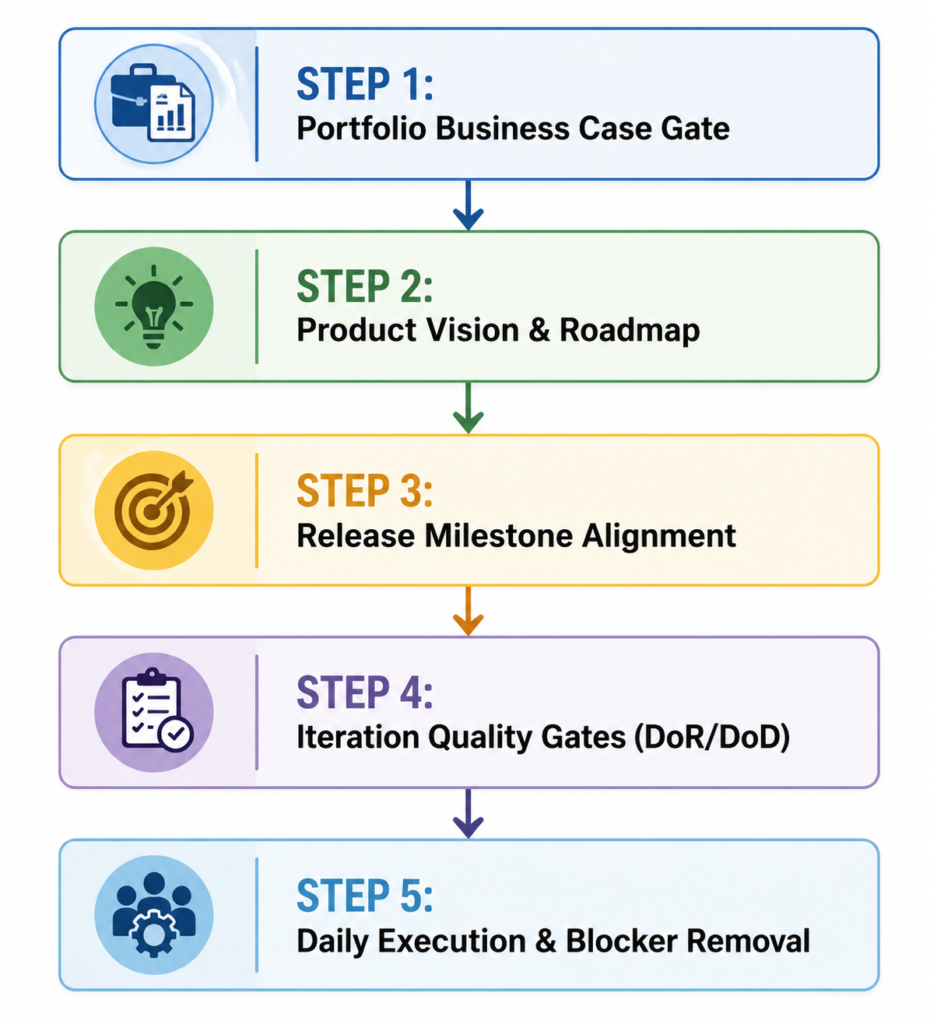
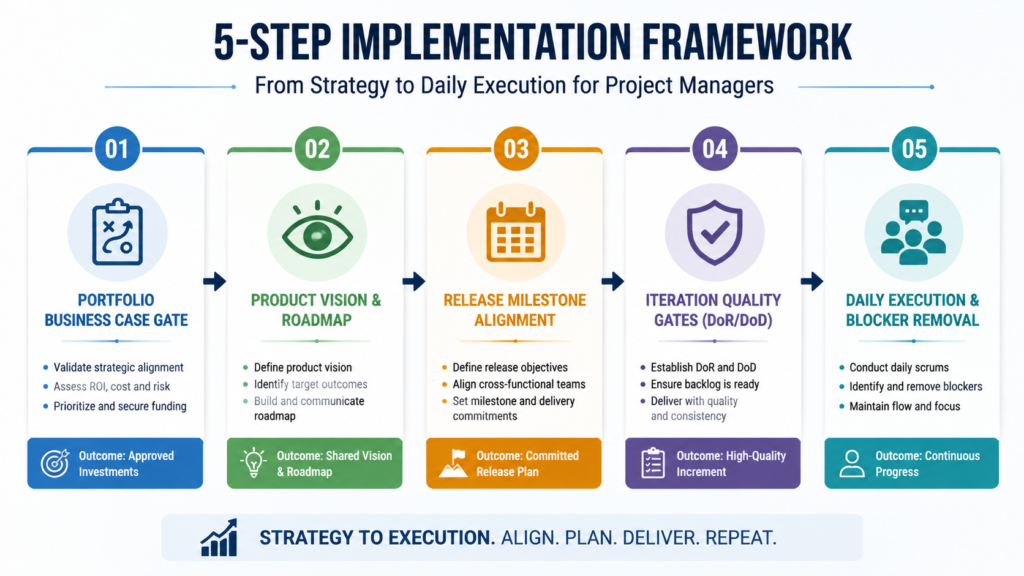
Step-by-Step Implementation Framework for Project Managers
If you are leading project delivery in a complex corporate environment, use this step-by-step playbook to set up top-down planning across your organization.
Step 1: Establish the Portfolio Business Case Gate
Mandate that all new initiative proposals complete a formalized business case before entering the backlog.
Conduct formal technical feasibility assessments with principal architects.
Perform financial viability analysis (calculating Net Present Value, ROI, and payback windows)
Step 2: Standardize the Product Vision & Roadmap
Require every Product Owner to publish a standardized Product Vision Statement.
Structure product roadmaps into rolling quarterly themes rather than fixed multi-year feature lists.
Ensure every item on the roadmap ties directly back to a strategic portfolio KPI.
Step 3: Define Strategic Release Boundaries
Group related epics into defined, value-adding release targets.
Conduct cross-functional release planning sessions involving IT, Marketing, Legal, Operations, and Customer Success.
Track cross-portfolio dependencies to ensure cross-functional alignment.
Step 4: Enforce DoR and DoD Quality Gates
Draft explicit Definition of Ready guidelines with your development teams. Reject vague stories during Sprint Planning.
Establish a non-negotiable Definition of Done checklist encompassing testing, documentation, and compliance reviews.
Step 5: Conduct Daily Scrums as Micro-Planning Events
Keep daily standups focused on three strategic items: achievements since last sync, commitments for the next 24 hours, and immediate blockers.
Immediately escalate systemic blockers to program or portfolio leadership to clear the runway for delivery teams.
From Execution Chaos to Executive Command
When you implement the Agile Planning Onion correctly, your workplace reality changes dramatically.
No longer do you face scope creep, frantic shifting priorities, or engineering burnout caused by random executive requests. Instead, you establish predictable, high-value delivery cycles where scope changes are handled through deliberate backlog refinement rather than emergency fire-drills.
Imagine running projects where:
Every sprint deliverable traces directly to an executive strategic objective.
C-suite leaders understand exactly how portfolio investments translate into shipped product increments.
Engineering teams feel purpose and alignment because they see the real business impact of their code.
Accelerating Your PM Career Trajectory
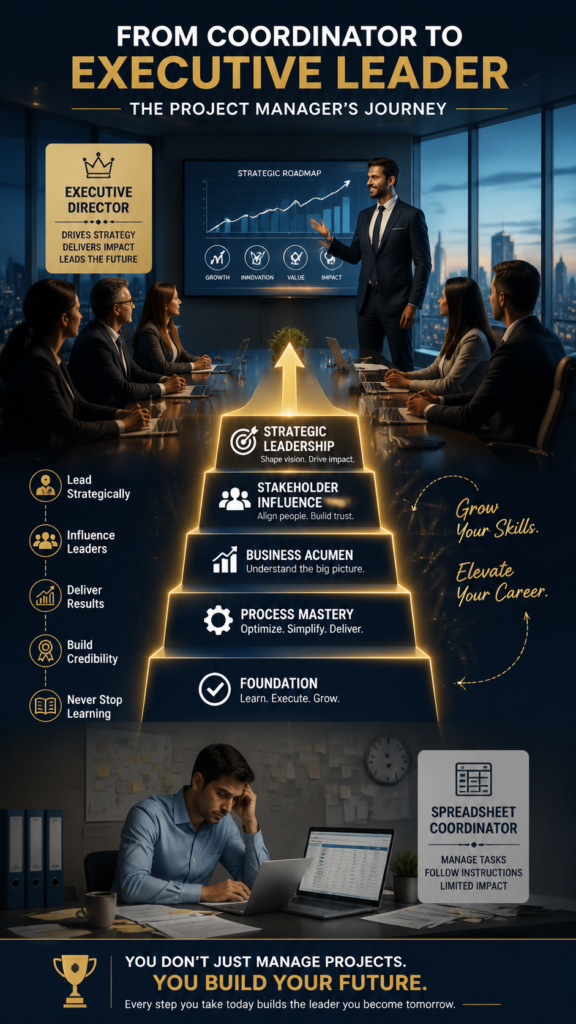
In today’s competitive corporate landscape, traditional project managers who merely update Gantt charts and log meeting minutes are rapidly becoming obsolete. Organizations demand strategic delivery leaders who can bridge the gap between high-level business management and tactical software execution.
Mastering top-down planning methodologies elevates you from an administrative coordinator to an indispensable strategic partner. When you demonstrate the ability to align corporate portfolios, structure multi-quarter releases, and maintain high-velocity team execution, you position yourself for executive career advancement.
Stop Guessing. Start Leading.
Navigating corporate planning flows from high-level enterprise strategies down to daily standups is not an accidental skill: it is an engineered discipline. The difference between struggling project managers and elite delivery leaders comes down to mastering proven frameworks.
If you are ready to stop guessing, move up the corporate ladder, and learn project management the right way, reach out to Skillsetify. We do not just teach frameworks: we show you your exact career growth trajectory.
Take control of your professional growth today. Visit Skillsetify and transform your delivery capabilities from tactical chaos into strategic excellence.