Strategic Alignment as Your Fastest Career Catalyst
Every high-stakes enterprise initiative eventually hits the point of friction. The delivery team faces budget pressures, scope modifications, or timeline constraints, while client executives demand immediate strategic outcomes. Project leaders often find themselves caught in the crossfire, treating stakeholder management as a series of damage-control meetings and status reports.
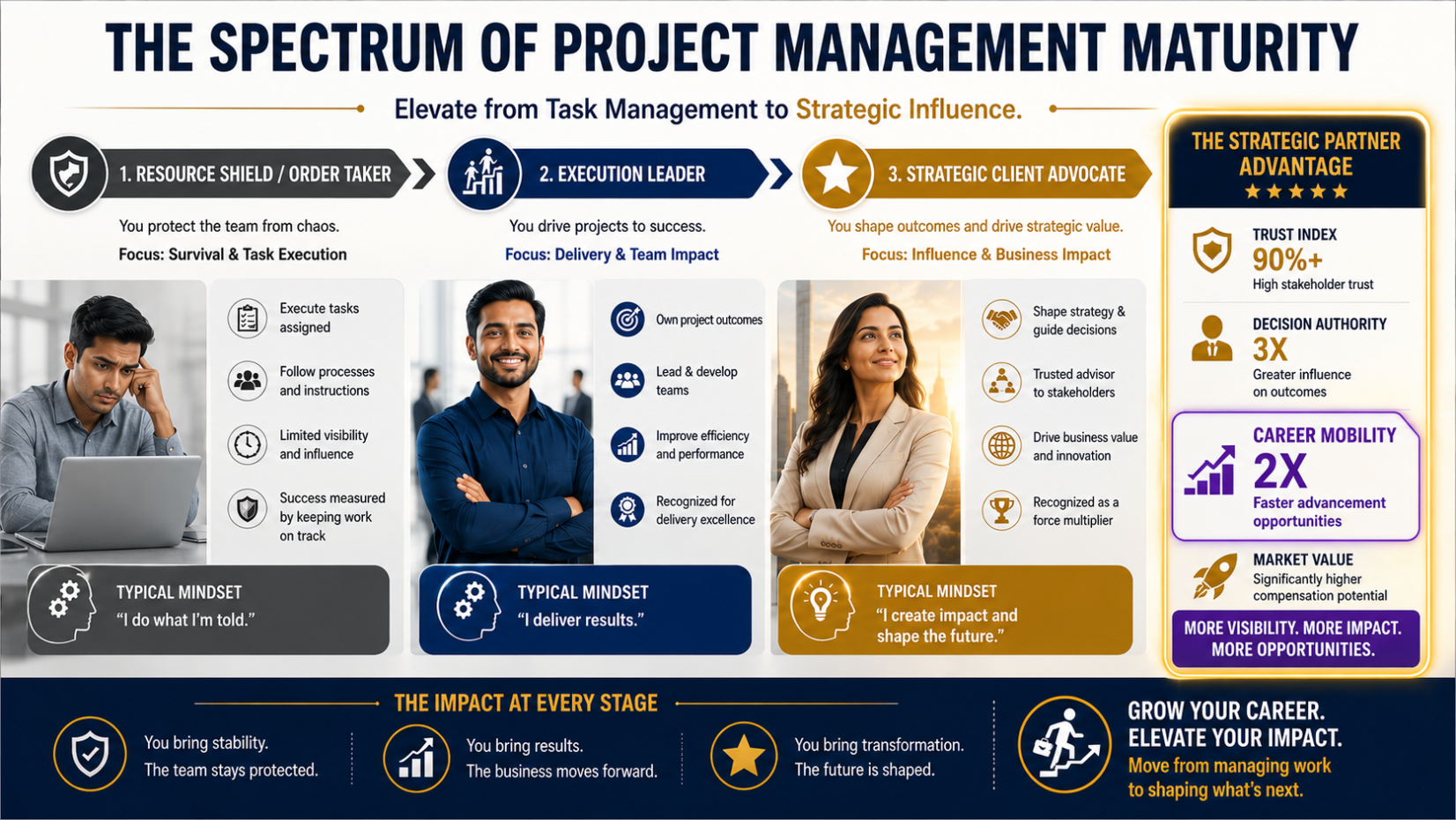
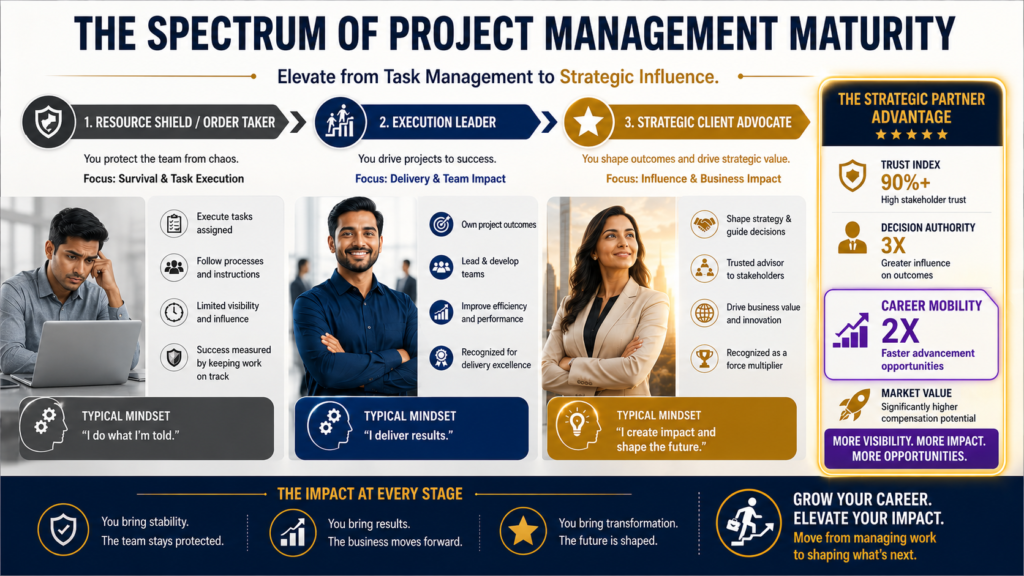
A dangerous myth persists in modern enterprise environments: that a project manager’s primary duty is to protect internal resources from client demands. Traditional project delivery frames the client relationship as zero-sum. Internal teams treat client change requests as disruptions to protect delivery margin, while clients view project updates with skepticism, suspecting hidden constraints. This boundary-policing mindset creates a structural barrier to career growth, locking talent inside the execution layer instead of elevating them into strategic partner roles.
High-performing enterprise leaders operate on a completely different principle. True authority is not built by shielding internal resources, but by acting as an unyielding advocate for client business outcomes directly within the project ecosystem.
The Mechanics of Strategic Client Advocacy
Positioning yourself as a client advocate requires shifting how project management is conceptualized across three distinct organizational layers:
The Strategic Layer: The executive space focused on bottom-line impact, market positioning, and revenue retention.
The Program Layer: The governance framework translating business strategy into actionable portfolio initiatives.
The Delivery Layer: The tactical execution level where cross-functional teams build products, systems, and services.
Project professionals often hit a ceiling because they remain trapped in the delivery layer. Focusing exclusively on tasks, sprint velocity, and technical execution prevents visibility into strategic alignment.
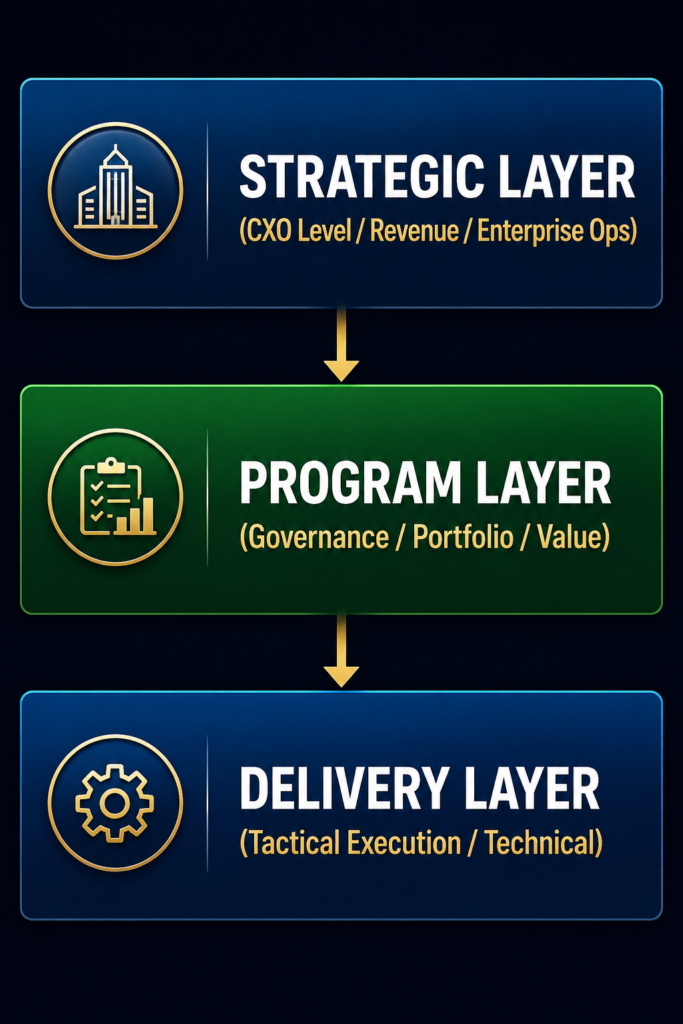
When you position yourself as a client advocate, you act as the critical bridge connecting the delivery layer directly to the strategic layer. When a project leader demonstrates deep commitment to driving the client’s business goals, the client stops viewing them as an external vendor and begins treating them as an indispensable extension of their leadership team.
The 4-Step Client Advocacy Implementation Framework
Transitioning from an execution-focused manager to an advocate requires a systematic framework for aligning stakeholder expectations and internal delivery.
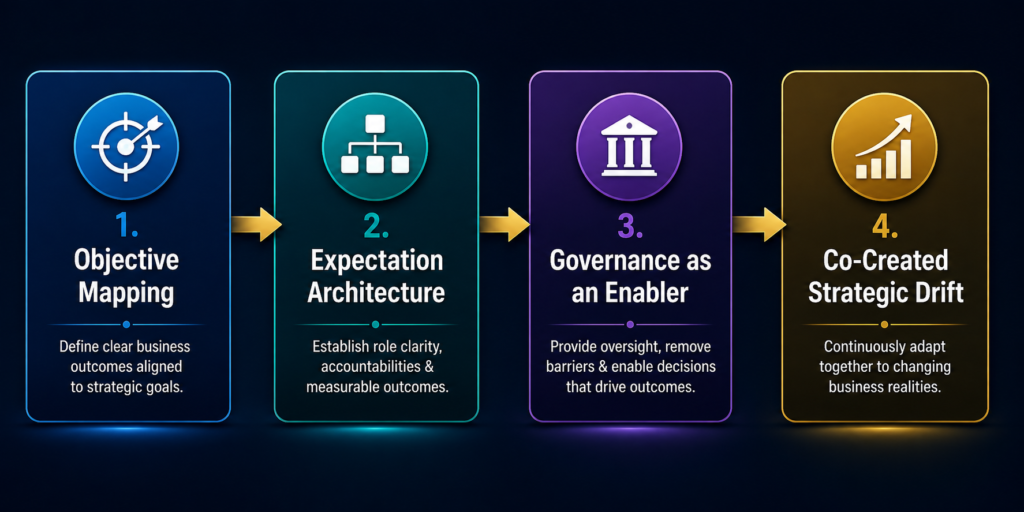
1. Execute Objective Mapping
Before setting project milestones, identify the client’s high-level business drivers. Go beyond functional requirements and uncover target business metrics:
Which key performance indicators determine success for executive leadership?
How does this project impact operational revenue or reduce organizational cost?
What internal visibility goals do client stakeholders hold?
Document these metrics inside your project charter and map every technical deliverable directly to a strategic outcome.
2. Establish Expectation Architecture
Misalignment occurs when delivery outcomes do not match executive expectations. Mitigate this gap early through transparent communication:
Define Perception Metrics: Establish early in the project lifecycle how the client measures progress, transparency, and collaboration quality.
Normalize Early Risk Disclosure: Frame risk identification as a shared problem-solving session rather than a status failure.
Align Executive Vernacular: Use the strategic language of financial value, risk reduction, and ROI rather than tactical jargon.
3. Deploy Governance as an Enabler
Governance frameworks are often viewed as restrictive compliance exercises. Advocate-led governance transforms controls into operational velocity:
Streamline Decision-Making: Structure change-control boards so decision cycles complete in hours rather than weeks.
Remove Delivery Friction: Eliminate repetitive documentation, using shared, real-time status dashboards instead.
Empower Team Authority: Give technical leads clear escalation pathways so blockers are resolved before impacting milestones.
4. Correct Strategic Drift Continuously
Enterprise projects encounter shifting market conditions. Regularly audit milestones against evolving business objectives:
Bi-Weekly Alignment Audits: Review delivery backlog against client priorities to verify ongoing relevance.
Transparent Scope Steering: When client priorities shift, provide immediate visibility into cost, timeline, and trade-off options.
Value Realization Checks: Conduct milestone retrospectives focused on delivered value rather than completed task counts.
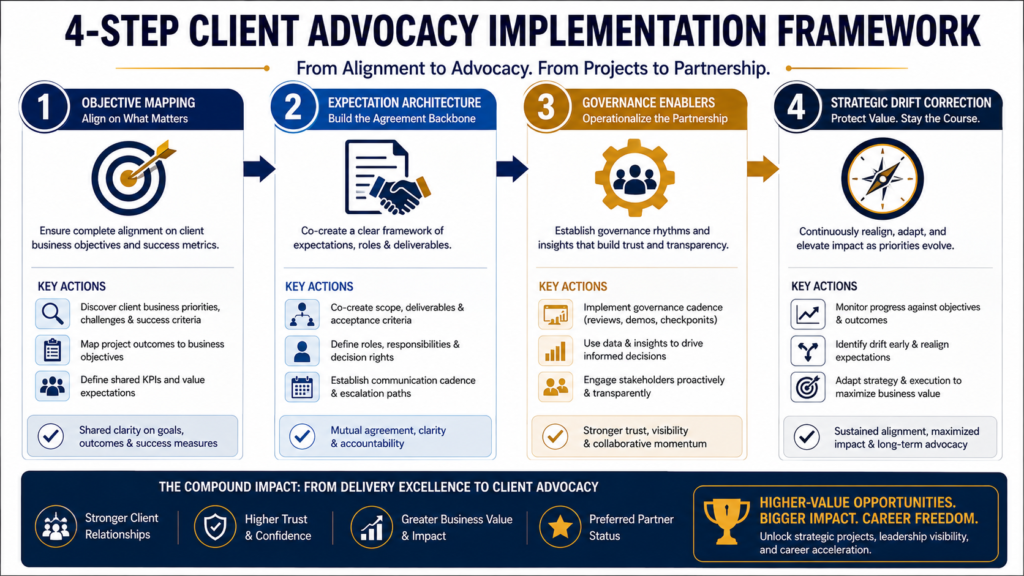
Moving Beyond Execution
Adopting client advocacy transforms day-to-day project operations:
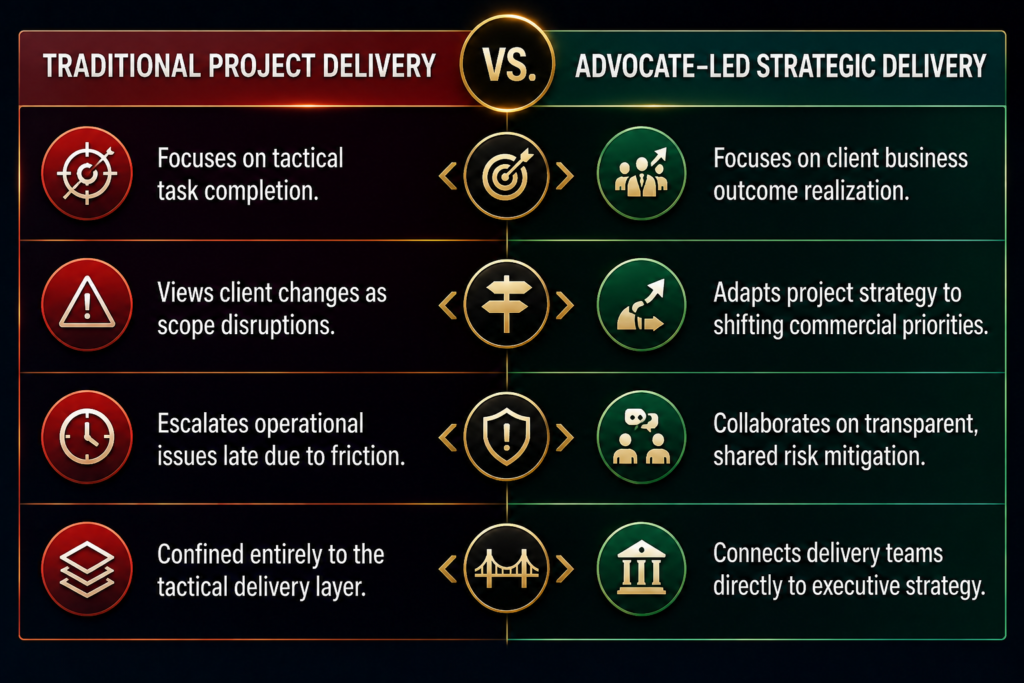
When client stakeholders realize you are fighting for their business goals as hard as they are, client perception changes completely. When internal changes threaten account stability, client executives step in to support advocacy-focused leaders. This trust unlocks senior executive access, accelerates promotions, and opens pathways to high-visibility enterprise programs.
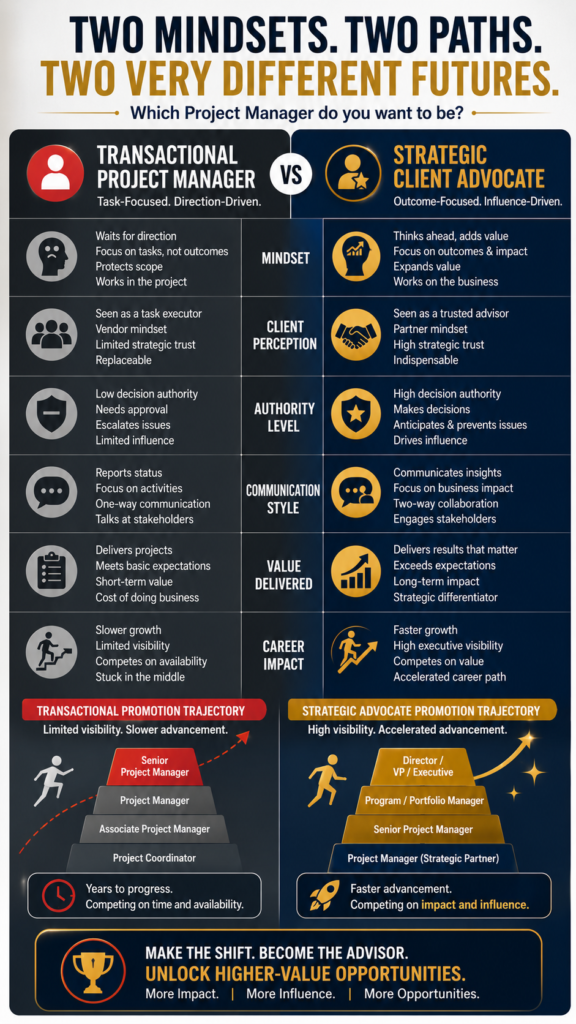
Master Strategic Leadership with Skillsetify
Navigating enterprise stakeholder management requires moving beyond basic frameworks and mastering real-world strategic execution.
If you are ready to stop guessing, break through career ceilings, and learn project management the right way, reach out to Skillsetify. We do not just teach frameworks: we show you your exact career growth trajectory. Take control of your professional development and position yourself as an elite enterprise leader today.