Why Redefining "Working Software" is the Ultimate Project Management Superpower
When Perfect Planning Delivers Zero Value
The VP of Global Compliance opens the project dashboard for a multi-million-dollar ESG audit framework expecting a functional, deployable reporting tool. Instead, she is greeted by a 400-page slide deck, fifty-two completed status reports, three separate Gantt charts, and zero operational capabilities. The project is technically “on schedule” according to every administrative milestone, yet the organization cannot execute a single audit.
This scenario plays out in enterprise boardrooms every single day across marketing, operations, legal, and human resources. Teams spend months refining documentation, polishing strategy decks, and negotiating contracts, only to realize at the eleventh hour that they have delivered zero usable value.
Busting the Enterprise Myth: Agile is Not Just for IT
For over two decades, corporate leadership has operated under a crippling misconception: the belief that the Agile Manifesto and its core tenet, “Working software over comprehensive documentation,” belong strictly to software engineers sitting in IT departments.
This myth has killed countless enterprise initiatives.
In the modern enterprise landscape, “software” is a metaphor for any functional, goal-oriented business baseline. Whether you are launching a multi-channel marketing campaign, building a regulatory compliance infrastructure, or restructuring enterprise talent acquisition, “working software” simply means a Potentially Shippable Increment of Value (PSIV). If your project deliverable cannot be put into the hands of a user or stakeholder to produce a real-world result, it is not “working,” regardless of how many approval signatures your documentation has accrued.
The Paradigm Shift: What "Working Software" Means in the Modern Enterprise
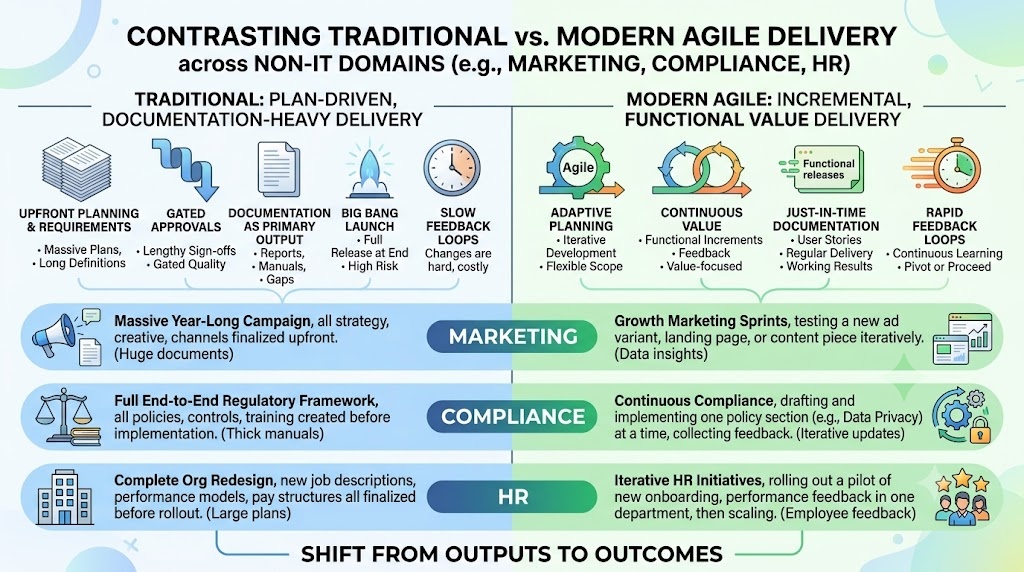
To evolve from a traditional task-tracker into an elite project leader, you must redefine how your team views deliverables. Traditional project management measures progress through activity: tasks completed, hours logged, and documents generated. Modern Agile project management measures progress exclusively through working capability.
When we strip away the software engineering jargon, the Agile Manifesto is fundamentally about reducing feedback loops and eliminating waste. When applied to non-IT environments, the second Agile value translates into a universal mandate: functional utility over theoretical planning.
Mapping "Working Software" Across Non-IT Domains
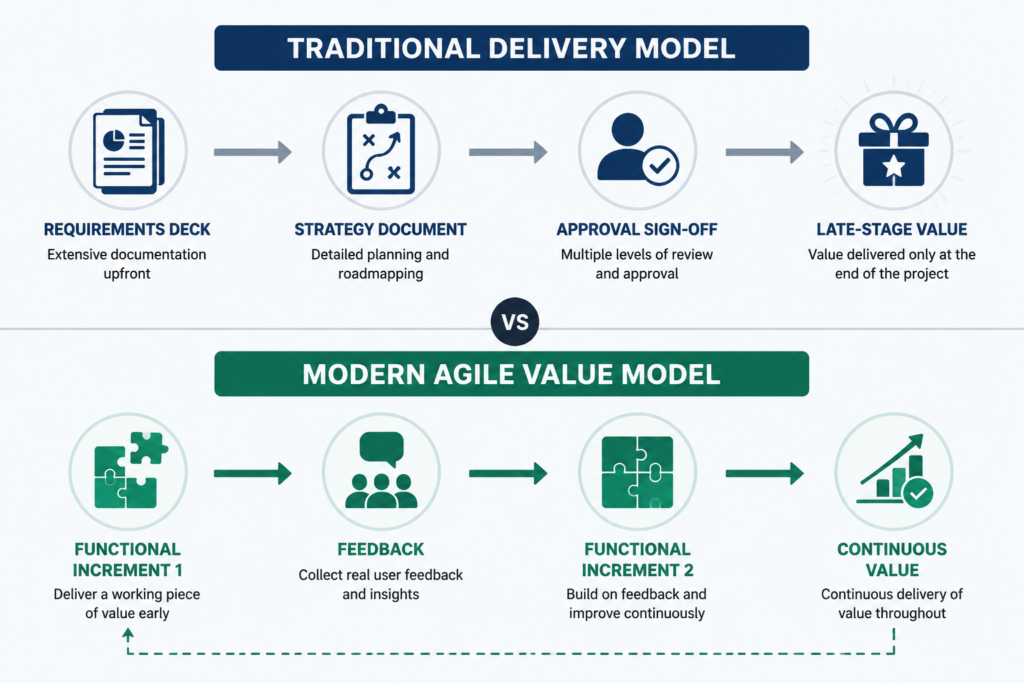
To operationalize this concept outside software engineering, project managers must translate “code” into concrete functional baselines across different business verticals:
Global Marketing Campaigns: A “working software” deliverable is not a 50-page brand strategy document. It is a live, split-tested landing page driving real customer traffic, paired with an active ad set. The strategy is refined based on live engagement data, not boardroom speculation.
Regulatory Compliance Overhauls: “Working software” is not a bound volume of proposed policies. It is a functional, audited intake workflow operating in a single regional office, capable of processing real compliance queries with zero risk breaches.
Enterprise HR Transformation: “Working software” is not an idealized employee journey deck. It is an automated, two-step onboarding portal used by the incoming cohort of hires, built to capture real friction points in real time.
Supply Chain Logistics: “Working software” is not a theoretical route optimization study. It is a pilot dispatch system deployed across five delivery vehicles, measuring actual fuel reduction and drop-off latency.
By shifting the definition of success from documenting the solution to operating a functional slice of the solution, project teams eliminate late-stage surprises, protect capital, and dramatically boost stakeholder trust.
The 5-Step Functional Increment Framework for Non-IT Project Managers
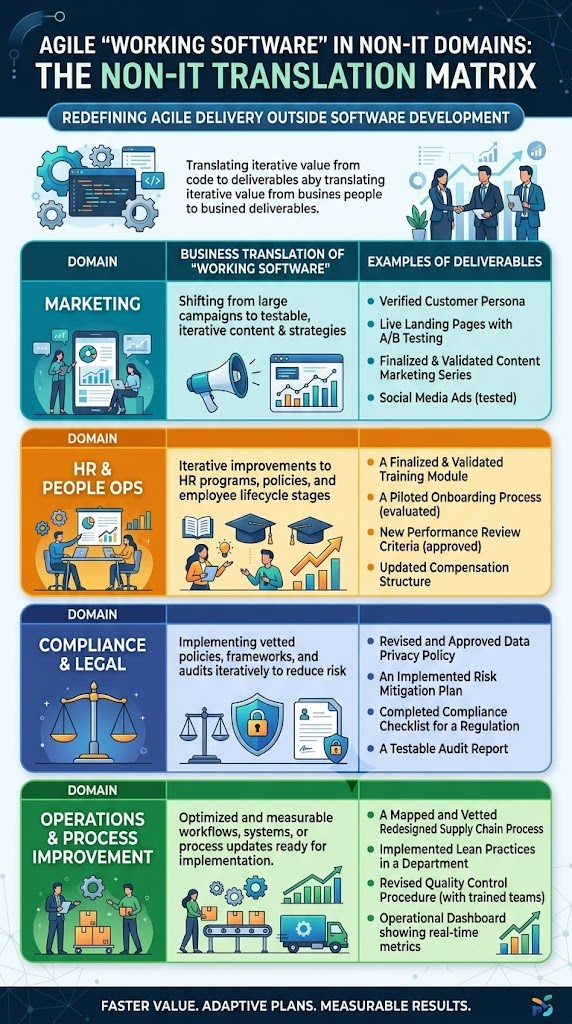
Transitioning a non-technical team from documentation-driven workflows to functional increment delivery requires a deliberate, structured framework. As a Project Manager, you can copy, adapt, and deploy the following five-step system immediately to drive predictable delivery.
Step 1: Define the Minimal Viable Outcome (MVO)
Before drafting a single planning document, force your project sponsors to define the absolute smallest increment of work that delivers tangible business utility.
Ask this question: “If we ran out of budget next week, what is the single functional component that must remain operational for this project to be considered a success?”
Action: Document this MVO in a one-page charter. Strip out all secondary features, decorative elements, and non-essential approvals.
Step 2: Practice Vertical Slicing Over Horizontal Layers
Traditional projects build horizontally: all research is completed first, followed by all drafting, all legal reviews, and finally, rollout. This guarantees that value is only realized at 99% project completion. Vertical slicing builds end-to-end functionality in thin, usable slices.
Horizontal Example (Flawed): Researching compliance laws for 50 countries simultaneously before writing a single policy.
Vertical Example (Agile): Building, testing, and fully operationalizing the compliance framework for one country end-to-end within a two-week sprint cycle.
Step 3: Establish a Non-IT "Definition of Done" (DoD)
In software engineering, code is not done just because a developer finished typing it. It must pass automated tests, peer reviews, and security scans. Non-IT projects require the exact same rigor.
Create a rigid checklist that every non-IT increment must satisfy before it is demonstrated to leadership:
Functional Usability: Can an end-user execute the workflow without assistance?
Stakeholder Validation: Has the operational business owner tested and accepted the output?
Data Capture: Is there a mechanism built into the increment to measure real-world performance?
Zero Critical Defects: Are there any unresolved compliance, brand, or operational risks?
Step 4: Conduct Functional Demonstrations, Not Status Meetings
Replace standard bullet-point status meetings with live, functional reviews. Instead of presenting slide decks about progress, require team members to walk stakeholders through the actual operational asset.
If the team is building an automated customer service workflow, do not read a status report. Trigger a live customer query in the test environment and observe the system response in front of executive sponsors.
Step 5: Implement Empirical Feedback Loops
Once a functional increment is live, gather empirical data immediately. Use real-world usage metrics to adjust the backlog for the next sprint cycle, replacing subjective opinions with objective usage evidence.
The Professional Transformation: Elevating Your PM Career
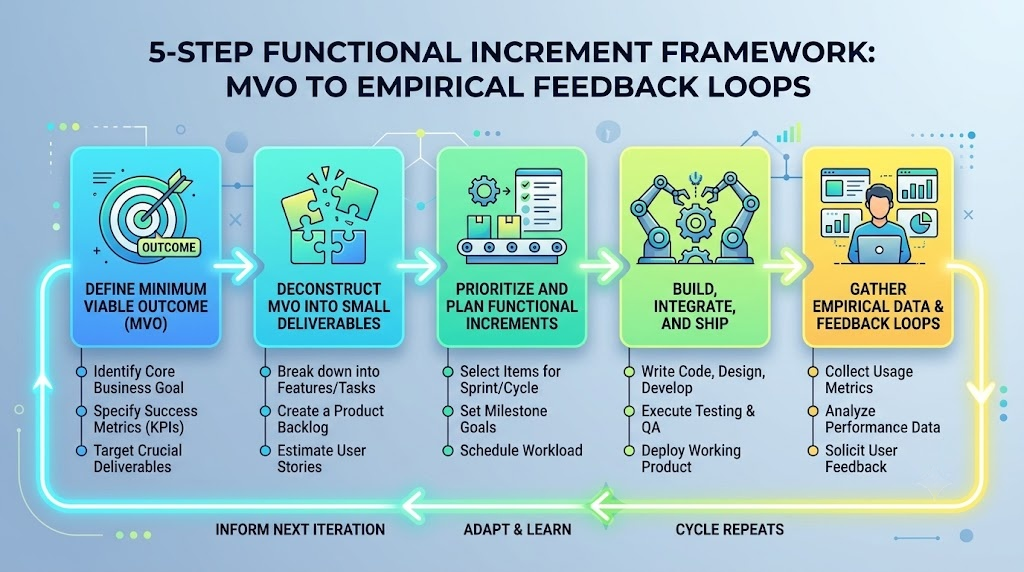
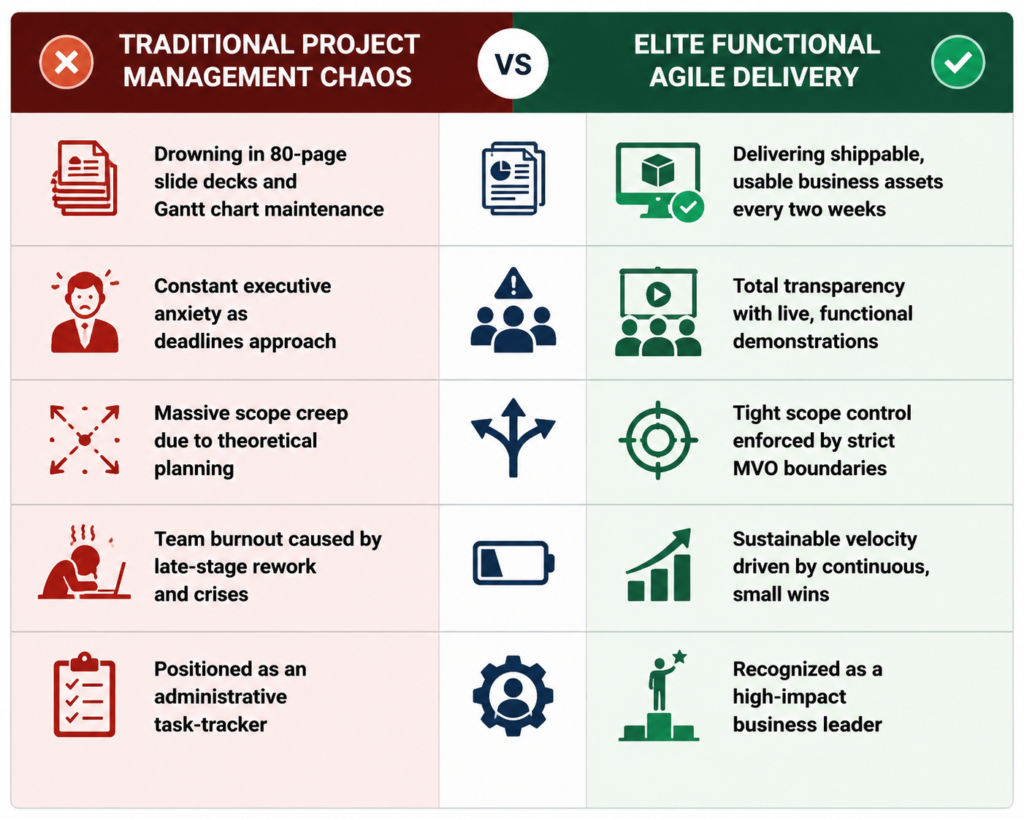
When you master the art of redefining “working software,” your daily professional life transforms completely. You step off the exhausting treadmill of scope creep, status report fabrication, and late-stage project failure.
Life Before vs. Life After Functional Agile Delivery
Accelerating Your Strategic Leadership Value
Organizations do not promote project managers because they can update a schedule or color-code a risk log. They promote project managers who reliably drive business outcomes, protect corporate capital, and eliminate operational uncertainty.
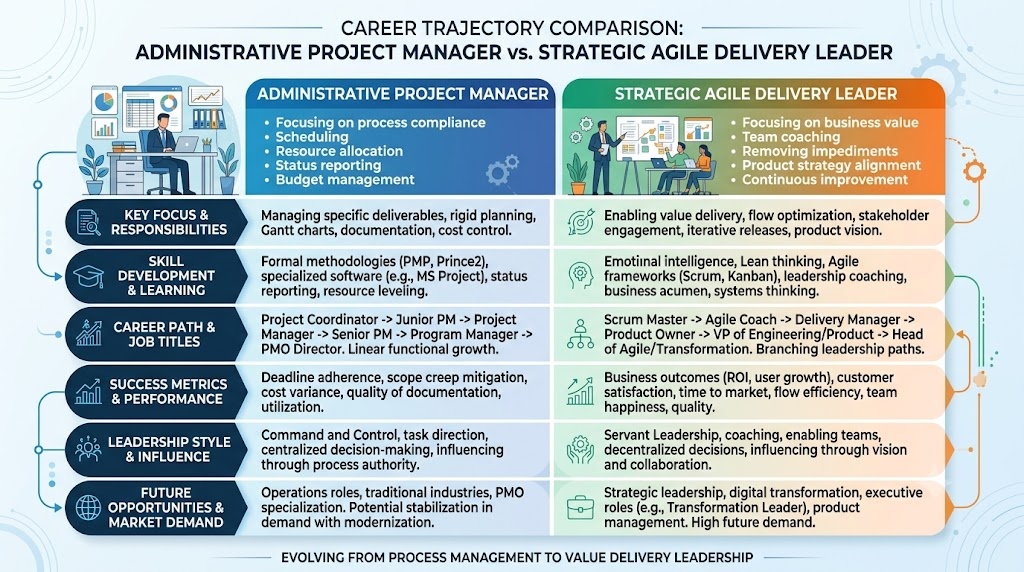
By executing non-IT projects through functional, working increments, you demonstrate senior-level strategic judgment. You prove to executive leadership that you understand business value, risk mitigation, and velocity. This mindset shift is the single fastest catalyst for advancing from a mid-level project coordinator to a Program Director or Chief Operating Officer.
Stop Guessing: Master Elite Project Delivery with Skillsetify
The enterprise landscape no longer rewards theoretical knowledge or passive task management. The future belongs to project leaders who know how to adapt modern Agile principles to drive real-world business results across every department.
Redefining “working software” is just one component of a modern, elite project management strategy. To truly excel, you need the tools, frameworks, and expert guidance that bridge the gap between abstract methodology and boardroom execution.
If you are ready to stop guessing, move up the corporate ladder, and learn project management the right way, reach out to Skillsetify. We do not just teach frameworks: we show you your exact career growth trajectory.