Why Status Meetings Are Failing Your Agile Teams (And How Information Radiators Fix It)
The Executive Vice President of Product sends an urgent, red-flagged message to the delivery channel: Where is the release build, and why is the payment gateway integration still incomplete?
Panic erupts. The developers insist the impediment was flagged three days ago in a sub-thread on Slack. The project manager scrambles through five different spreadsheet tabs, three Jira boards, and an unread email thread trying to find who owned the sign-off. Meanwhile, the client is demanding answers, the engineering team is demoralized by weekend overtime, and executive leadership is questioning the competence of the entire project office.
This high-stress scenario plays out in enterprise environments every single week. The root cause is rarely technical failure or lack of effort. It is communication breakdown hidden behind the illusion of alignment.
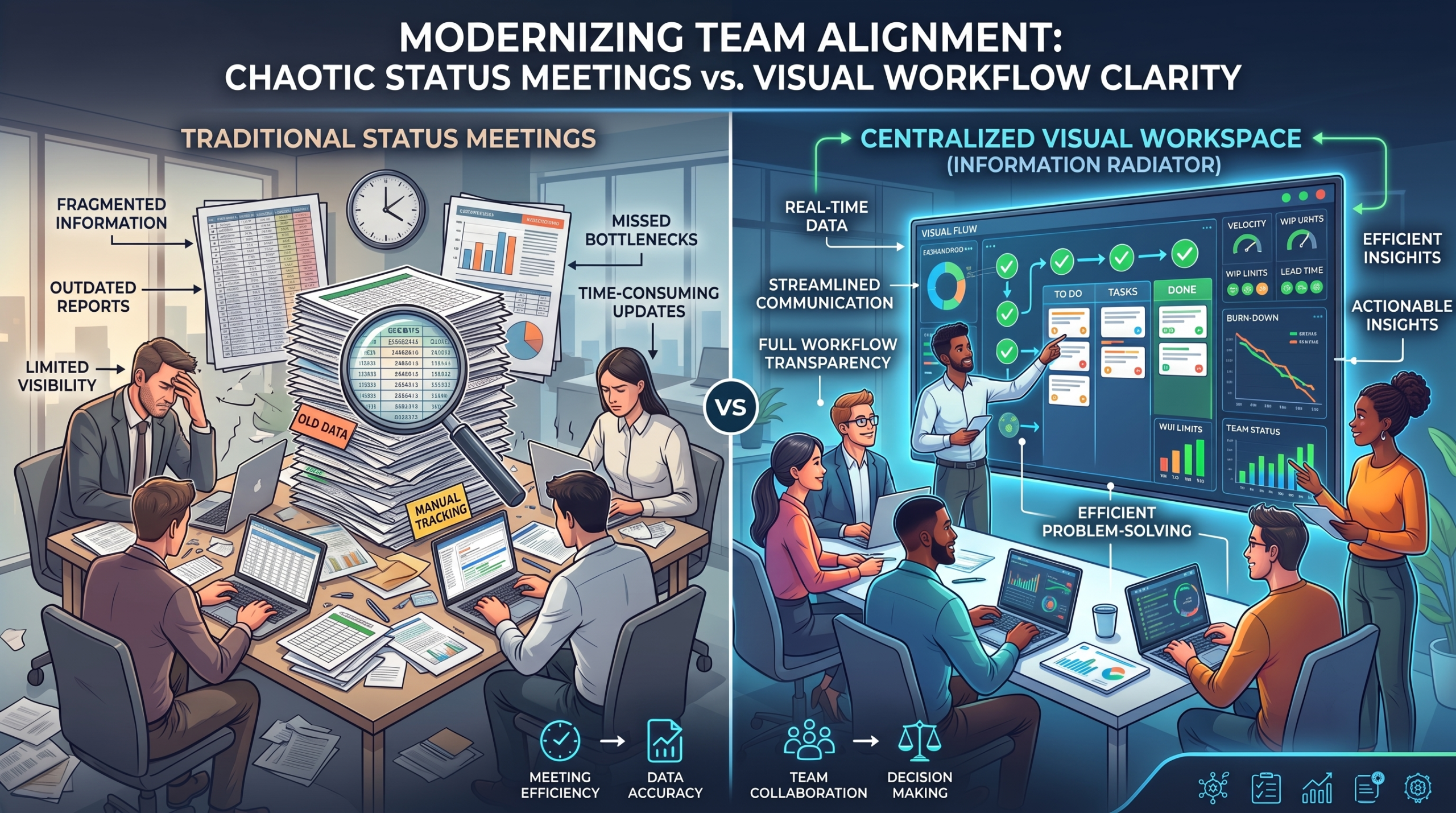
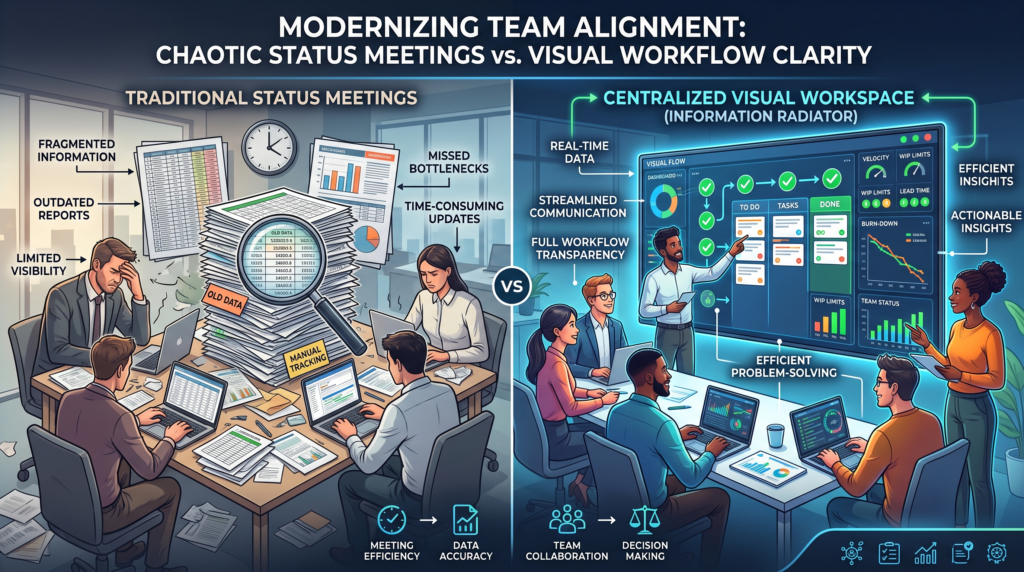
A common corporate myth suggests that more status meetings, longer weekly slide decks, and constant messaging pings equal high transparency. In reality, modern delivery teams do not suffer from a lack of communication tools; they suffer from dark work, where critical project data remains trapped inside siloed software, private chats, or individual heads.
To break this cycle, elite organizations shift away from pull communication, where managers constantly ask for status updates, and embrace passive, real-time visual systems known as Information Radiators and optimized Agile Workspaces.
Decoding Core Agile Roles: The Reality of the Scrum Master and Agile Coach Dynamic
Before constructing a transparent physical or digital workspace, organizations must establish clear accountability. In high-performing environments, leadership roles serve as the backbone for facilitating visual communication and removing workflow impediments.
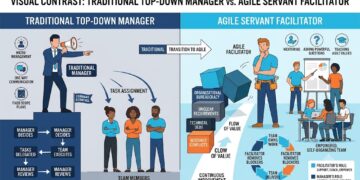
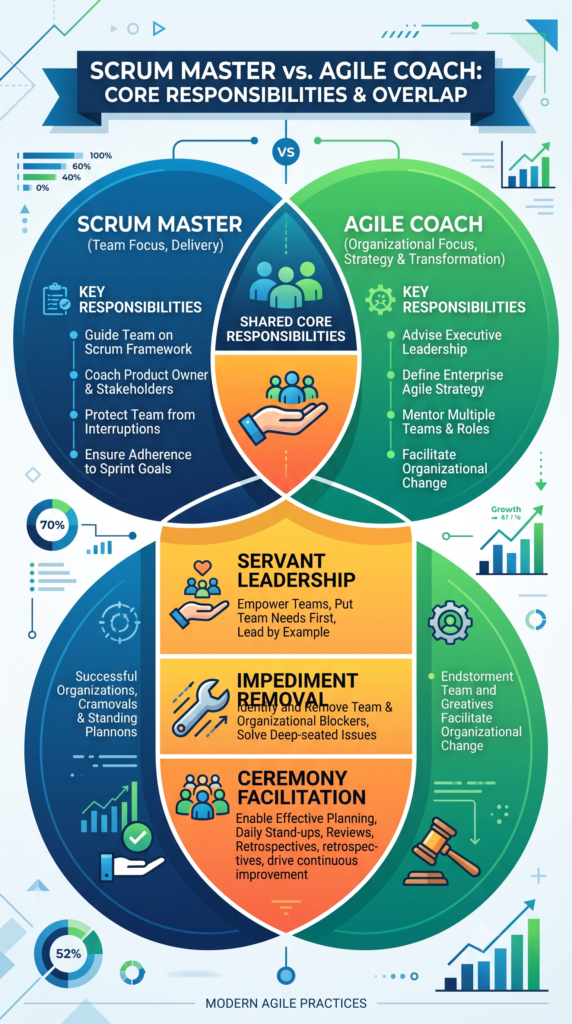
However, corporate job listings and internal organizational charts often use terms like Scrum Master and Agile Coach interchangeably. While both act as servant leaders who prioritize team enablement over top-down management, understanding their nuanced scope is vital for operational design.
| Role Parameter | Scrum Master | Agile Coach |
| Primary Scope | Single team or squad level | Enterprise, multi-team, or department level |
| Operational Focus | Sprint execution, impediment removal, ceremony facilitation | Systemic process design, leadership mentoring, cultural shift |
| Tooling Ownership | Day-to-day visual board management, sprint burndown accuracy | Portfolio-level workspace strategy, metric standardized reporting |
| Engagement Model | Embedded daily team member | Strategic consultant or change agent across business units |
In practical execution, an experienced Scrum Master frequently operates as an Agile Coach for their team, while an Agile Coach must retain hands-on Scrum Master skills to clear ground-level blockers. Regardless of the exact job title on paper, these leaders share three mandatory responsibilities:
Servant Leadership: Putting the team’s operational needs first, insulating developers from external executive pressure while ensuring accountability.
Impediment Removal: Identifying systemic blockers, whether administrative delays, pending third-party approvals, or broken continuous integration pipelines, and clearing them swiftly.
Ceremony Facilitation: Ensuring key events such as Daily Stand-ups, Sprint Planning, Sprint Reviews, and Retrospectives remain focused, actionable, and tied directly to visible data.
When these roles function correctly, they do not manage people through micro-tasking. Instead, they manage the workspace so the work can manage itself.
Information Radiators: Turning Dark Data into Visual Flow
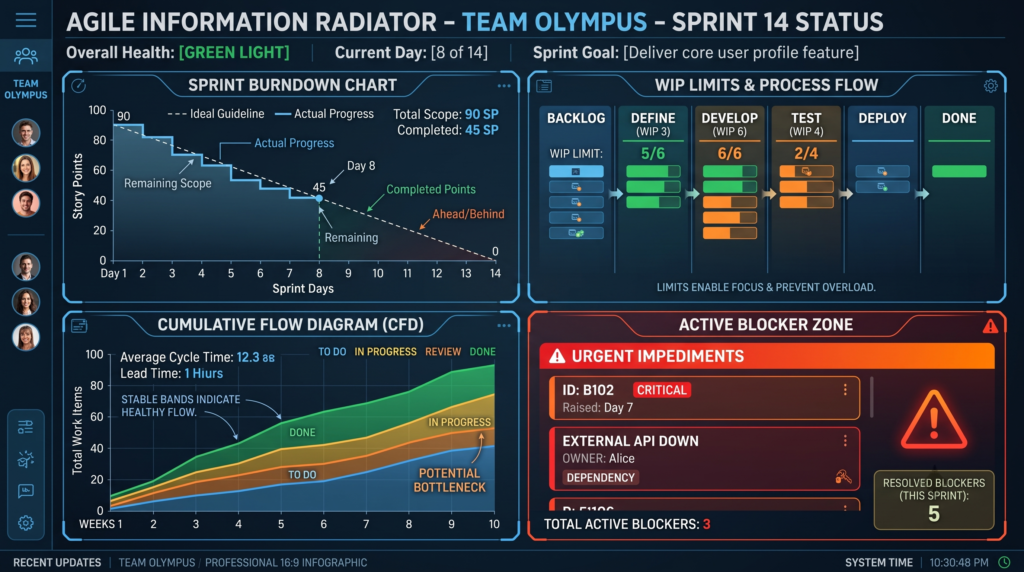
Coined by Agile pioneer Alistair Cockburn, an Information Radiator is a display placed in a prominent, highly visible space that continuously broadcasts essential project metrics to passersby without requiring them to ask a single question.
Unlike an information refrigerator, where status reports are hidden deep inside folder structures or password-protected files, an information radiator forces transparency. Anyone walking past a physical wallboard or opening a shared digital workspace team monitor immediately grasps the current health of the release.
Low-Tech vs. High-Tech Radiators
Elite project teams leverage a mix of physical and digital visual tools depending on team distribution:
Low-Tech, High-Touch Radiators (Physical Workspaces):
Whiteboards with Color-Coded Sticky Notes: Highly tactile boards positioned in central high-traffic office corridors. Different colors represent distinct work item types, user stories, technical debt, or emergency bugs.
Physical Burndown Charts: Hand-drawn daily trendlines tracking remaining work against time. Physical interaction fosters strong team ownership as developers physically move cards across columns.
High-Tech, Continuous Radiators (Digital Workspaces):
Live Monitor Dashboards: Dedicated floor monitors displaying real-time Jira, Azure DevOps, or Confluence gadgets.
Automated Cumulative Flow Diagrams (CFD): Visual graphs illustrating work-in-progress (WIP) distribution across stages, immediately highlighting operational bottlenecks.
CI/CD Build Light Indicators: Visual status lights that glow green for successful deployments or red when automated build pipelines fail.
Key Metrics Every Radiator Must Display
To avoid visual clutter and maintain high signal-to-noise ratios, an effective Information Radiator should highlight five core elements:
Sprint Goal Statement: The single strategic objective the team committed to achieving.
Work-in-Progress (WIP) Limits: Explicit caps on how many tasks can sit in active development or review simultaneously.
Burndown & Burnup Charts: Real-time curves tracking completed story points versus total scope.
Visible Blocker Zone: A dedicated, highlighted section reserved for flagged impediments requiring immediate leadership intervention.
Cycle Time & Throughput Trends: Historical performance data showing how fast work moves from start to completion.
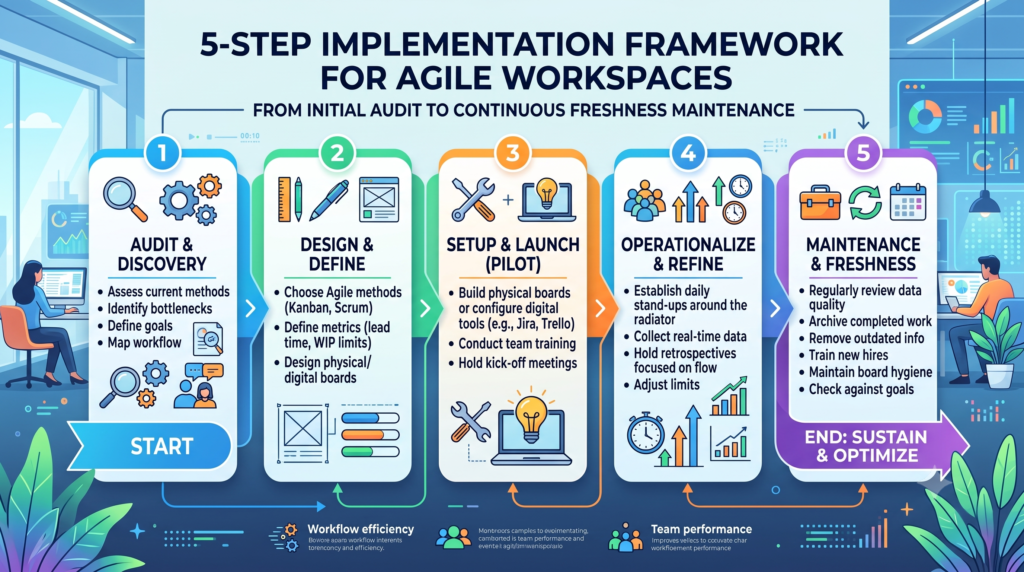
The 5-Step Implementation Framework for Agile Workspaces
Project managers and team leads can implement this step-by-step framework to transition their teams from communication chaos to automated visual transparency within 15 days.
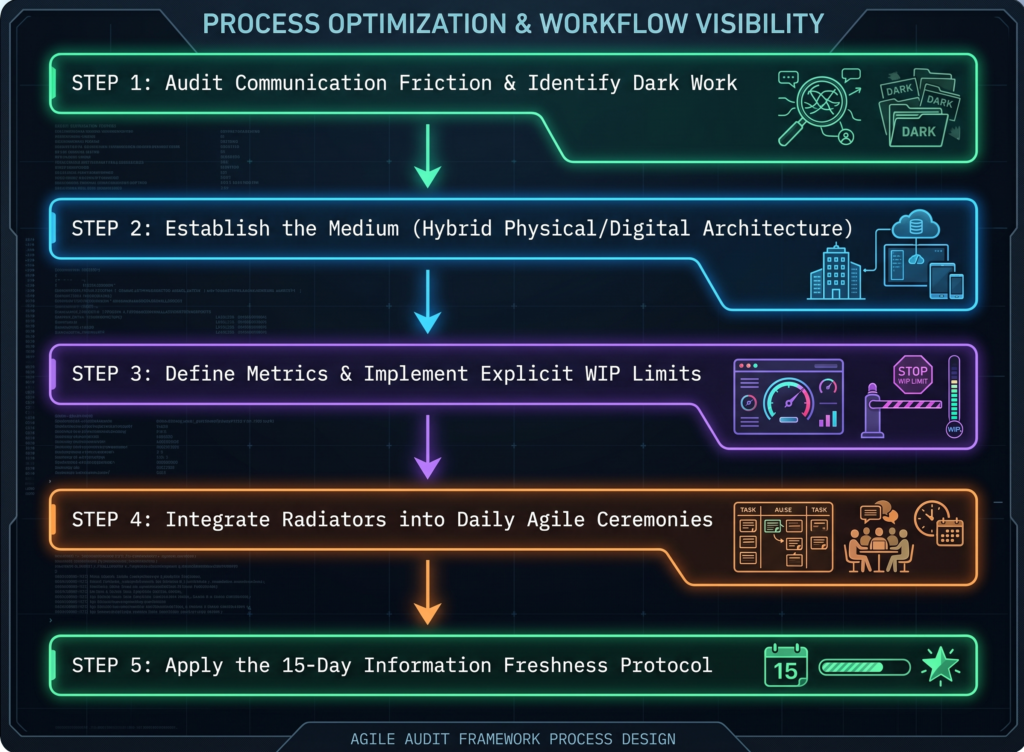
Step 1: Audit Communication Friction & Identify Dark Work
Conduct a quick assessment of your current team communication patterns. Count how many status updates are requested via email or chat each week. Identify tasks currently being worked on that do not appear on any shared board. Bring this dark work out into the open.
Step 2: Establish the Medium (Hybrid Architecture)
For co-located teams, construct a physical wallboard in a high-traffic zone. For remote or hybrid teams, configure a dedicated digital workspace board using tools like Jira, Miro, or Trello. Ensure every team member has edit access, while stakeholders are given view-only access to prevent unauthorized scope modifications.
Step 3: Define Metrics & Implement Explicit WIP Limits
Do not overload the workspace with unnecessary data points. Select three to four critical metrics: Sprint Goal, Burndown Chart, Blocker Board, and WIP Limits. Set strict caps on active column tasks to prevent multi-tasking overload and expose workflow drag.
Step 4: Integrate Radiators into Daily Agile Ceremonies
Anchor all daily stand-ups and sprint reviews around the Information Radiator. During the 15-minute daily stand-up, team members should walk the board from right (closest to Done) to left (To Do), focusing discussions on moving active items across completion gates and addressing flagged blockers.
Step 5: Apply the 15-Day Information Freshness Protocol
An information radiator that displays outdated data is worse than no board at all; it becomes ignored background noise. Establish clear team norms: cards must be updated in real time as work shifts, and the Scrum Master or team lead must audit board accuracy daily.
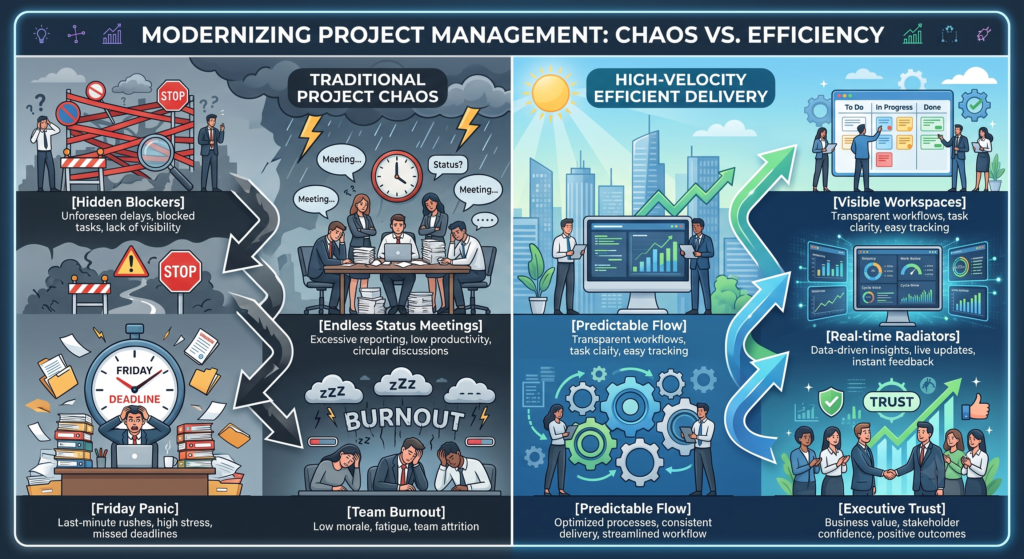
Moving from Project Chaos to High-Velocity Executive Delivery
When an organization successfully implements clear agile leadership roles, structured ceremonies, and real-time Information Radiators, the workplace environment undergoes a radical transformation.
The chronic stress of surprise delivery failures vanishes. Executive status meetings drop by up to 70 percent because leadership can evaluate project progress by glancing at a live dashboard or passing an information radiator wall. Teams stop wasting hours compiling manual weekly PowerPoint reports and redirect that energy into building high-value product features.
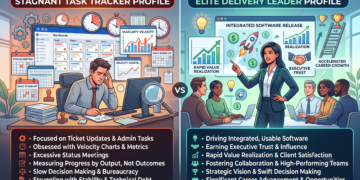
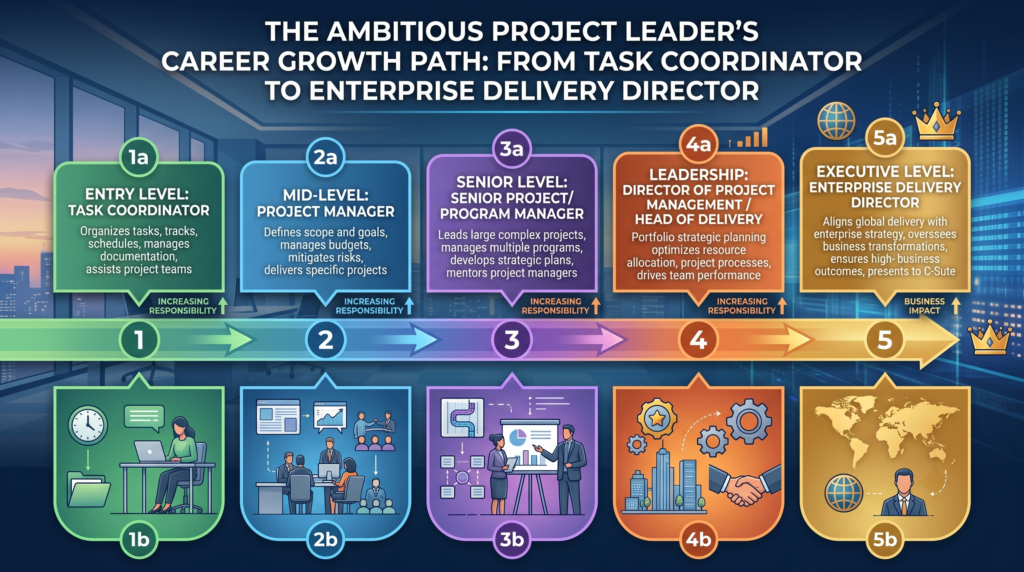
For project managers, Scrum Masters, and delivery leads, mastering visual workspace architecture marks the transition from an administrative task-tracker to a high-impact strategic leader. Executive teams do not promote project managers simply because they update spreadsheets on time; they promote leaders who design reliable systems that eliminate risk, align cross-functional teams, and guarantee predictable business outcomes.
Master the Art of High-Visibility Agile Leadership
Modern project management demands more than theoretical framework knowledge. It requires practical expertise in building visual ecosystems that drive transparency, protect team focus, and deliver consistent performance under tight deadlines. By replacing reactive status calls with continuous Information Radiators and clear Agile roles, you turn delivery chaos into predictable operational success.
If you are ready to stop guessing, move up the corporate ladder, and learn project management the right way, reach out to Skillsetify. We do not just teach frameworks: we show you your exact career growth trajectory.