Why "Just Good Enough" Planning in the Agile Onion Saves Multimillion-Dollar Initiatives
Forty-eight hours before the scheduled global rollout of a flagship enterprise payment processing engine, the primary staging environment completely crashed. The culprit was not an unexpected cyberattack or an external cloud outage. It was a self-inflicted disaster.
During the final development sprint, a well-meaning engineering squad decided to add an unrequested, highly complex custom theme engine and an automated predictive analytics microservice. Their logic was simple: they wanted to surprise executive leadership with extra polish. The actual result? A catastrophic cascade of memory leaks, database connection pool exhaustion, a delayed launch of four weeks, $350,000 in emergency overtime and server costs, and severely eroded trust across the executive team.
This scenario plays out in enterprise environments every day. Corporate culture often perpetuates a dangerous myth: delighting stakeholders requires delivering unrequested, flashy extras. In modern project management, this phenomenon is known as gold plating, and it is one of the most toxic forms of project waste.
When teams deliver features, architectural complexities, or design flourishes that were never requested or prioritized, they do not add value: they introduce uncalculated risks, inflate maintenance costs, and delay speed-to-market. To combat this, elite project leaders leverage “just good enough” planning through the framework of the Agile Planning Onion.
The Anatomy of Gold Plating Within the Agile Planning Onion
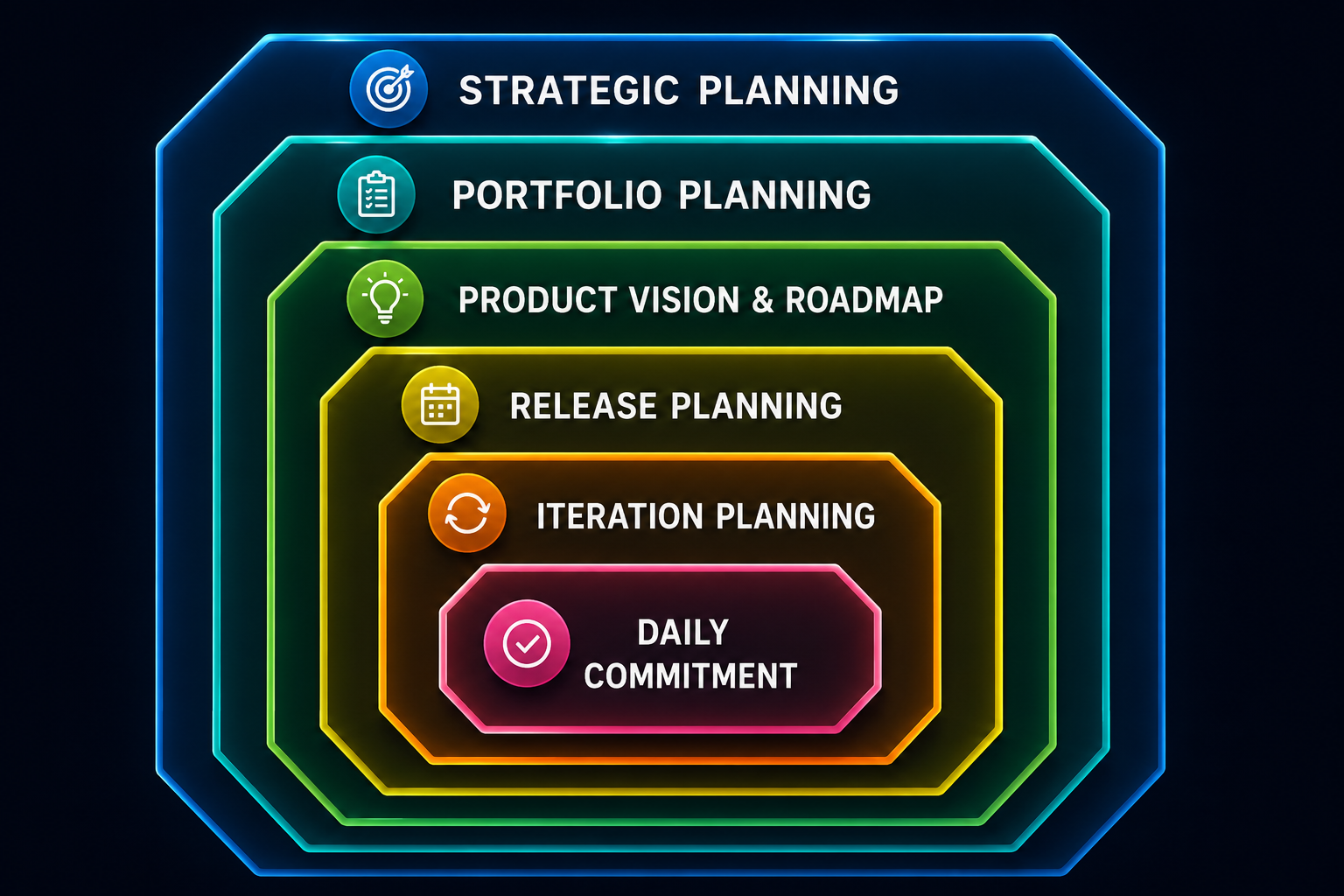
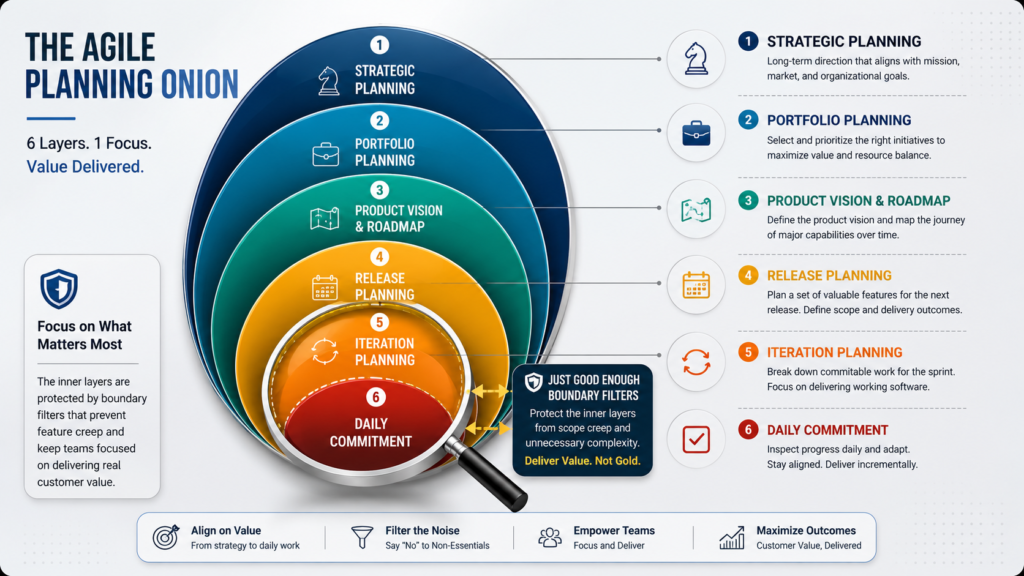
To permanently dismantle gold-plating behaviors, a Project Manager must first understand where planning decisions break down. The Agile Planning Onion illustrates the multi-layered levels of strategic alignment required to deliver successful products. Planning occurs progressively across distinct layers:
Strategic Planning: High-level organizational goals and long-term business objectives.
Portfolio Planning: Grouping product lines, vertical initiatives, and capital allocation.
Product Vision & Roadmap: Long-range feature trajectory, market position, and major release milestones.
Release Planning: Defining explicit increments of functional value delivered to users over a specified quarter or horizon.
Iteration (Sprint) Planning: Establishing the precise user stories and technical tasks committed for the next one to four weeks.
Daily Commitment (Standup): Micro-aligning daily execution against immediate sprint goals.
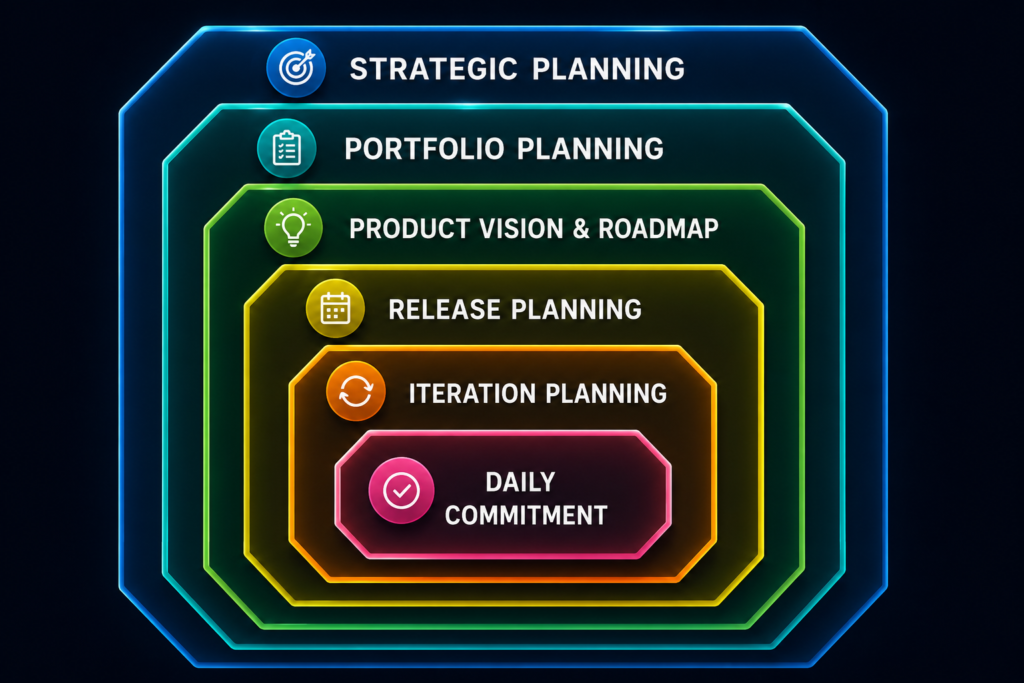
Gold plating rarely originates at the Strategic or Portfolio layers. Instead, it festers at the Release and Iteration layers. When higher-level planning lacks clarity, development teams operate in an ambiguity vacuum. Engineers, striving for professional excellence, fill that vacuum by over-engineering solutions, adding speculative code, or polishing UI elements beyond business necessity.
What Drives Gold Plating in Corporate Teams?
Developer Perfectionism: Passionate technical teams naturally want to build the most robust, elegant, and future-proof system possible, often prioritizing technical elegance over immediate business utility.
Ambiguous Acceptance Criteria: User stories that lack rigid, testable boundaries leave room for subjective interpretation, encouraging teams to build beyond the scope.
Lack of Direct Customer Feedback: When teams are isolated from real user interactions, they make false assumptions about what the customer values.
Fear of Misinterpretation: Teams mistakenly believe that delivering only what was asked will make them appear lazy or lacking initiative.
The "Just Good Enough" Philosophy: Simplicity as the Highest Sophistication
In high-velocity Agile delivery, “just good enough” planning is not an endorsement of sloppy work, cutting corners, or accepting low quality. Rather, it is the deliberate practice of delivering exact requested value without wasting resources on speculative features.
It is rooted directly in the Agile Manifesto principle: Simplicity—the art of maximizing the amount of work not done—is essential.
By embracing “just good enough” planning across the Agile Planning Onion, Project Managers enforce strict scope discipline:
Elimination of Technical Waste: Every line of unrequested code is a line of code that must be tested, documented, maintained, and debugged for the next decade.
Accelerated Time-to-Market: Shipping bare-bones functional utility (often referred to as a Walking Skeleton or Minimum Viable Product) allows real users to validate assumptions faster.
Predictable Financial Performance: Keeping scope tightly bounded ensures project costs remain strictly aligned with the approved business case and capital budget calculations.
Key Takeaway: A master project manager does not measure success by how much extra functionality was squeezed into a release. Success is measured by how precisely the project delivered the target outcome using the minimum required investment of time, capital, and labor.
The PM's Step-by-Step Implementation Framework to Eliminate Gold Plating
To transition your team from over-engineered chaos to lean, highly predictable execution, implement this tactical five-step framework immediately within your current delivery cycle.
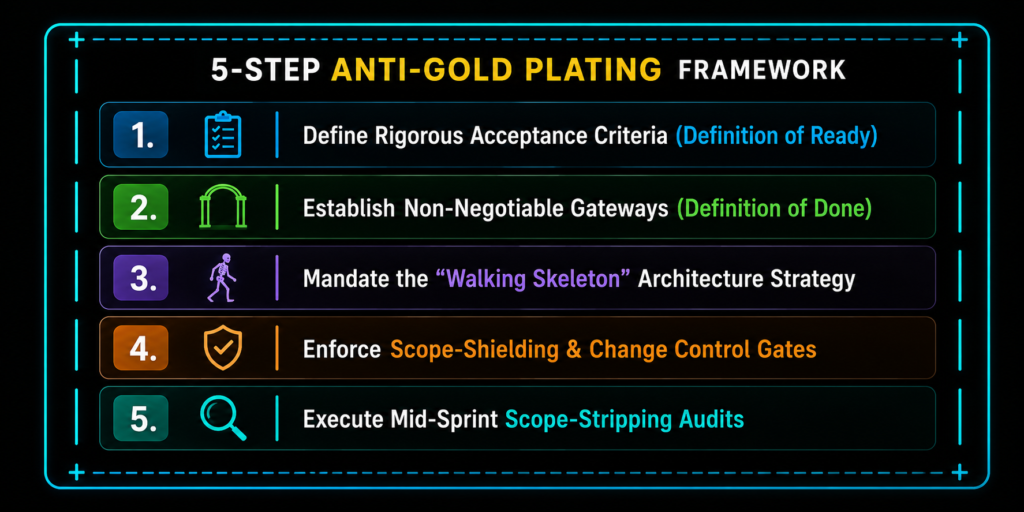
Step 1: Define Rigorous Acceptance Criteria via the Definition of Ready (DoR)
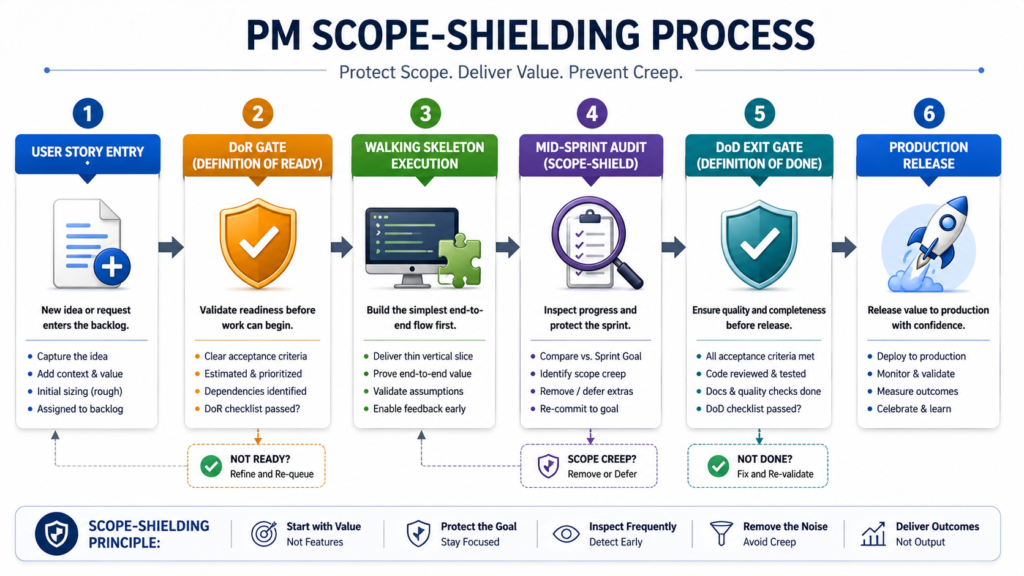
Before any item enters a sprint, it must meet a strict Definition of Ready. Never allow vague user stories into execution. Every story must feature explicit, testable acceptance criteria using the Given-When-Then format:
Example: “Given an authenticated user on the checkout screen, when they click ‘Pay with Credit Card’, then the system processes the payment and returns a transaction confirmation within 2.0 seconds.”
Anti-Gold Plating Boundary: Explicitly state what is out of scope for the story (e.g., “Out of Scope: Saving multiple credit card profiles, custom receipt animations, or third-party reward points integration”).
Step 2: Establish Non-Negotiable Gateways in the Definition of Done (DoD)
While the Definition of Ready controls entry, the Definition of Done (DoD) controls exit. Ensure your team’s DoD evaluates strict adherence to specified criteria rather than unrequested additions:
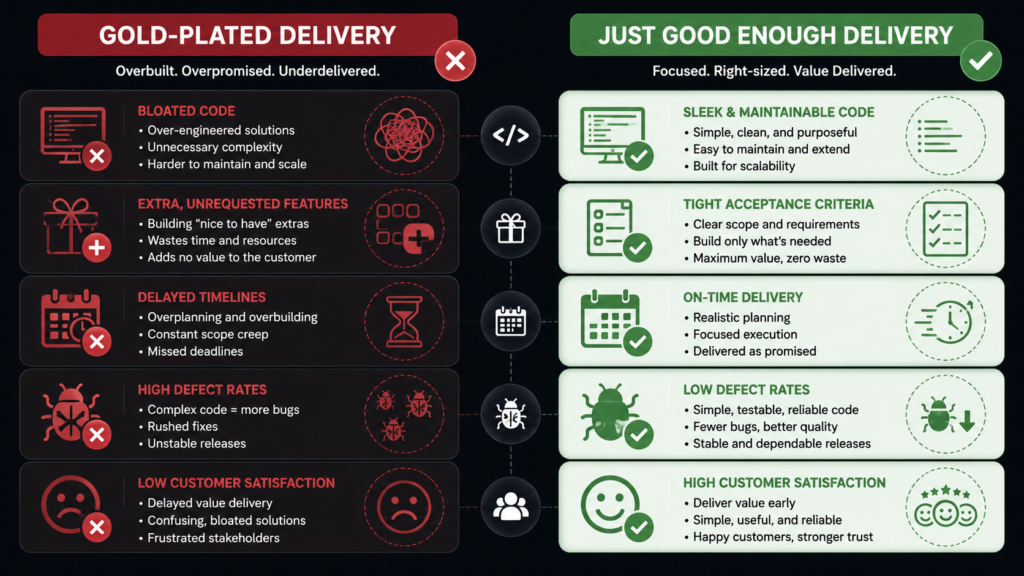
| Feature Dimension | Gold-Plated (Wasteful) Execution | “Just Good Enough” (Lean) Execution |
| User Interface | Custom styling, complex animations, dark mode options unrequested by Product. | Strict compliance with established corporate design system guidelines. |
| Database Architecture | Designing schema to support hypothetical features 3 years away. | Schema designed specifically for current user story requirements. |
| API Integration | Building a full GraphQL endpoint with custom query capabilities. | Building a simple, secure REST endpoint fulfilling the explicit contract. |
| Testing Scope | 100% code coverage including edge-case scenarios that never occur in production. | Robust automated unit and integration tests covering explicit user paths. |
Step 3: Mandate the "Walking Skeleton" Architecture Strategy
When initiating new products or major release increments, force the team to build a Walking Skeleton first. This is a bare-bones implementation of the end-to-end user journey containing only the absolute foundational architecture required to run. Do not allow UI polish, advanced validation logic, or secondary features until the core functional spine walks successfully across the environment.
Step 4: Enforce Scope-Shielding Mechanisms
Once a sprint backlog is locked during Iteration Planning, no new features, enhancements, or “quick additions” may be added, whether they come from external stakeholders or internal developers. If an engineer discovers an “awesome idea” mid-sprint:
Log the idea as a separate user story candidate in the central Product Backlog.
Require the Product Owner to review and rank it against business priorities for future releases.
Keep the current sprint focused entirely on committed scope.
Step 5: Execute Mid-Sprint Scope-Stripping Audits
During mid-sprint check-ins or backlog refinement sessions, actively inspect work-in-progress items for scope bloat. Ask your engineering team three direct questions:
Is this technical design solving an immediate acceptance criterion, or a future hypothetical scenario?
Did the Product Owner explicitly request this additional logic?
Can we remove this component and still completely satisfy the user story?
If the answer reveals gold-plating, strip the extra work out immediately and return the story to its leanest functional form.
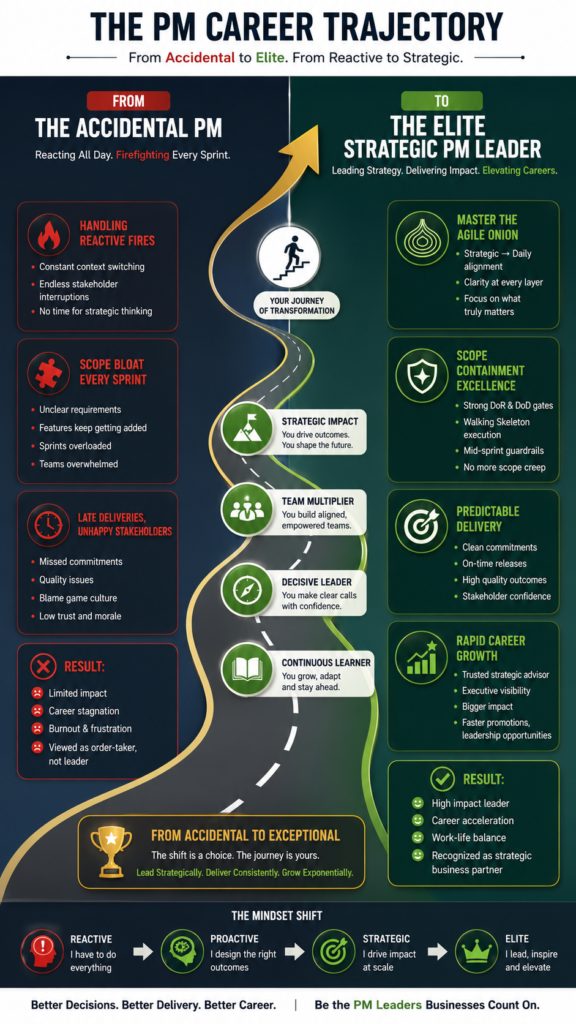
The Professional Transformation: From Firefighting Chaos to Strategic Mastery
When you master the art of resisting gold plating and enforcing “just good enough” planning across the Agile Onion, your professional reality shifts dramatically.
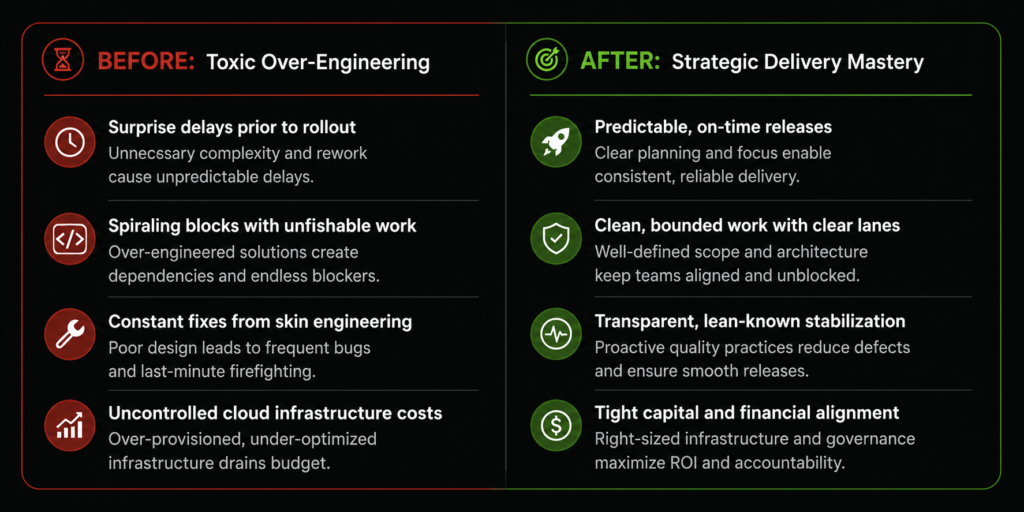
Instead of drowning in emergency patching, midnight release failures, and toxic crunch cycles, you establish a cadence of predictable, elite delivery. Senior executives and stakeholders do not promote project managers who deliver flashy, late, bug-ridden projects with extra unrequested bells and whistles. They elevate leaders who consistently deliver targeted business outcomes on time, within budget, and with rock-solid reliability.
Learning project management the right way means understanding that real leadership is not about managing task lists or nodding yes to every clever engineering idea. It is about acting as a disciplined guardian of scope, budget, and business strategic value.
Master the Art of Elite Execution with Skillsetify
Navigating the complexities of modern enterprise environments requires more than basic certification memorization: it requires battle-tested, practical leadership skills. Knowing how to resist gold plating, manage complex stakeholder dynamics, and streamline execution using the Agile Planning Onion is what sets industry leaders apart from average coordinators.
If you are ready to stop guessing, move up the corporate ladder, and learn project management the right way, reach out to Skillsetify. We do not just teach frameworks: we show you your exact career growth trajectory.