Why Your Go-Lives Fail and How to Fix Your Planning Onion
It is Friday evening at 11:45 PM. Your enterprise software release was scheduled for midnight. On paper, every iteration velocity chart showed green checkmarks. Your engineering teams completed their assigned user stories, the burn-down charts looked immaculate, and management was promised a flawless zero-downtime deployment.
Then reality hit.
The deployment script halted due to mismatched database environment variables. The security team flagged three unpatched API vulnerabilities that were never vetted during active development. Compliance stopped the push because data retention audit logs were missing. As the clock ticks past midnight, your team descends into emergency War Room calls, scrambling through emergency rollbacks while executives demand answers.
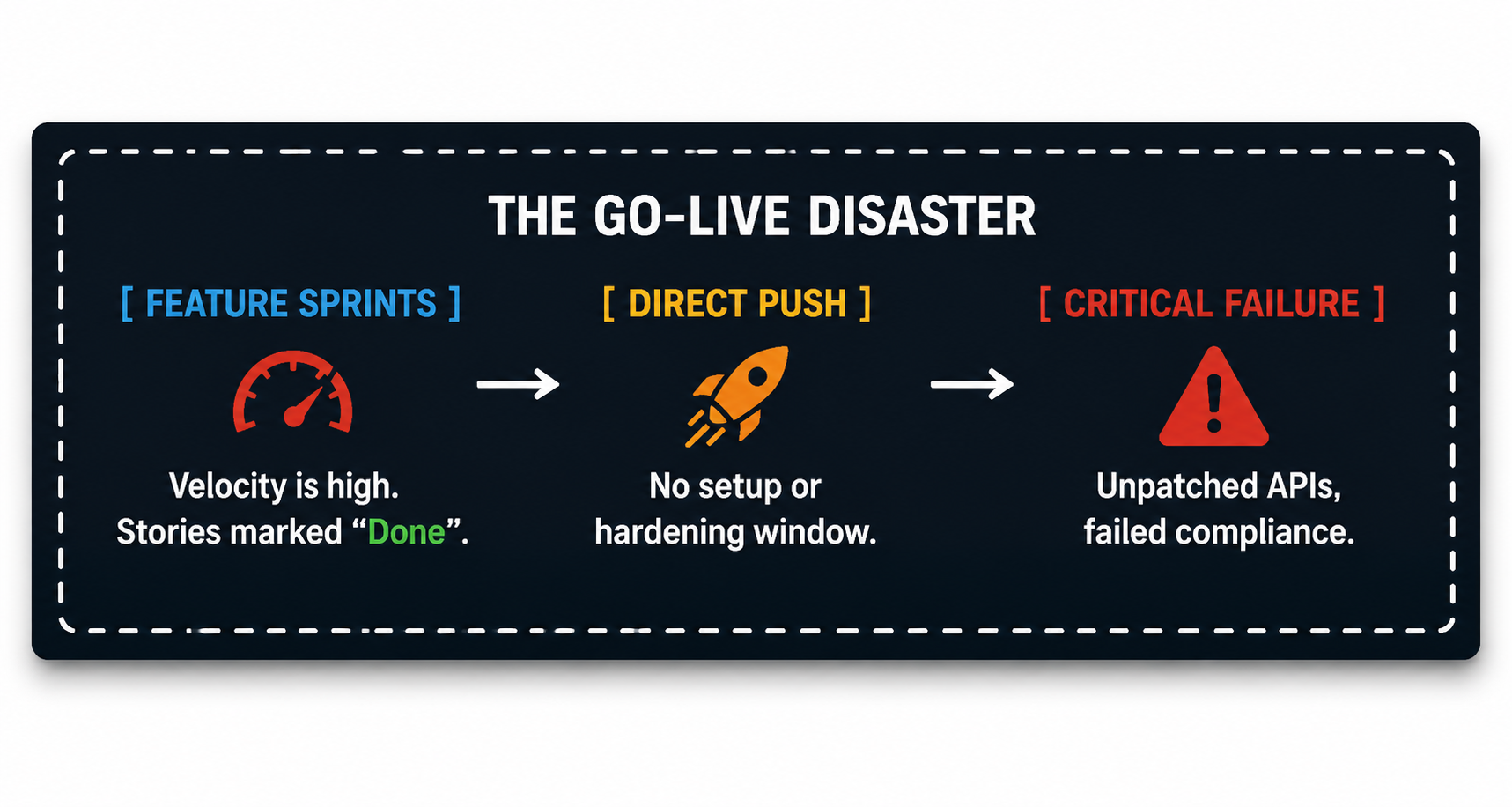
How did a project that followed Agile practices so meticulously end up in complete operational chaos?
The Myth of Modern Agile Development
The root cause lies in a pervasive corporate myth: the belief that pure Agile means jumping directly into feature development on Day One and pushing straight to production at the end of every sprint without preparation or release stabilization.
Dogmatic purists often claim that setup phases and deployment polishing windows are non-Agile anti-patterns. They insist that every iteration must result in a production-ready asset without exception. In complex enterprise environments with legacy infrastructure, strict regulatory frameworks, and multi-system integrations, this approach creates severe operational risk.
Real-world enterprise Agile requires mastering The Agile Planning Onion. Specifically, it demands a clear operational distinction between initial setup windows, active execution sprints, and end-of-cycle release hardening windows.

To build a predictable delivery pipeline, a Project Manager must understand where release planning sits within the broader organizational framework. Agile planning operates in concentric layers, known as the Agile Planning Onion.
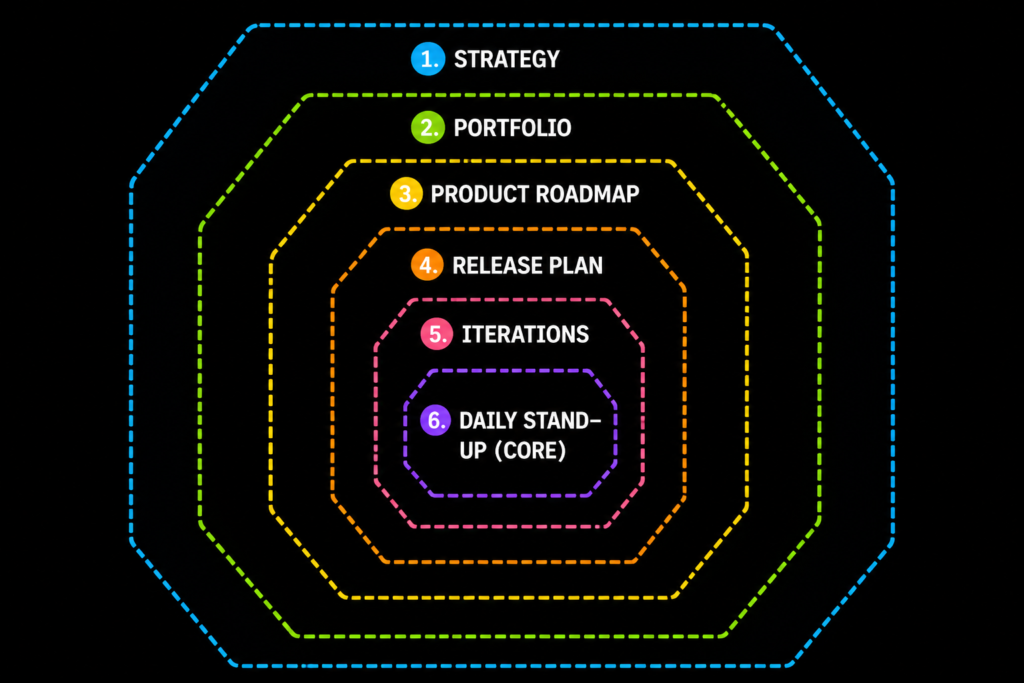
Each layer represents a different horizon of time and specificity:
Strategy and Portfolio: Define long-term enterprise goals, resource allocation, and market positioning.
Product Roadmap: Maps high-level capabilities, epics, and product evolution across quarterly or annual milestones.
Release Plan: Groups sets of functional increments into cohesive, market-ready deployments.
Iteration (Sprint) Plan: Focuses on tactical execution over a fixed 1-to-4-week timebox to deliver specific backlog items.
Daily Standup: Evaluates immediate progress, daily commitments, and emerging operational blockers.
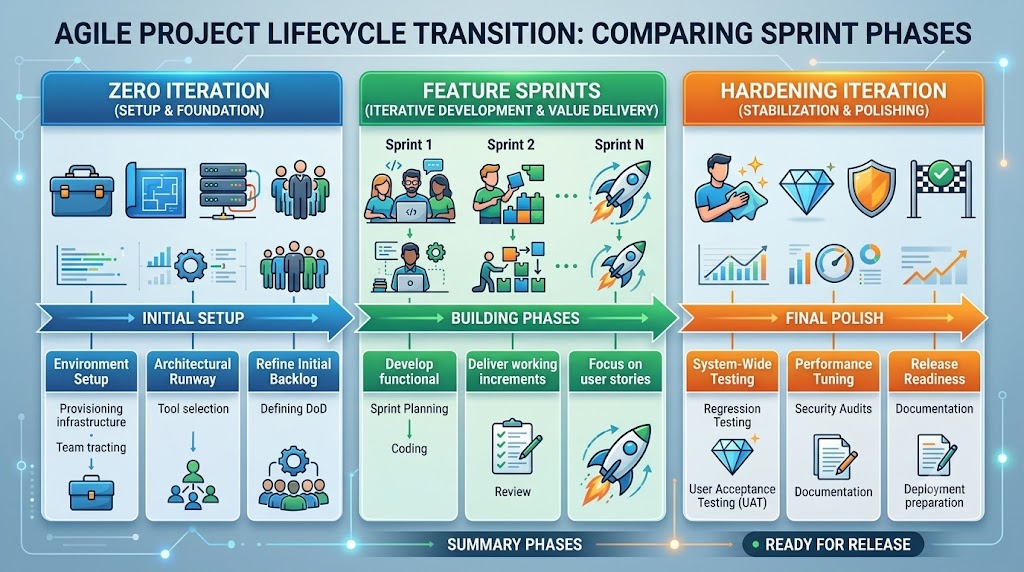
Failure occurs when organizations attempt to connect Product Roadmaps directly to standard Iteration Sprints without structuring the Release Plan. Within the Release Plan layer, you must differentiate three distinct types of sprint windows: Zero Iterations, Feature Sprints, and Hardening Iterations.
Deconstructing Zero Iterations (Sprint 0 / Setup Windows)
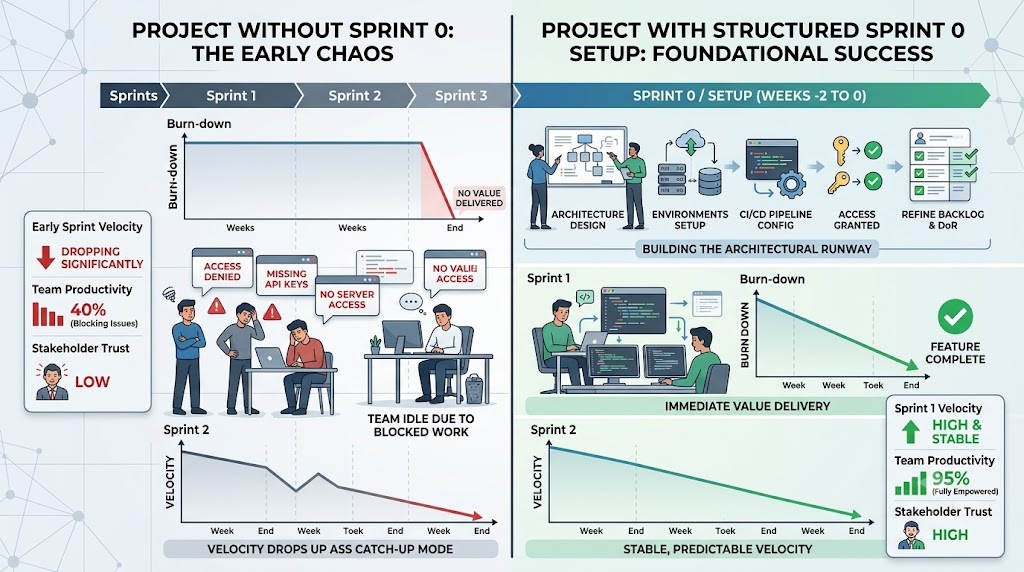
A Zero Iteration (often called Sprint 0 or a Discovery Sprint) is a dedicated preparation window that occurs before feature development begins. Its primary mandate is to build the architectural runway and operational infrastructure required for sustainable engineering velocity.
Key Rule: A Zero Iteration does not deliver customer-facing functional features. Instead, it establishes the foundation that prevents future technical debt and operational delays.
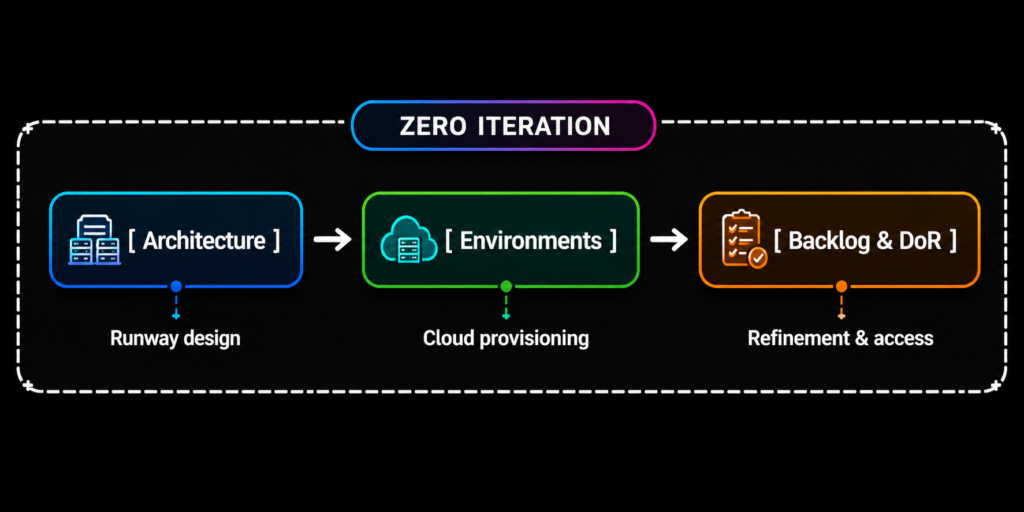
Core Deliverables of a Zero Iteration:
Infrastructure Provisioning: Spinning up development, staging, testing, and sandbox cloud environments.
CI/CD Pipeline Construction: Configuring automated build systems, automated testing harnesses, and code repositories.
Tooling and Access Governance: Securing licenses, database accesses, and security clearance for all engineering staff.
Definition of Ready (DoR) Alignment: Ensuring initial product backlog items are refined, estimated, and fully scoped with actionable acceptance criteria.
Architectural Runway Design: Establishing baseline system designs, schema structures, and API protocols.
Without a structured Zero Iteration, the early feature sprints waste significant time fighting environment provisioning issues, access delays, and conflicting architectural assumptions.
Deconstructing Hardening Iterations (Cutover & Compliance Windows)
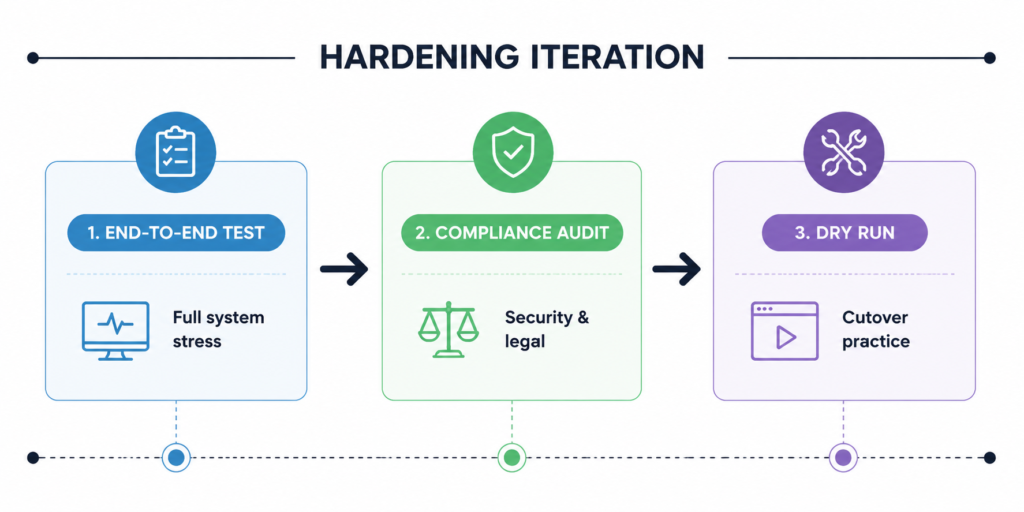
At the opposite end of the release window sits the Hardening Iteration. As a product increment nears market release, feature development pauses so the team can focus on system-wide stability, security validation, and deployment cutover execution.
While individual feature iterations verify user stories against local acceptance criteria, they rarely validate how full multi-sprint packages behave under peak stress, complex security threats, or live database cutovers.
Core Deliverables of a Hardening Iteration:
End-to-End Regression & Performance Testing: Validating system throughput, latency, and system response under heavy load.
Penetration & Security Compliance Audits: Conducting vulnerability scans, data privacy reviews, and regulatory checks.
Cross-System Integration Verification: Testing integrations across external vendor endpoints and legacy corporate databases.
Cutover Dry Runs & Migration Scripts: Practicing live database schema updates, rollback procedures, and environment cutovers in staging.
Final Definition of Done (DoD) Sign-Off: Securing formal sign-offs from operational support, security, legal, and executive oversight teams.
Attempting to perform intensive hardening tasks during standard feature sprints degrades team velocity, distorts iteration metrics, and introduces high risk into production deployments.
Comparing Sprint Types
To manage these phases effectively, project managers must structure team commitments based on the specific sprint type:
| Attribute | Zero Iteration (Setup) | Feature Iteration (Execution) | Hardening Iteration (Release) |
| Primary Goal | Establish foundation and readiness | Deliver working functional increments | Validate stability, compliance, and cutover |
| User Story Source | Technical enablers and infrastructure tasks | Prioritized business backlog items | Bug fixes, security enablers, and release tasks |
| Customer Value | Indirect (risk reduction) | Direct (working capabilities) | Indirect (quality and security assurance) |
| Key Metrics | Environment readiness, team onboarding | Velocity, sprint burndown, defect rate | Test pass rate, vulnerability count, cutover time |
| Primary Stakeholders | System architects, DevOps, PMs | Product owners, business end-users | Compliance, IT operations, security officers |
Step-by-Step PM Implementation Framework
Here is an actionable implementation framework to integrate these windows into your release planning cycle without violating Agile principles.
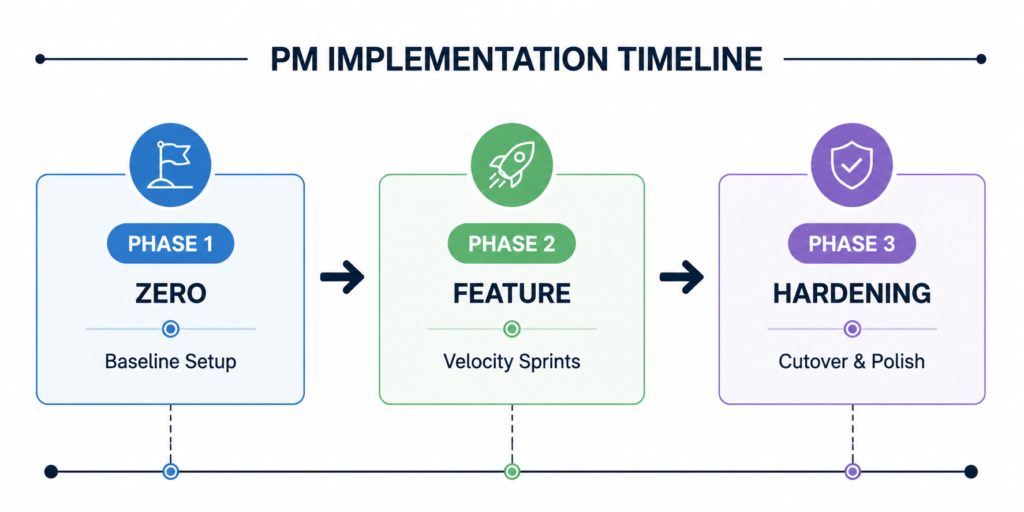
Phase 1: Establish the Zero Iteration Baseline
Define Gate Criteria: Establish clear entry requirements. Do not start Sprint 1 until cloud environments are active, access tokens are granted, and basic pipeline integrations pass smoke tests.
Conduct Backlog Refinement: Ensure the initial product backlog contains at least two sprints worth of user stories meeting the Definition of Ready (DoR).
Validate Infrastructure Enablers: Run a complete end-to-end code deployment test with a minimal code baseline to verify pipeline automation before feature development begins.
Phase 2: Execute Velocity-Driven Feature Iterations
Maintain Scope Discipline: Protect feature sprints from non-essential technical work that belongs in release setup or hardening.
Enforce Individual Definition of Done: Every user story completed during feature iterations must meet standard quality checks, unit tests, and local acceptance criteria.
Track Technical Debt: Document non-critical bugs, edge-case fixes, and minor integration adjustments in the release backlog for attention during the upcoming hardening window.
Phase 3: Launch the Hardening and Cutover Window
Enforce Feature Freeze: Implement a strict code freeze on new functional development. The code baseline is locked to allow full focus on quality assurance and delivery.
Execute the Cutover Playbook: Conduct at least one full dry-run of the production release script in a production-equivalent staging environment.
Secure Compliance Sign-Off: Review the final release bundle against organizational risk, security, and legal standards to secure go-live authorization.
When you structure your release management around the Agile Planning Onion, your daily operational reality transforms completely.
Life After Correct Implementation
Instead of late-night deployment failures, emergency rollbacks, and stressful executive escalations, your releases become predictable, scheduled events. Go-live weekends turn quiet and controlled because deployment scripts, security audits, and data migrations were thoroughly vetted weeks in advance during dedicated hardening windows.
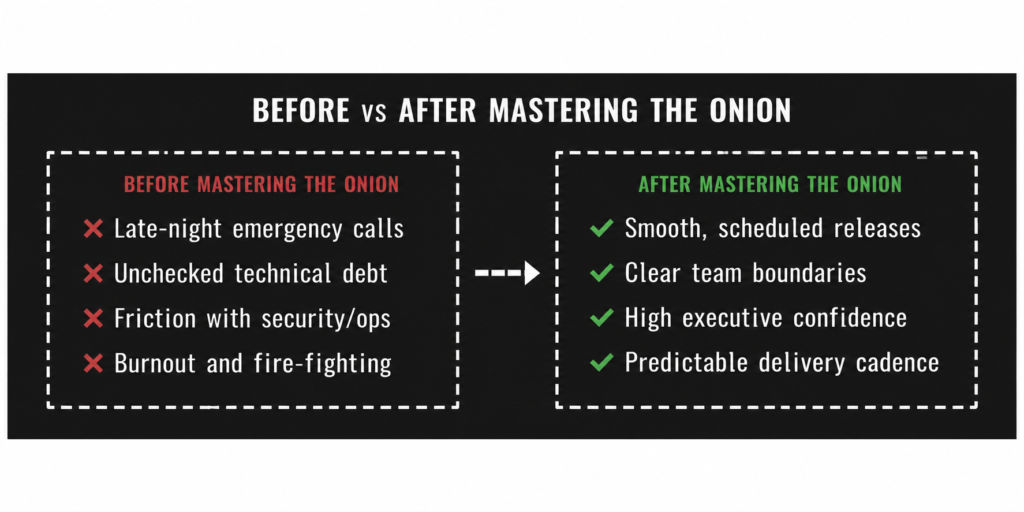
Your engineering teams maintain high velocity during feature iterations because they aren’t forced to juggle complex infrastructure setup alongside feature coding. System architects, IT operations, and compliance officers shift from reactive blockers to collaborative partners because their technical requirements are integrated directly into the project lifecycle.
Accelerating Your Career Trajectory
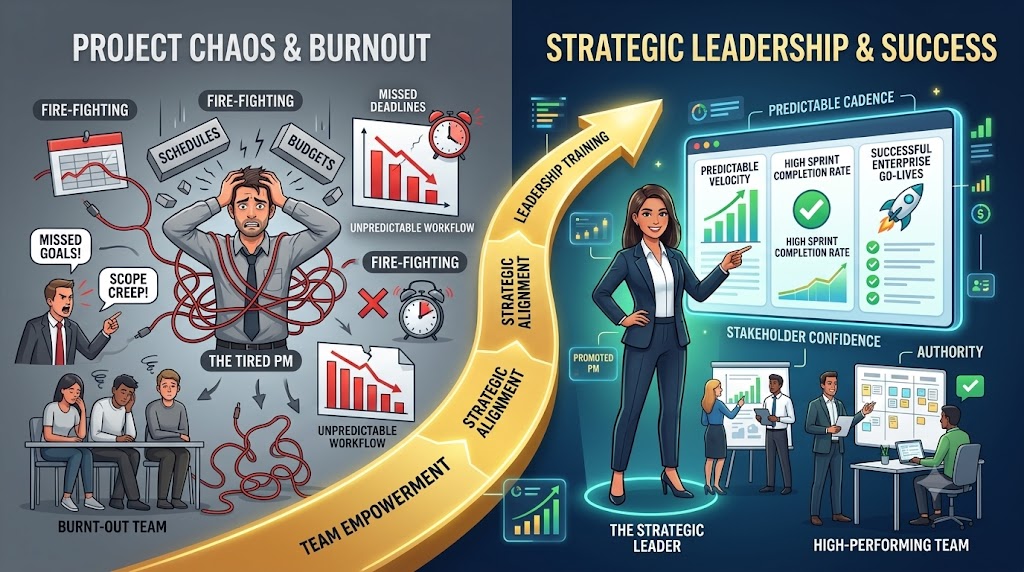
In enterprise project management, career advancement depends on handling complex, high-stakes initiatives safely. Organizations do not promote project managers simply for tracking task boards; they promote leaders who can deliver major business releases predictably and without disruption.
Mastering the mechanics of Zero Iterations, Feature Sprints, and Hardening Iterations positions you as an elite delivery manager:
You transition from a tactical task tracker to a strategic delivery lead.
You gain executive trust by protecting the business from public deployment failures and compliance penalties.
You build a reputation for managing enterprise-grade initiatives with clarity and calm authority.
Learning project management the right way means moving past simplistic textbook interpretations and applying practical frameworks designed for complex corporate realities.
To build reliable enterprise software, organizations must look beyond rigid, theoretical Agile approaches. The Agile Planning Onion provides a structured, multi-layered framework that balances strategic goals with daily execution.
By separating setup windows (Zero Iterations), core development (Feature Sprints), and stabilization phases (Hardening Iterations), project managers protect team velocity, enforce strict compliance, and ensure reliable, low-risk deployments.
Mastering these advanced delivery mechanisms is what distinguishes project coordinators from high-impact corporate leaders.
If you are ready to stop guessing, move up the corporate ladder, and learn project management the right way, reach out to Skillsetify. We do not just teach frameworks: we show you your exact career growth trajectory.