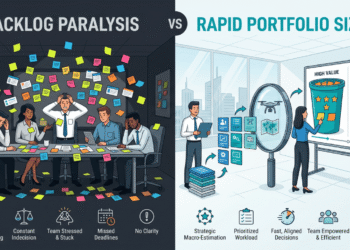
How Strict DoR and DoD Frameworks Eliminate Sprint Chaos
The Friday Afternoon Deployment Disaster
It is Friday afternoon. The engineering team is preparing to deploy the latest release to production after two weeks of intense effort. Suddenly, the QA lead discovers that three major user stories lack acceptance criteria, the API contract with the payments microservice was never finalized, and no automated integration tests were run.
The Product Owner insists the work is finished because the primary UI screen looks complete. The lead developer argues that backend dependencies were missing from day one, so the feature could only be partially implemented.
The deployment fails, throwing the production environment into a critical outage. The weekend is consumed by emergency hotfixes, cross-functional blame, and mounting frustration.
This scenario is far too common in enterprise software engineering. Organizations frequently confuse high velocity with rapid code output, pulling ambiguous requirements into sprints and pushing half-tested code into production.
A common corporate myth suggests that establishing strict process gates slows down delivery and creates unnecessary bureaucratic friction. In reality, working without clear quality gates creates chaos, rework, technical debt, and team burnout.
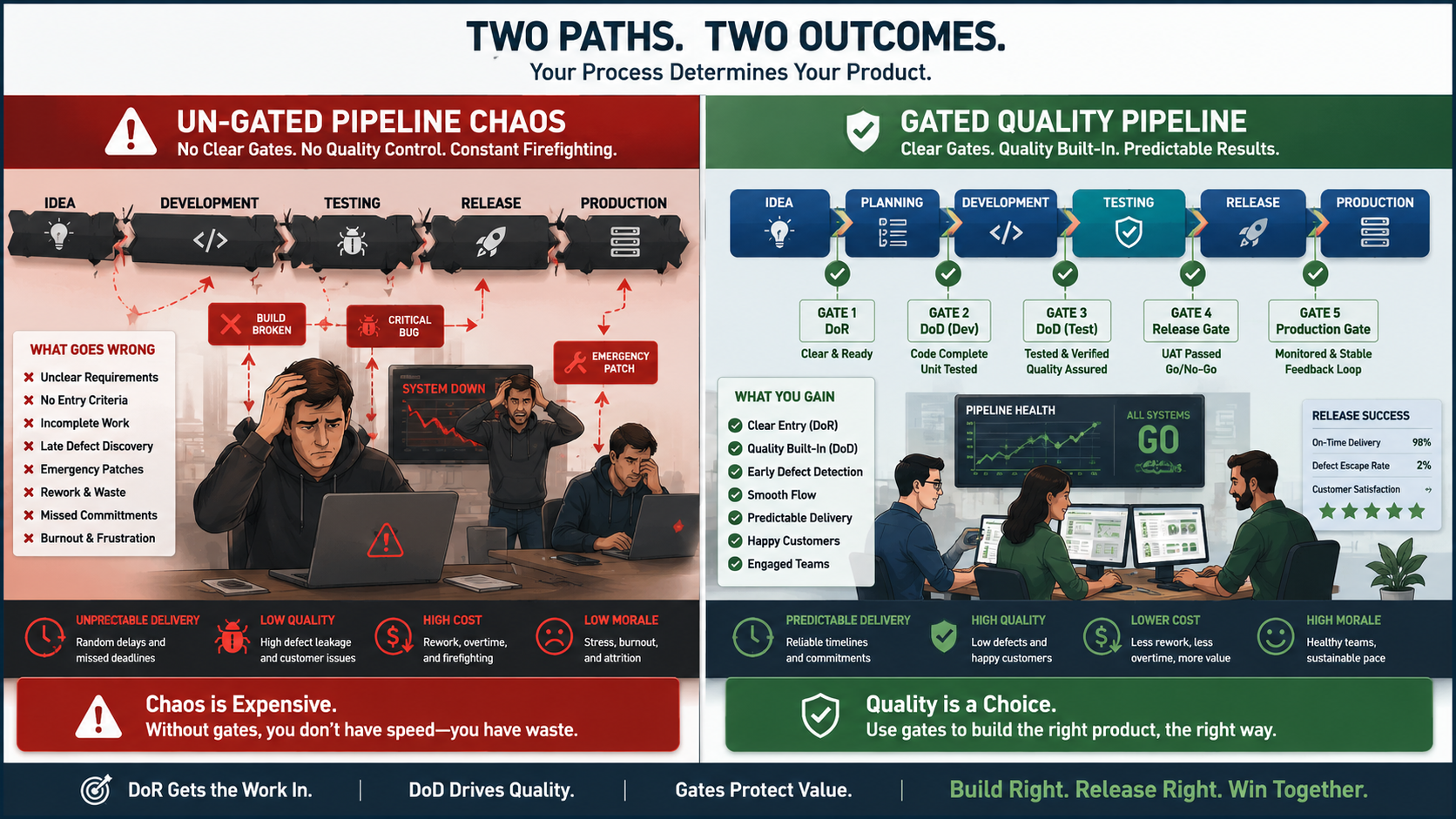
Decoding Quality Gates: The Mechanics of DoR vs. DoD
To build predictable delivery systems, high-performing software teams decouple entry criteria from exit criteria. This separation relies on two operational quality gates: the Definition of Ready (DoR) and the Definition of Done (DoD).
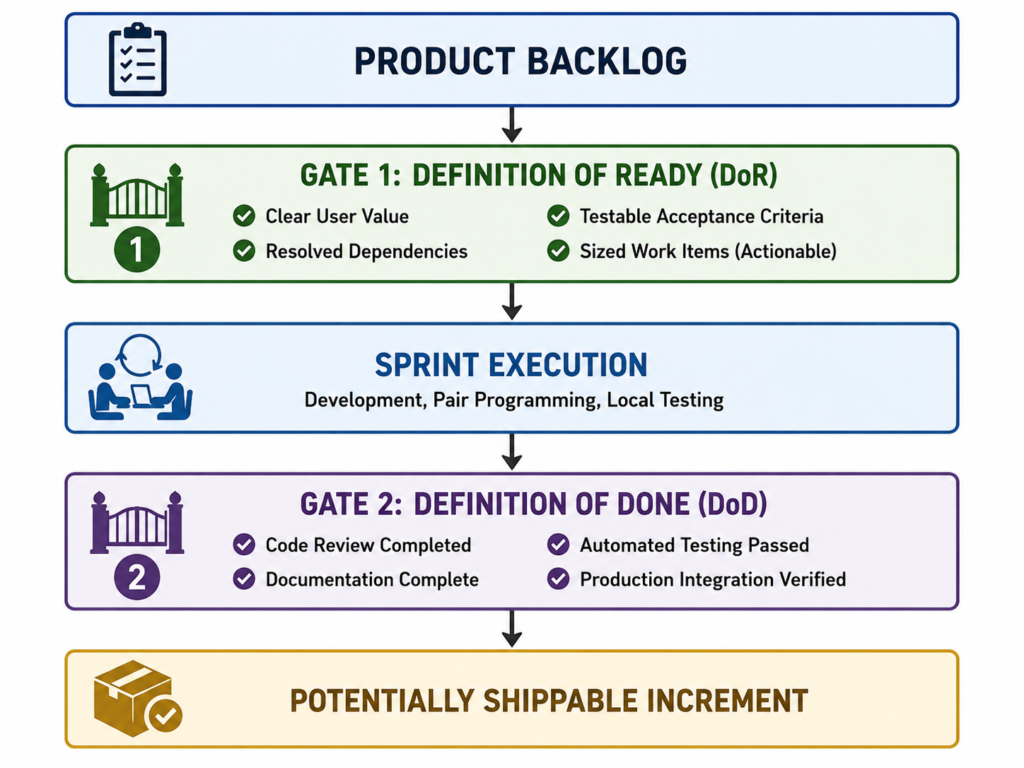
What is the Definition of Ready (DoR)?
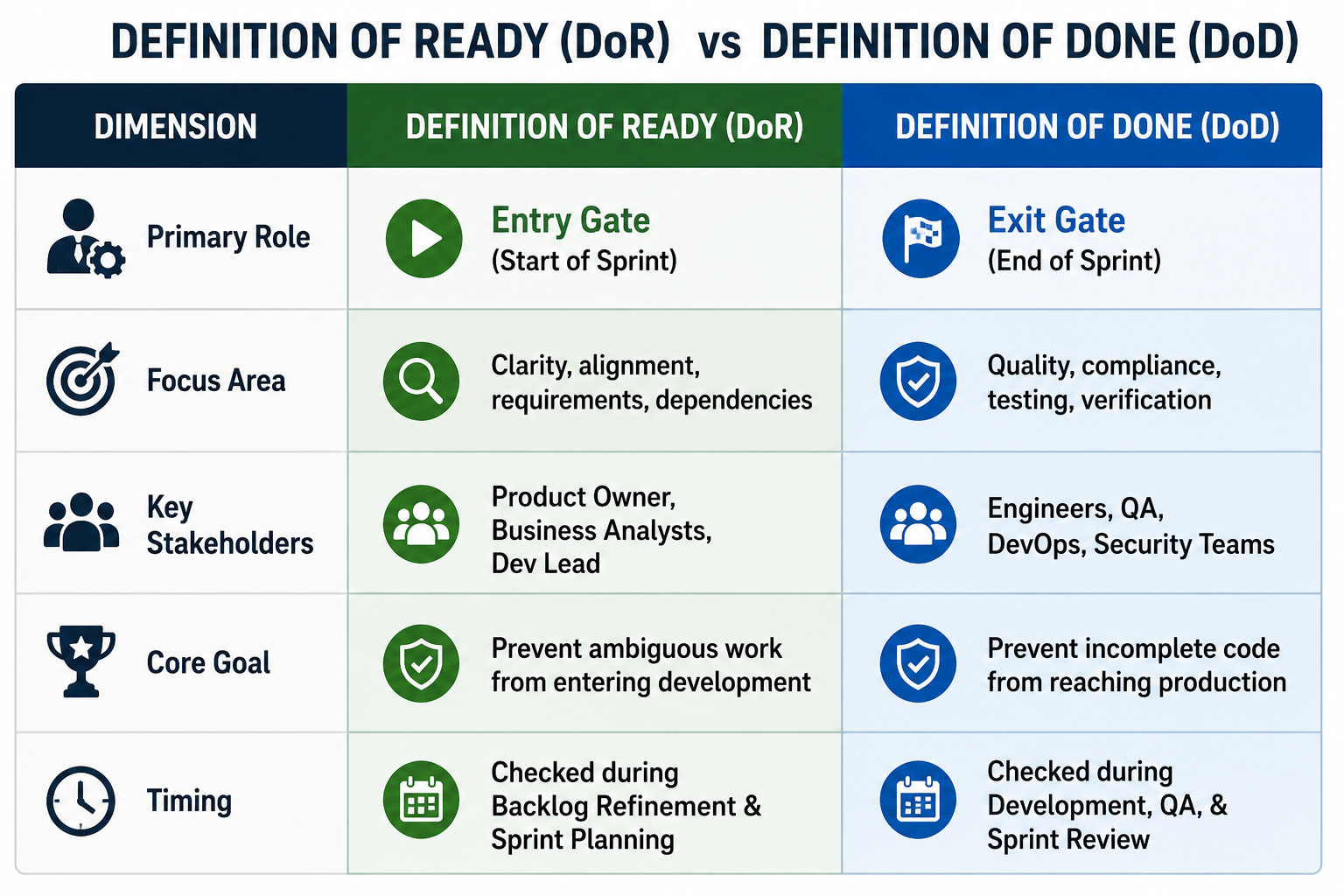
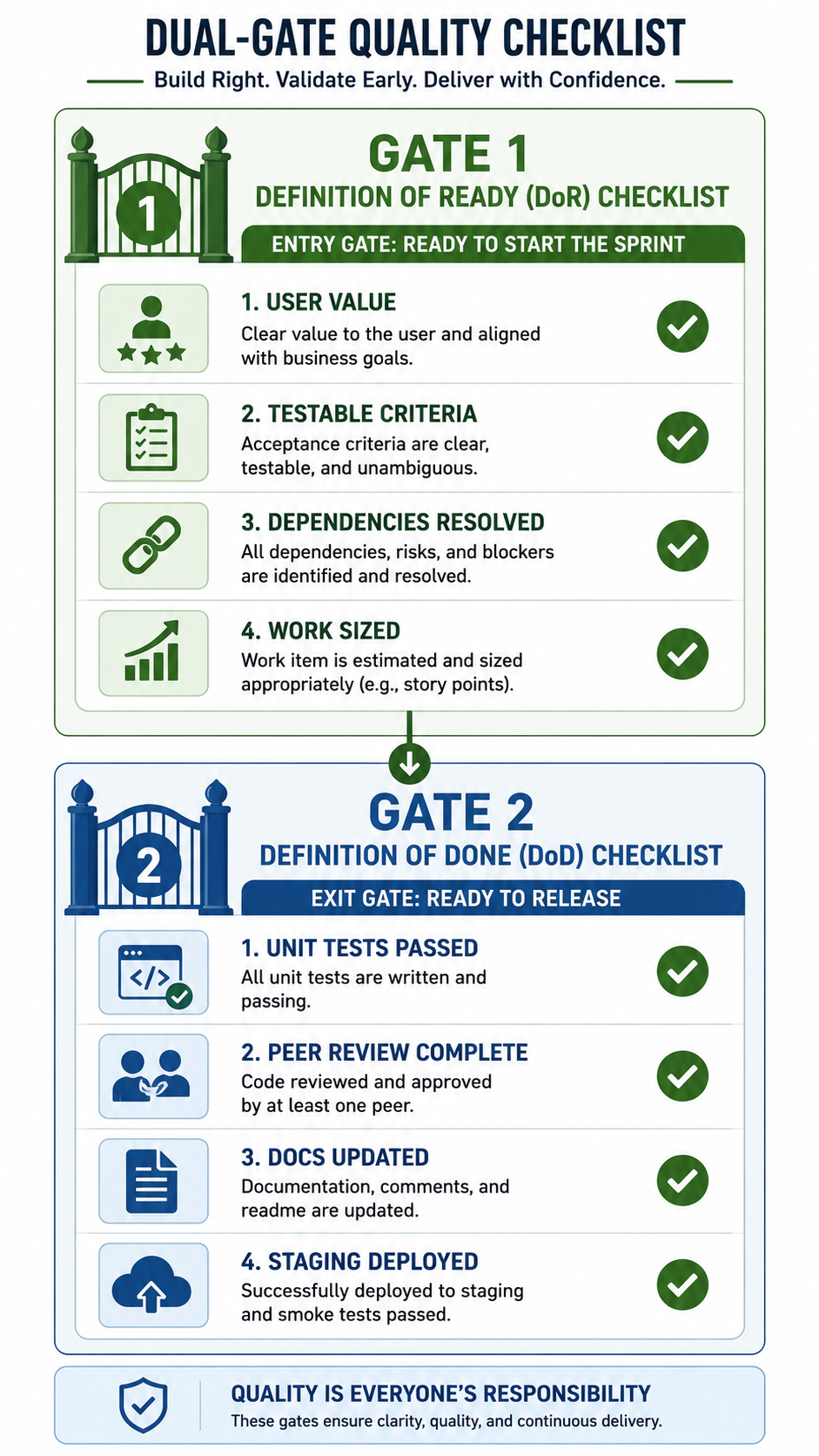
The Definition of Ready serves as the entry gate for a sprint. It is an agreement between the Product Owner and the development team ensuring a user story or backlog item is sufficiently defined, clear, and actionable before being pulled into an active iteration.
Without a clear DoR, teams pull half-baked features into sprints, spending valuable engineering time clarifying requirements, hunting down missing dependencies, or guessing business intent.
What is the Definition of Done (DoD)?
The Definition of Done serves as the exit gate for a sprint. It is a shared standard of quality that every product increment must meet before it can be considered complete and ready for deployment.
While acceptance criteria focus on the specific functional behavior of an individual user story, the DoD applies universally across all stories to guarantee systemic architecture quality, security, and maintainability.
Structural Comparison: DoR vs. DoD
The Step-by-Step Implementation Framework
Implementing strict DoR and DoD gates across your organization requires a structured operational approach. Here is an execution roadmap for engineering leaders and Project Managers.
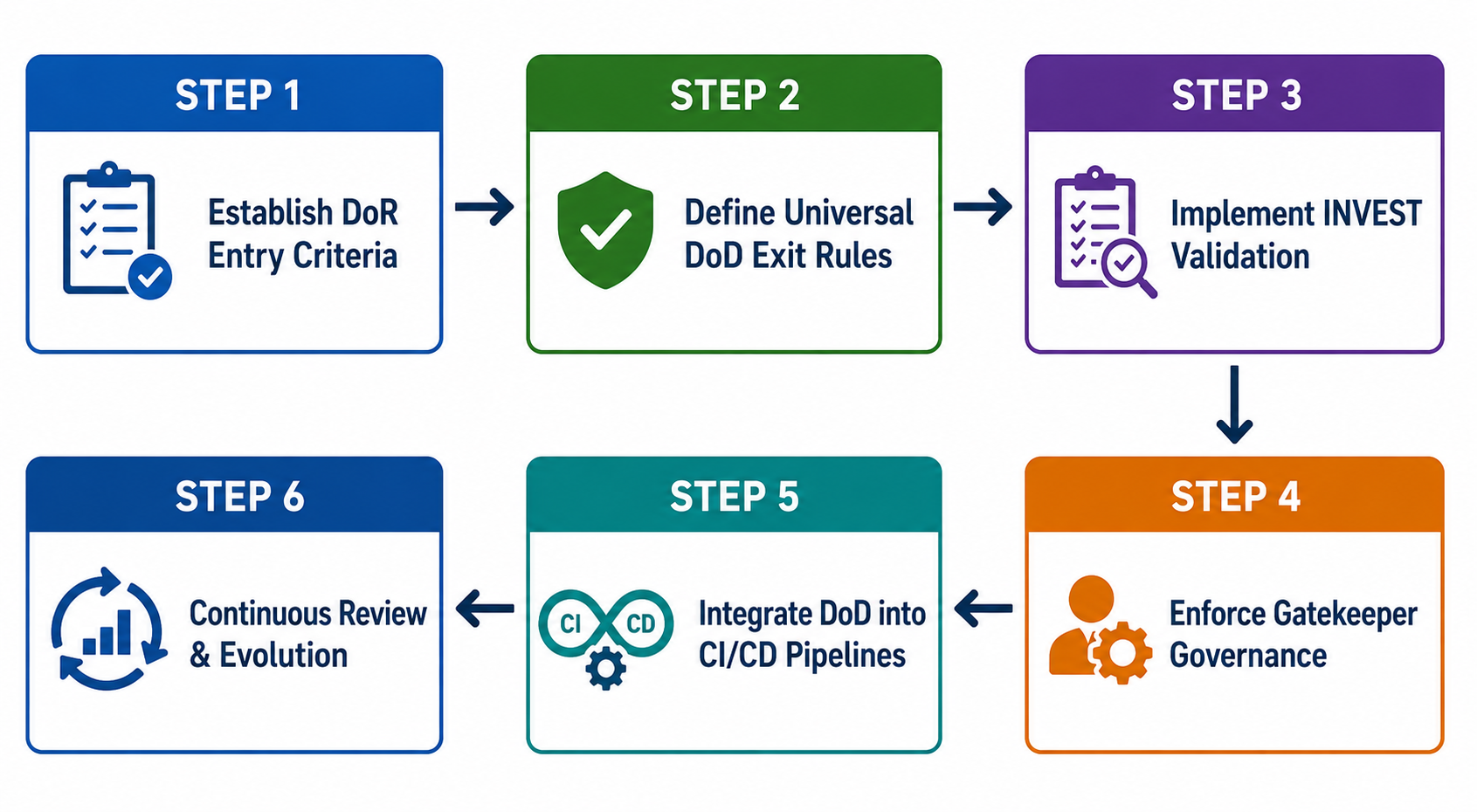
Step 1: Establish Standard DoR Entry Criteria
Define a clear checklist that every backlog item must satisfy during backlog refinement:
User Perspective: The story clearly identifies the target persona, desired action, and expected benefit.
Explicit Acceptance Criteria: Explicit, testable scenarios outlining expected functional behavior.
Dependency Resolution: All external blockers, third-party API contracts, and design mockups are verified and available.
Actionable Sizing: The story is broken down into manageable tasks that fit comfortably within a single iteration.
Step 2: Define Universal DoD Exit Standards
Establish standard quality criteria across all features:
Code Quality & Review: Code passes peer review and static code analysis without critical alerts.
Test Coverage: Automated unit, integration, and regression tests pass in staging environments.
Documentation & Compliance: System documentation, release notes, and security compliance checks are up to date.
Environment Verification: The feature deploys cleanly into staging or pre-production environments without manual intervention.
Step 3: Apply the INVEST Matrix to DoR
To ensure user stories are genuinely ready for estimation and execution, apply the INVEST framework:
Independent: The story can be developed and delivered without tightly coupled blockers.
Negotiable: Details remain open to technical collaboration between dev and product teams.
Valuable: Delivers clear, measurable value to end consumers or business operations.
Estimable: Sufficiently understood for developers to accurately gauge effort.
Small: Sized to fit comfortably within a single sprint iteration.
Testable: Accompanied by clear verification parameters.
Step 4: Establish Gatekeeper Governance
Assign clear accountability for each quality gate:
The Development Team holds primary authority over the DoR, reserving the right to reject ambiguous stories during sprint planning.
The Product Owner and QA Leads maintain authority over DoD verification, ensuring feature increments are fully verified before marking them as complete.
Step 5: Automate DoD Compliance via CI/CD
Reduce manual verification by baking DoD requirements into your delivery pipeline:
Automate code linting, security scanning, and unit test execution upon every commit.
Gate staging deployments behind automated integration test suites.
Block build promotions automatically if test coverage falls below agreed-upon thresholds.
Step 6: Continuously Evolve Quality Gates
Inspect and adapt your quality gates during sprint retrospectives. If production bugs slip through, expand the DoD to cover the missing quality checks. If team velocity stalls due to upfront bottlenecks, streamline the DoR to balance preparation with execution agility.
The Operational Payoff: High Velocity with Zero Rework
Adopting strict DoR and DoD quality gates transforms delivery dynamics across the enterprise.
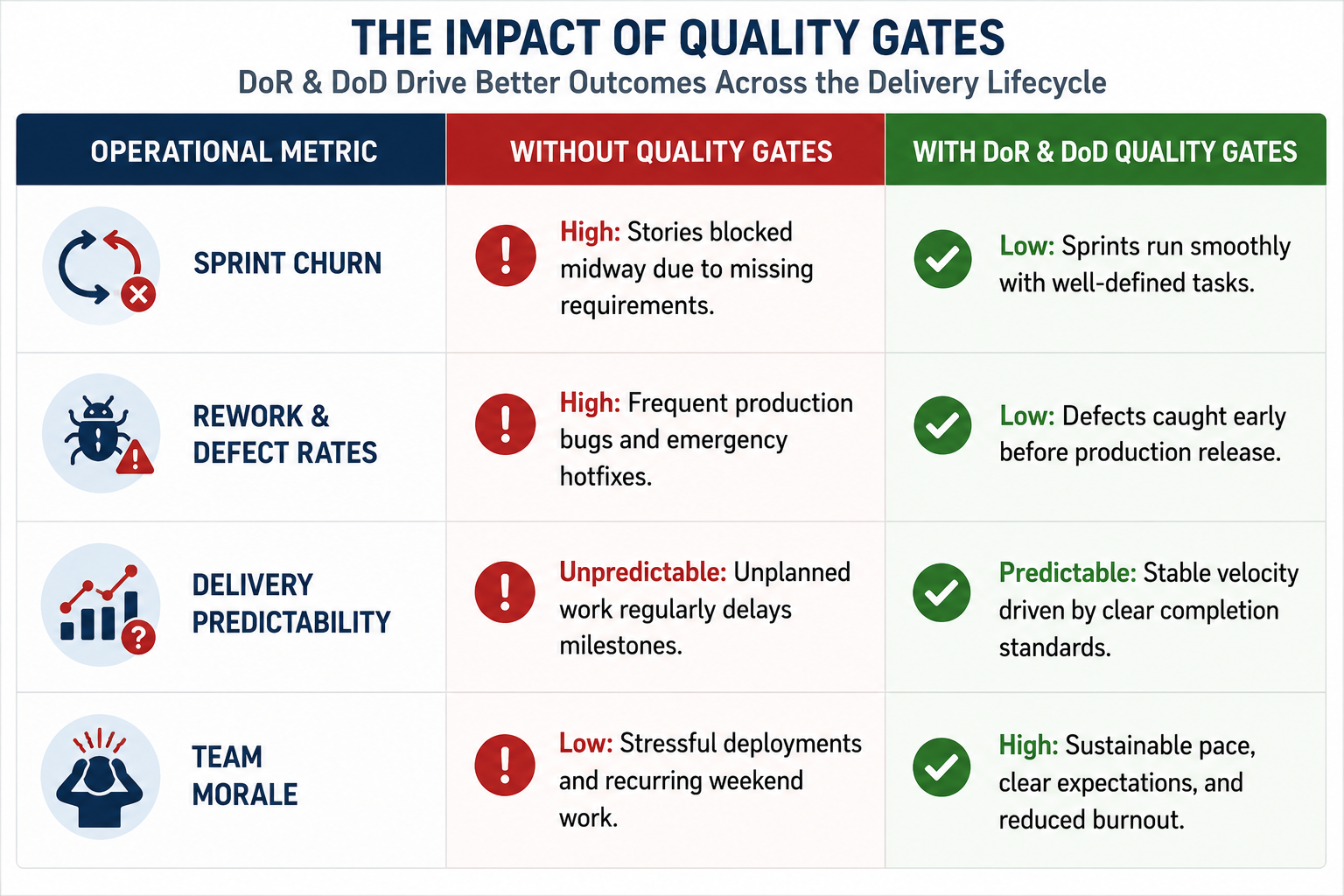
When quality gates are enforced effectively, project management evolves from a reactive fire-fighting exercise into an engine of predictable delivery. Scope creep drops because features cannot enter development without explicit boundaries. Team frustration gives way to steady output as developers focus on clear, actionable tasks.
For ambitious project managers and Scrum Masters, mastering gatekeeping mechanics is a key career differentiator. Organizations reward leaders who establish robust quality frameworks, eliminate operational waste, and drive predictable value.
![[IMAGE DIRECTIVE: Professional 16:9 visual showing an executive dashboard displaying key delivery metrics: Decreased Sprint Churn, Zero Production Defect Escalations, and 95% On-Time Release Rates achieved via strict DoR/DoD compliance.]](https://skillsetify.com/blog/wp-content/uploads/2026/07/98f70715-2551-4142-86fd-5b5173dcb96f.png)
Elevate Your Delivery Capabilities with Skillsetify
The difference between managing delivery chaos and leading high-velocity engineering teams comes down to disciplined execution and proven frameworks. Relying on loose guidelines and informal handoffs exposes your projects to scope creep and quality failures.
To build reliable delivery systems, lead high-performing teams, and move into senior PMO positions, you need practical, career-defining expertise.
If you are ready to stop guessing, move up the corporate ladder, and learn project management the right way, reach out to Skillsetify. We do not just teach frameworks: we show you your exact career growth trajectory.
Visit Skillsetify today to explore our specialized certifications and enterprise training programs. Master modern quality practices, build predictable delivery pipelines, and advance your career.