The $10M Executive Mistake Costing Your Organization Predictability
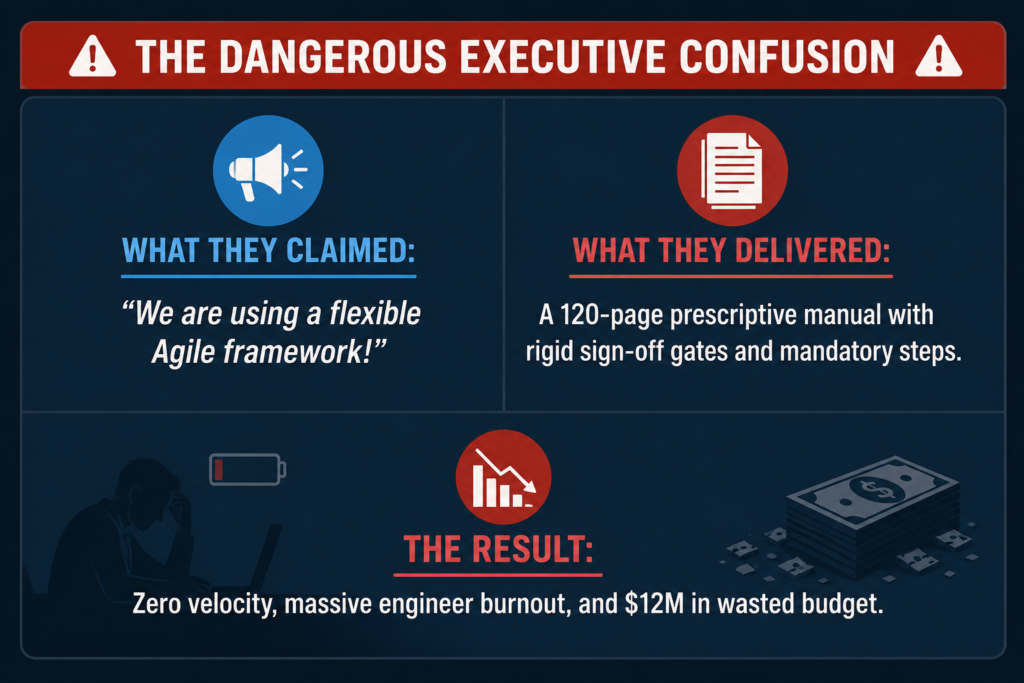
A global financial services enterprise recently launched a $12 million digital modernization program. The initiative was pledged to shareholders as an agile, fast-moving transformation. Executive leadership mandated that every product team strictly adhere to a 120-page operational manual detailing exact meeting durations, standardized document templates, rigid sign-off gates, and mandatory step-by-step approvals for every single user story.
By month six, software release velocity had plunged to near zero. Senior engineering talent was resigning due to procedural fatigue, compliance auditors were sounding alarm bells over missed milestones, and the steering committee was locked in emergency meetings.
What caused this high-profile operational collapse?
The organization suffered from a fatal architectural flaw: executive leadership forced a rigid, prescriptive methodology onto teams while falsely labeling it a flexible Agile framework. They constructed a procedural straightjacket under the guise of modern delivery, confusing strict execution steps with adaptive structural boundaries.
Across corporate boardrooms and project management offices, professionals treat the terms “framework” and “methodology” as interchangeable synonyms. This common misinterpretation is one of the single biggest drivers of systemic project failure across tech, manufacturing, and enterprise services.
A framework is not a lighter version of a methodology. A methodology is not just a formalized framework. They represent two fundamentally distinct philosophies of work design, governance, and risk management. Mixing them up guarantees operational chaos, scope creep, and organizational burnout.
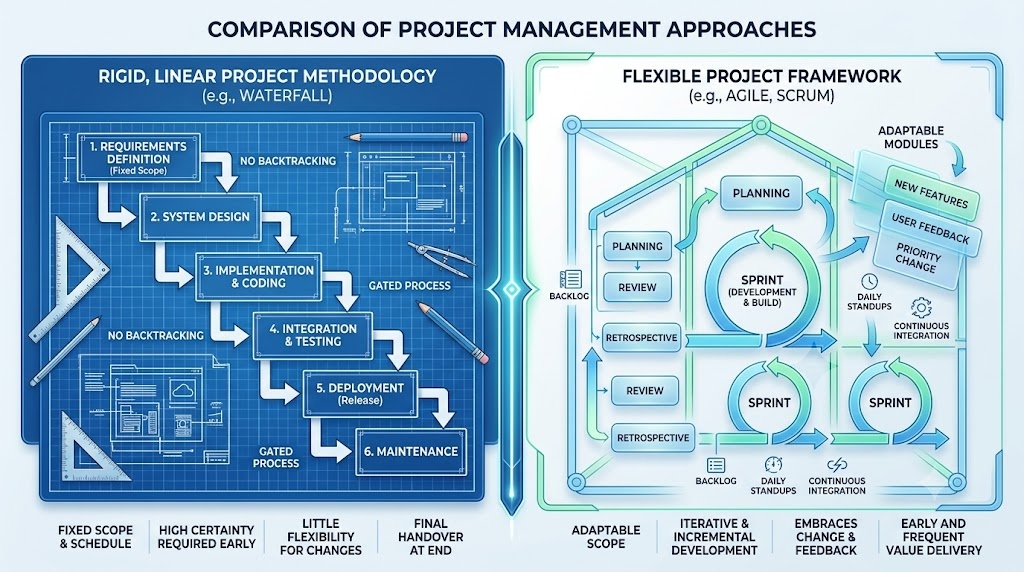
Deconstructing the Structural Execution Architecture
To build predictable execution engines, project managers must deeply understand the core mechanics, explicit definitions, and functional trade-offs of both delivery models.
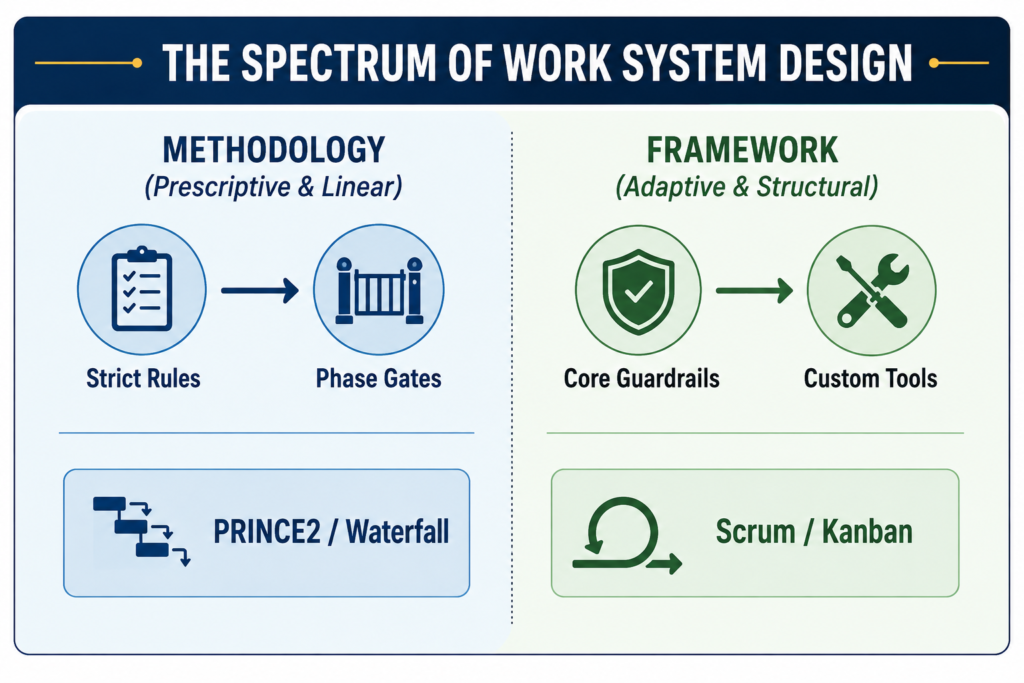
What is a Project Methodology? Prescriptive Rules and Linear Precision
A project methodology is a comprehensive, highly prescriptive, step-by-step system that dictates how work must be executed from initiation to closeout. Originating from disciplined engineering, construction, and heavy industrial disciplines, a methodology leaves minimal room for interpretation.
Core Purpose: To standardize execution, eliminate variance, enforce regulatory compliance, and guarantee precise operational repeatability across complex initiatives.
Structural Mechanics: Methodologies define specific inputs, mandatory tools, explicit techniques, structured artifacts, and formal phase-gate approvals for every milestone.
Dominant Examples: Traditional Waterfall (SDLC), PRINCE2 (Projects IN Controlled Environments), and Six Sigma DMAIC (Define, Measure, Analyze, Improve, Control).
Optimal Operating Environment: High-rigor, low-uncertainty initiatives such as nuclear facility construction, aerospace hardware engineering, financial auditing systems, or pharmaceutical manufacturing where process deviation can lead to catastrophic failure.
What is a Project Framework? Flexible Boundaries and Adaptive Execution
A project framework is a lightweight structural guardrail that defines the essential boundaries of work without dictating the exact tactical steps required to complete it. Frameworks provide the “what” and the foundational boundaries, leaving the “how” to be adapted by teams based on real-time context.
Core Purpose: To provide foundational structure while empowering teams to innovate, iterate, respond to emerging market shifts, and self-organize efficiently.
Structural Mechanics: Frameworks specify key roles, primary events or ceremonies, core values, and baseline artifacts. They purposefully omit detailed task-level instructions so teams can plug in localized tools and practices.
Dominant Examples: Scrum, Kanban, Extreme Programming (XP), and the Scaled Agile Framework (SAFe).
Optimal Operating Environment: Volatile, high-uncertainty environments such as SaaS product development, disruptive technology innovation, exploratory market research, and rapid business model transformation.
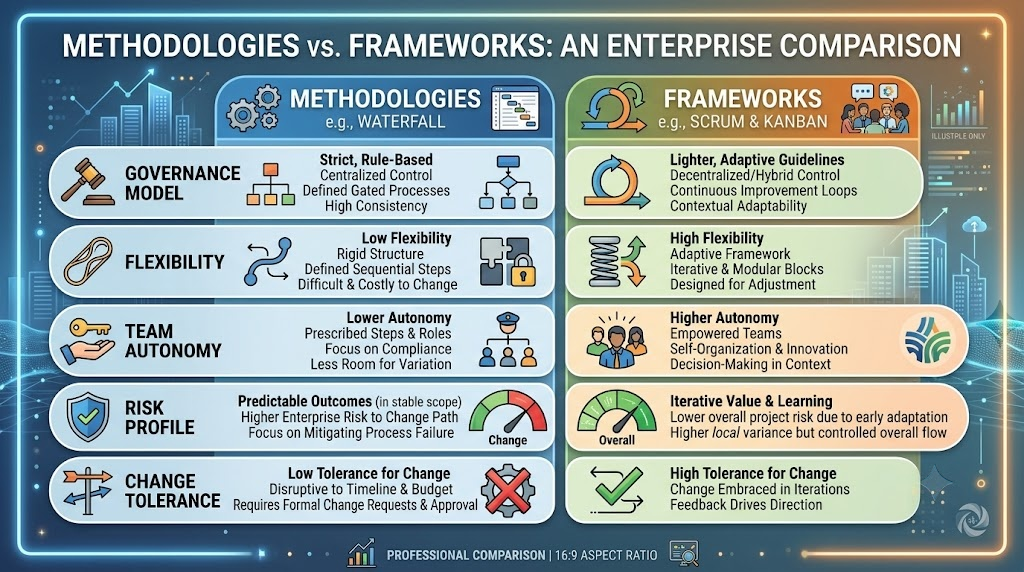
Comparative Breakdown: Frameworks vs. Methodologies
To evaluate which approach aligns with your operational reality, review how these two systems function across critical governance dimensions:
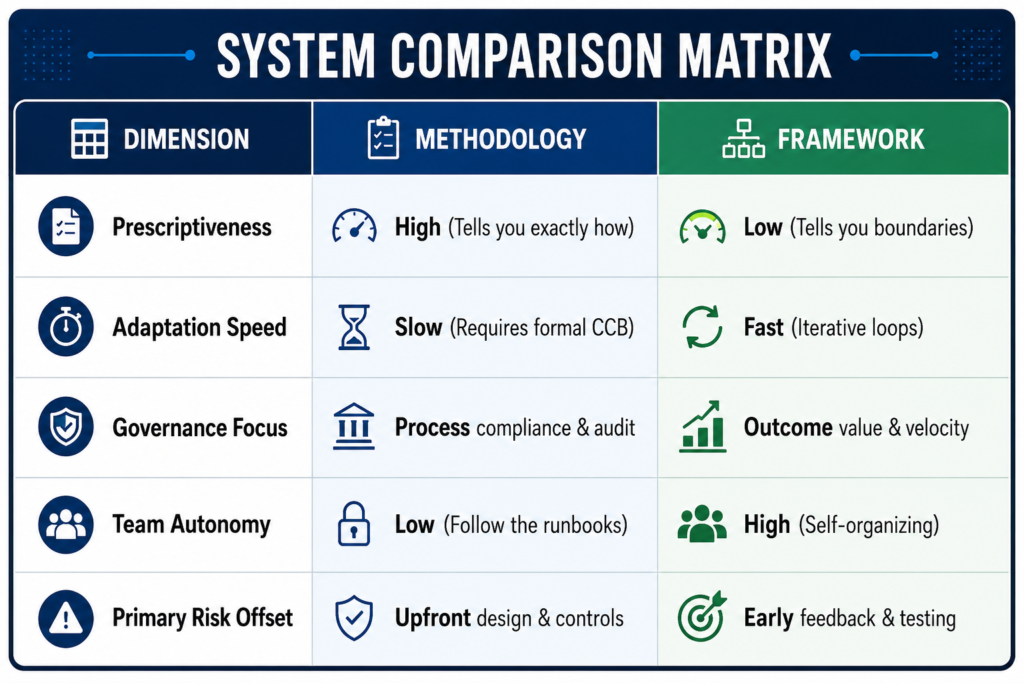
Governance and Compliance: Methodologies enforce control through detailed documentation, audit trails, and formal change control boards. Frameworks enforce control through frequent inspect-and-adapt loops, visible metrics, and ongoing stakeholder alignment.
Change Tolerance: Methodologies view late-stage changes as threats to budget and schedule baselines. Frameworks treat late-stage changes as opportunities to optimize product value.
Operational Flexibility: Methodologies require formal tailoring guidelines to strip away unneeded steps. Frameworks require teams to intentionally add context-specific practices onto a lean structural base.
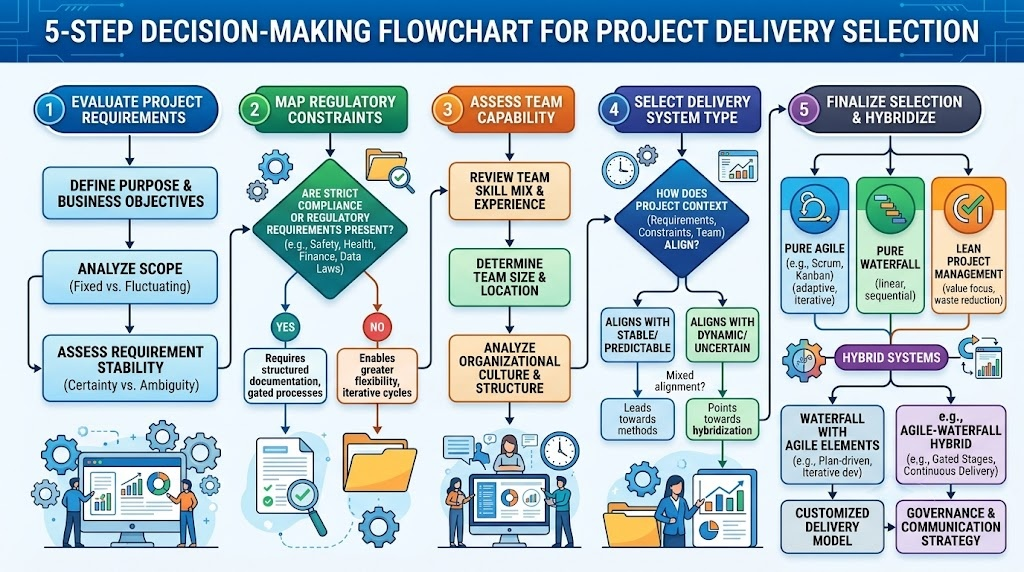
The PM Execution Guide: A 5-Step Implementation Framework
When establishing governance for new projects, experienced leaders do not blindly select a methodology or a framework off the shelf. Instead, they run a structured operational assessment to architect the right delivery model.
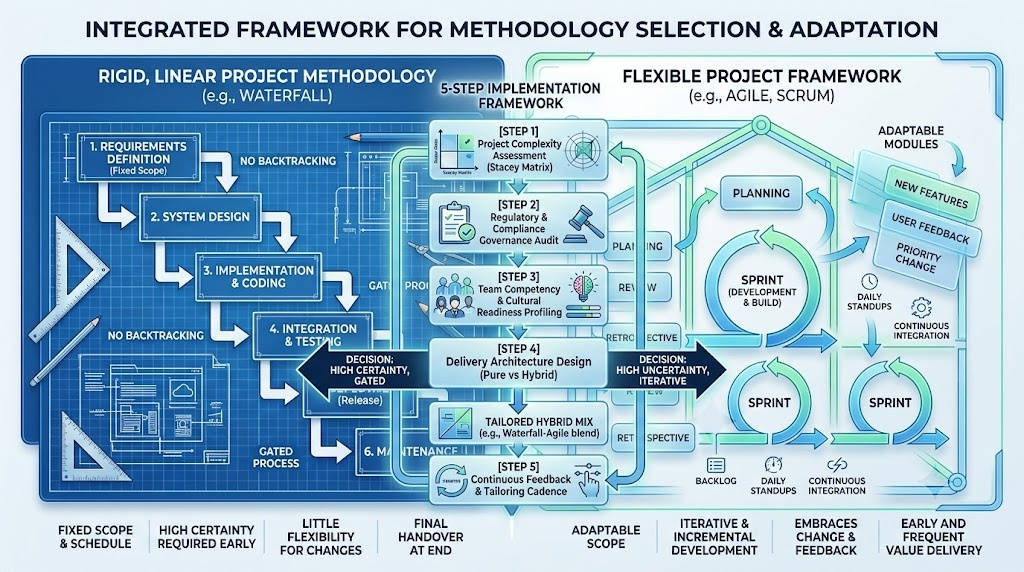
Step 1: Conduct a Project Complexity Assessment
Map your project across technical uncertainty and requirements volatility using models like the Stacey Complexity Matrix:
If requirements and technical solutions are clear and stable, select a structured Methodology.
If requirements are evolving and technical solutions are novel, deploy an adaptive Framework.
Step 2: Perform a Regulatory and Governance Audit
Identify non-negotiable external constraints:
Document all mandatory compliance standards, legal sign-offs, and reporting obligations.
Determine whether safety audits require deterministic step-by-step records. High regulatory oversight often requires layering methodological controls over your execution system.
Step 3: Profile Team Competency and Cultural Readiness
Evaluate the self-organization capability of your execution engine:
Highly experienced, cross-functional teams thrive within lightweight Frameworks that maximize autonomy.
Inexperienced or distributed teams working within traditional hierarchies often require the clear instructions and safety net of a Methodology.
Step 4: Architect Your Hybrid Delivery Model
Most enterprise environments require a blended approach. Design a custom delivery system by selecting a core execution model and layering necessary controls:
Establish a flexible framework like Scrum or Kanban at the team execution level to maintain speed and iterative feedback.
Overlay necessary methodological governance gates at the enterprise portfolio level to satisfy capital expenditure reporting, risk controls, and executive milestone tracking.
Step 5: Institute an Iterative Governance Review
Execution models must not remain static. Set up quarterly governance retrospectives to review delivery metrics:
If teams experience bottlenecked approvals and delayed decisions, strip away unnecessary methodological overhead.
If teams experience scope instability, low quality, or missed regulatory criteria, introduce targeted framework guardrails and standardized verification checkpoints.
The Career Transformation of Strategic Delivery Leaders
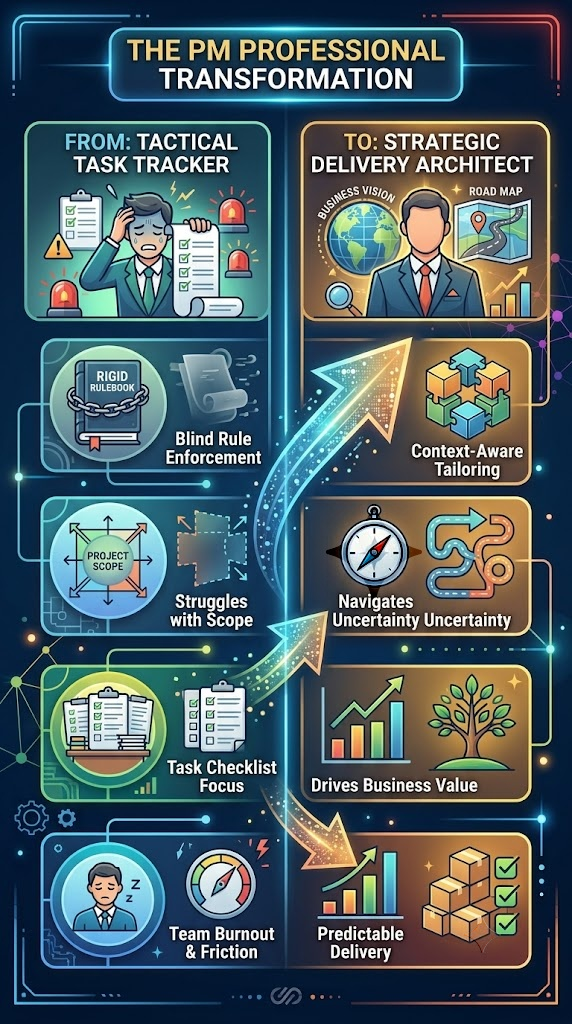
Mastering the structural nuance between frameworks and methodologies transforms how you operate as a professional. It shifts your role from a tactical task tracker into a strategic delivery architect.
From Operational Chaos to Predictable Delivery
When you implement the wrong execution model, your daily life as a project manager is defined by constant firefighting:
Forcing a rigid methodology onto an innovative product team leads to missed deadlines, administrative bloat, and disengaged engineers.
Applying a loose framework to a compliance-heavy integration project leads to missed risk controls, scope creep, and audit failures.
When you correctly match your delivery model to the operational context, the transformation is immediate:
Sustained Velocity: Development teams operate with clarity, focusing their energy on creating value rather than managing process overhead.
Stakeholder Trust: Executive sponsors receive reliable forecasting, transparent status indicators, and consistent business value.
Minimized Burnout: Teams enjoy psychological safety and operational autonomy, protected by clear structural boundaries.
Accelerating Your Professional Trajectory
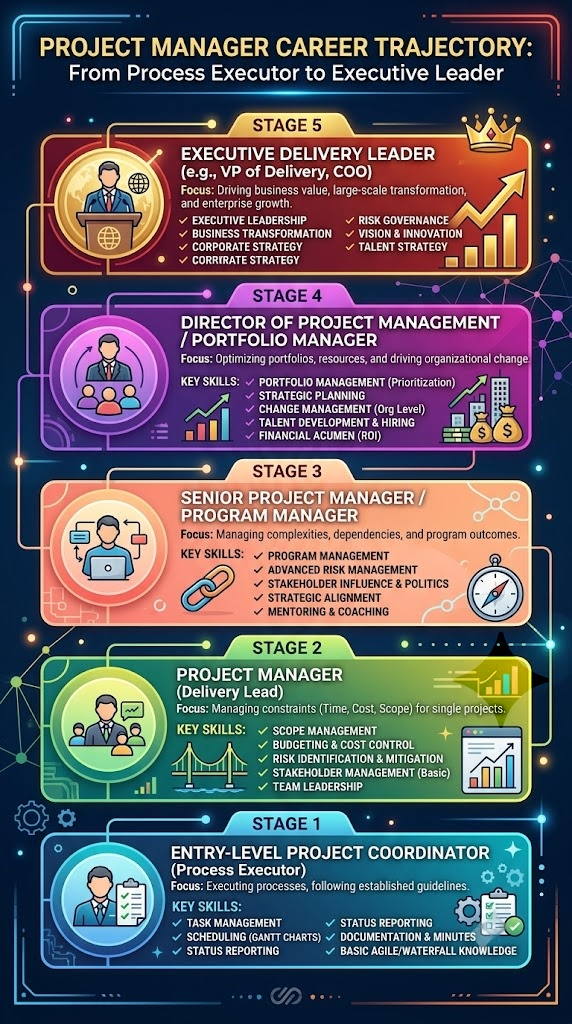
The modern business landscape does not award senior leadership roles to project managers who simply enforce rigid project checklists. C-suite executives promote strategic leaders who know how to design execution systems that balance risk management with rapid market delivery.
Understanding how to choose, tailor, and blend frameworks and methodologies positions you in the top tier of global project leadership. It elevates you from managing basic project schedules to steering high-stakes enterprise strategy.
Master High-Impact Project Leadership with Skillsetify
Navigating the landscape of modern project management requires more than memorizing terminology. It requires real-world execution expertise, strategic decision-making capability, and the confidence to architect high-performing delivery engines in complex corporate environments.
Understanding the difference between frameworks and methodologies is your first step toward building predictable, scalable, and resilient operational systems. By applying context-aware governance, you protect your organization’s capital, unleash your team’s talent, and secure your standing as an indispensable business leader.
If you are ready to stop guessing, move up the corporate ladder, and learn project management the right way, reach out to Skillsetify. We do not just teach frameworks: we show you your exact career growth trajectory.