Why Your Exam Delivery Strategy Can Destroy Executive Credibility
Imagine spending three months meticulously preparing for a major career landmark like the Project Management Professional (PMP) credential. You have logged hundreds of hours studying process groups, agile methodologies, and strategic alignment. Your executive sponsors know your exam date, and your organization has slated you for a promotion to Technical Program Manager upon passing.
On exam morning, you log into the online testing portal from your home office. You clear your desk, scan your room with your laptop webcam, and begin. At question 115, your company-managed laptop runs a mandatory background security update, causing the proctoring software to drop the video feed for four seconds.
Without warning, the online proctor terminates your session for a security policy violation. Your exam fee is lost, your score is invalidated, and your executive sponsors receive an awkward update that your certification is indefinitely delayed.
The corporate myth driving thousands of professionals into this exact trap is simple: “Taking high-stakes professional exams at home is always more convenient, efficient, and risk-free.”
This assumption misunderstands risk management. Online proctored testing does not eliminate operational friction; it merely transfers 100% of the technological, environmental, and procedural risk onto the candidate. In professional delivery, failing to manage execution environment risk mismanages stakeholder expectations and damages leadership perception before you even step into a senior role.
Deconstructing Exam Delivery Mechanics: Center vs. Home Testing
Choosing between a testing center and home-based online proctoring is an operational delivery decision. To protect your investment and maintain career momentum, you must evaluate the mechanics of both delivery channels across key operational vectors.
1. Technical Infrastructure and Administrative Constraints
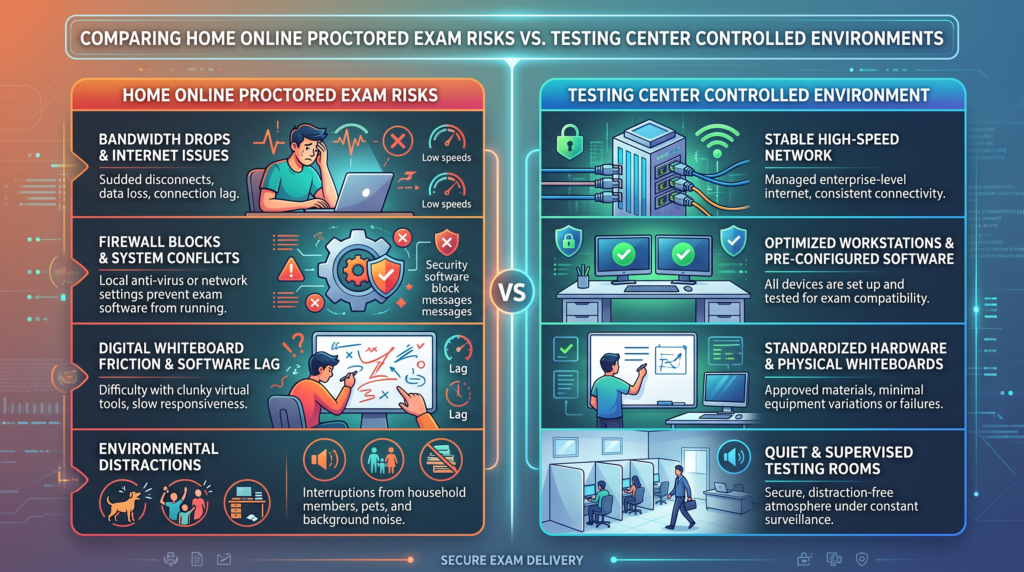
Home testing relies entirely on consumer-grade hardware and ISP reliability. Most candidate failures during home testing stem from system-level conflicts on corporate-issued laptops.
Firewalls and Security Software: Enterprise devices often run background agents (such as Endpoint Detection and Response software or active VPN adapters) that block the deep-level system access required by testing clients like Pearson VUE.
Administrative Rights: If an online testing client crashes or requires an emergency patch during check-in, candidates using enterprise devices without local administrative credentials cannot troubleshoot or reinstall the software.
Network Stability: Consumer internet connections lack Quality of Service (QoS) guarantees. A brief micro-drop in home Wi-Fi can trigger an immediate software disconnection and session invalidation.
In contrast, dedicated testing centers run optimized, isolated hardware with static network configurations, dedicated on-site technical support, and pre-approved security permissions.
2. Cognitive Load and Workspace Ergonomics
High-stakes project management exams test critical thinking under strict time constraints (typically 180 questions across 230 minutes). The physical medium of your workspace directly affects your cognitive throughput.
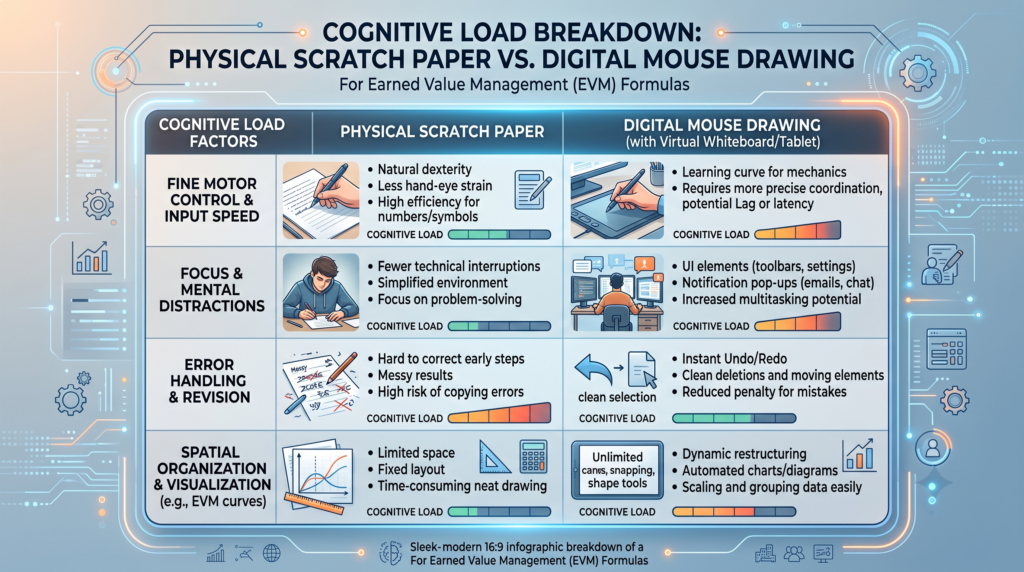
- Scratchpad Mechanics: At a physical testing center, candidates receive physical booklet scratch paper or erasable marker boards with dry-erase pens. This allows fast, natural sketching for network diagrams or mathematical calculations such as Cost Performance Index (CPI = EV AC ) or Schedule Performance Index (SPI = EV PV ).
- Digital Whiteboard Friction: In home testing, physical paper, pens, and whiteboards are strictly prohibited. Candidates must use an on-screen digital whiteboard driven by a mouse. Drawing PERT charts or calculating earned value formulas with a mouse consumes disproportionate time and elevates frustration.
- Environmental Strain: Online proctors enforce zero-tolerance policies regarding physical movement. Leaning out of camera view, covering your mouth, reading questions aloud, or taking your eyes off the screen for prolonged periods can trigger instant warnings or exam termination.
| Delivery Dimension | In-Center Testing | Home Online Testing |
| Hardware & Network Risk | Managed by facility; full redundancy | Transferred entirely to candidate |
| System Security Restrictions | Fully compliant dedicated terminals | High failure risk on corporate laptops |
| Scratchpad Tooling | Physical paper/pen or erasable booklet | Mouse-drawn digital whiteboard only |
| Proctoring Protocol | Passive room monitoring; low intrusion | Aggressive real-time webcam tracking |
| Calculation Speed | High (natural hand-written math) | Low (clunky digital interface) |
| Environment Control | Quiet, isolated testing cubicle | Variable (susceptible to home interruptions) |
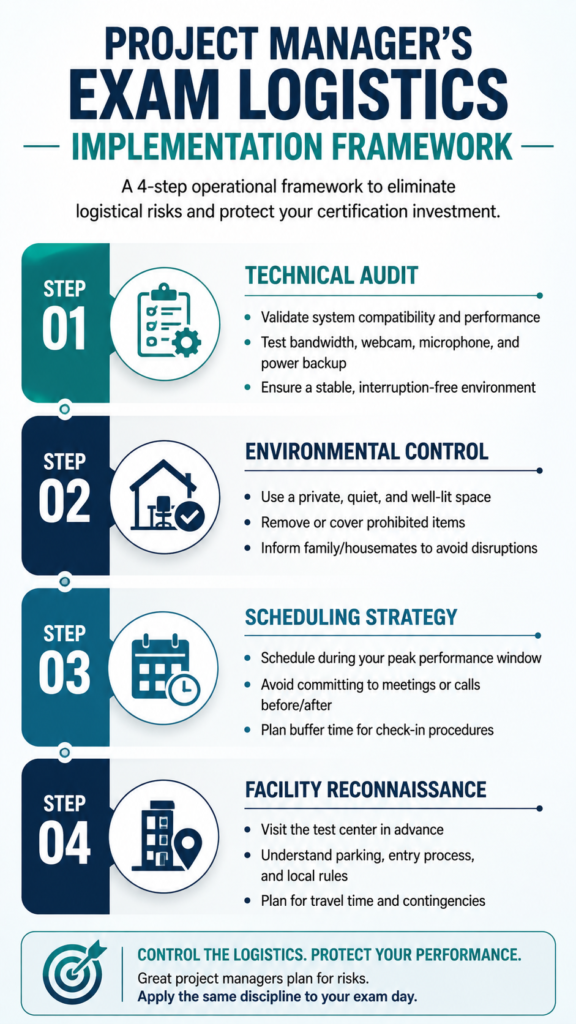
The Project Manager’s Exam Logistics Implementation Framework
To ensure your certification journey reflects elite operational standards, treat your exam execution as a high-visibility project deliverable. Use this four-step implementation framework to evaluate, select, and execute your testing path.
Step 1: Conduct a Technical Environment Audit
Before scheduling an online proctored exam, conduct a systematic audit of your hardware and network stack:
Device Isolation: Determine if you have access to a personal, non-corporate computer where you hold full administrative rights and can disable non-essential background processes.
System Check Execution: Run the testing vendor’s system check at the exact time of day you plan to test to catch routine ISP throttling or periodic background tasks.
Bandwidth Verification: Ensure a hardwired Ethernet connection is available; avoid testing over shared Wi-Fi connections.
Step 2: Evaluate Ergonomic & Calculation Requirements
Review the target exam’s question profile:
If your exam requires heavy quantitative analysis, formula scratchwork, or network diagram sketching, default to an In-Center Exam. The velocity gained from physical writing balances out travel time to a facility.
If your exam consists purely of qualitative, scenario-based multiple-choice items, Home Testing may be viable if your technical audit passes with zero warnings.
Step 3: Map Section Locks and Break Protocols
Professional certification bodies structure exams into distinct sections. For instance, modern 180-question exams often split into three 60-question blocks with two optional 10-minute breaks:
Complete the first 60 questions and review flagged items carefully.
Formally submit the 60-question block. Once submitted, these questions are locked permanently and cannot be re-accessed post-break.
Step away during the designated 10-minute break to clear cognitive fatigue.
Return, complete identity re-verification, and tackle the next block.
Step 4: Execute Facility Pre-Reconnaissance
If choosing an in-center delivery route:
Visit the facility site 48 hours prior to verify parking, exact building floor locations, and transit timing.
Prepare two valid forms of government identification that match your registration name down to the middle initial.
Arrive 30 minutes early to complete check-in, secure personal belongings in assigned lockers, and settle into the environment without elevated cortisol levels.
From Risk-Blind Execution to Strategic Delivery Mastery
Mastering project management is not just about passing a test; it is about adopting an executive mindset that leaves zero room for unmitigated failure.
When you treat exam logistics with the same rigor you apply to enterprise software launches or multi-million dollar infrastructure deployments, you shift your professional identity. You stop operating as a task-focused coordinator and start executing as a risk-aware leader.
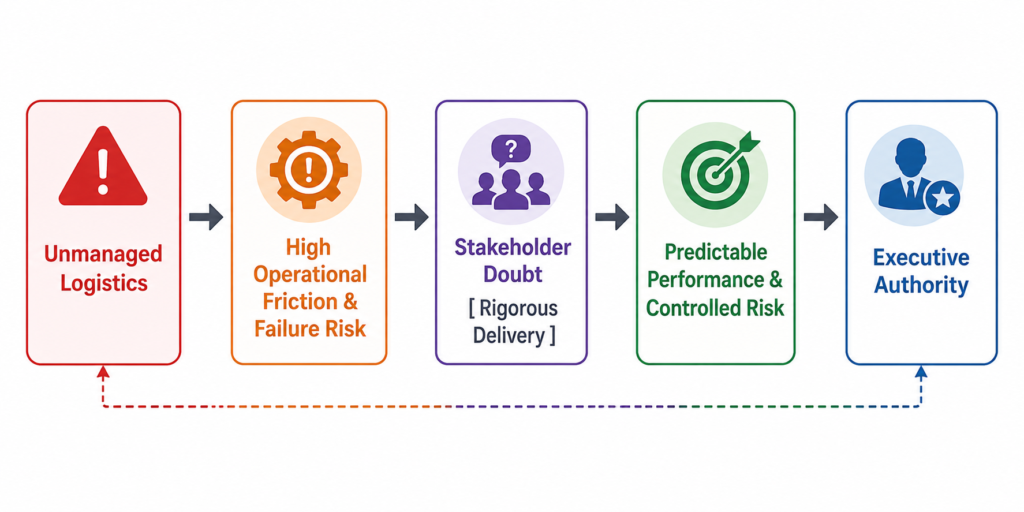
This operational discipline directly transforms your career trajectory:
Elimination of Delivery Chaos: You proactively spot hidden technical dependencies and environmental risks before they derail project schedules.
Controlled Stakeholder Perception: Executive leadership perceives your delivery outcomes as predictable, controlled, and strategically aligned.
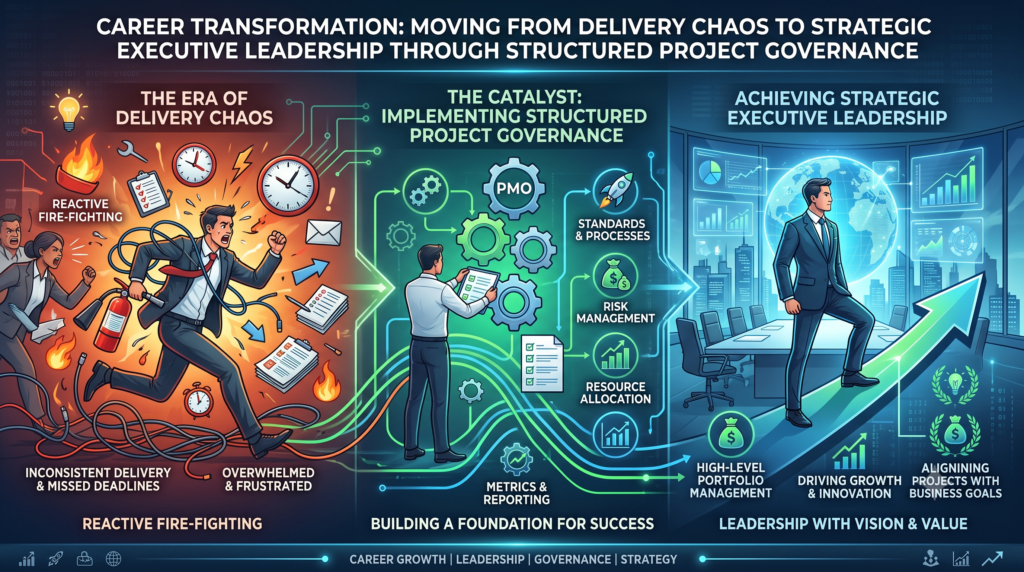
Accelerated Leadership Growth: You build the confidence needed to transition out of daily execution fires and step into strategic program-level governance.
Understanding the operational nuances of exam delivery, question mechanics, and environmental control is the benchmark of professionals who drive elite results.
Master the Science of Professional Delivery with Skillsetify
Navigating high-stakes certifications and building a resilient leadership mindset requires more than self-study. It demands structured mentorship, industry-tested frameworks, and real-world execution strategies that set you apart in boardrooms and executive interviews.
If you are ready to stop guessing, move up the corporate ladder, and learn project management the right way, reach out to Skillsetify. We do not just teach frameworks: we show you your exact career growth trajectory.