Moving Beyond Code to the User Journey
The Silent Killer of Modern Agile Delivery
Imagine this scenario: It is 11:45 PM on a Thursday, two days before a major enterprise product release. Your engineering team has successfully closed out 100% of their assigned Jira tickets. Every unit test passes, the APIs are integrated, and the code compiles without a single error.
Yet, when the Vice President of Product logs into the staging environment to test the new user workflow, total chaos ensues. The customer cannot complete a basic purchase because the login interface forces an unexpected redirect, the payment gateway lacks clear error messaging, and the system fails to send an automated confirmation email.
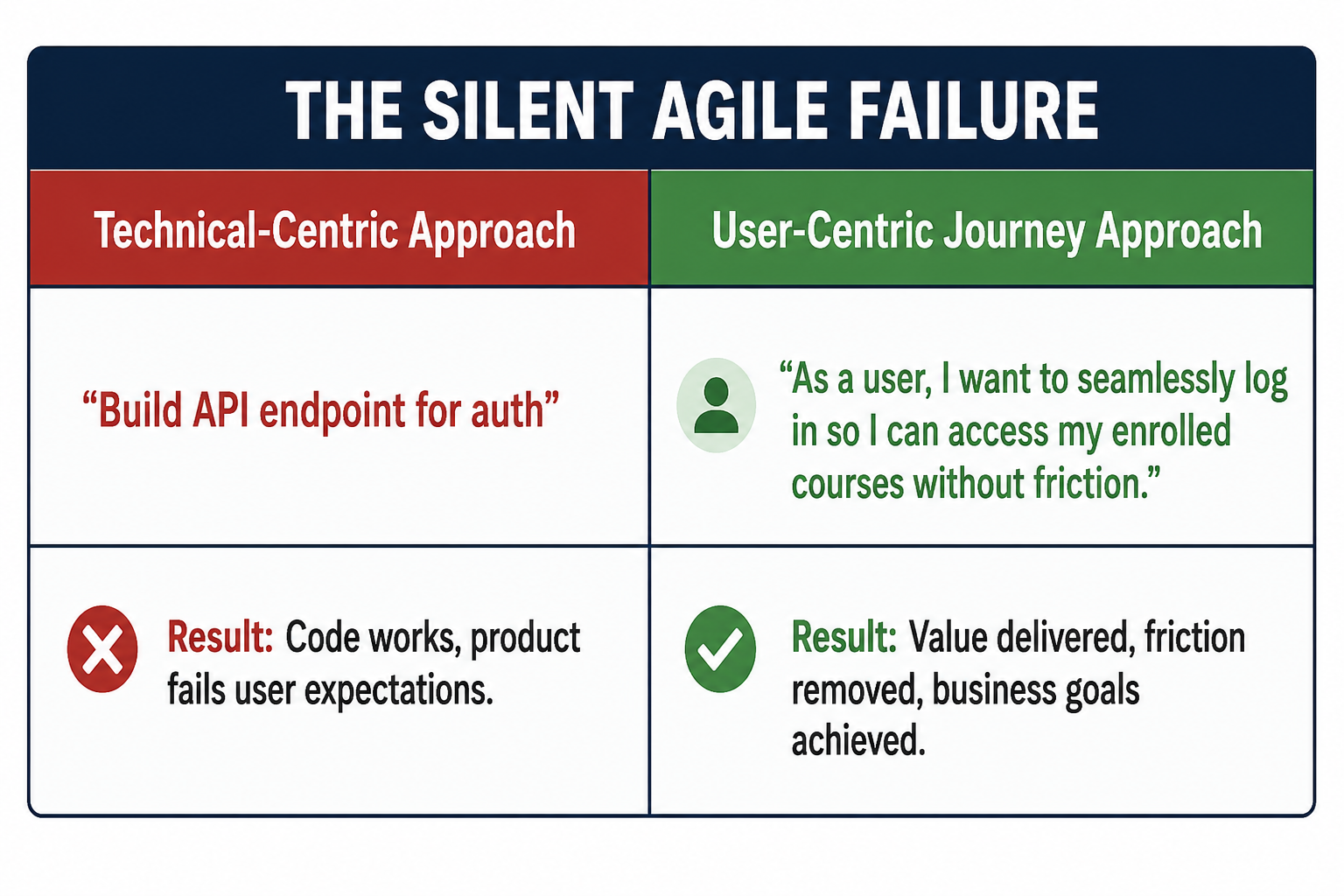
The developers are genuinely baffled. “We built exactly what was in the ticket,” they insist. They are right: the ticket requested an API endpoint and a database schema update. But the product failed.
Why? Because the feature was structured entirely as an isolated technical IT task rather than an end-to-end, user-centric journey.
The most prevalent corporate myth in modern project management is that Agile user stories are simply small technical tasks or system requirements written on a Kanban card. This misunderstanding ruins releases, burns out engineering talent, and inflates project budgets. User stories are not technical specifications; they are functional slices of value framed through the eyes of the consumer.
Deconstructing the User Story within the Agile Planning Onion
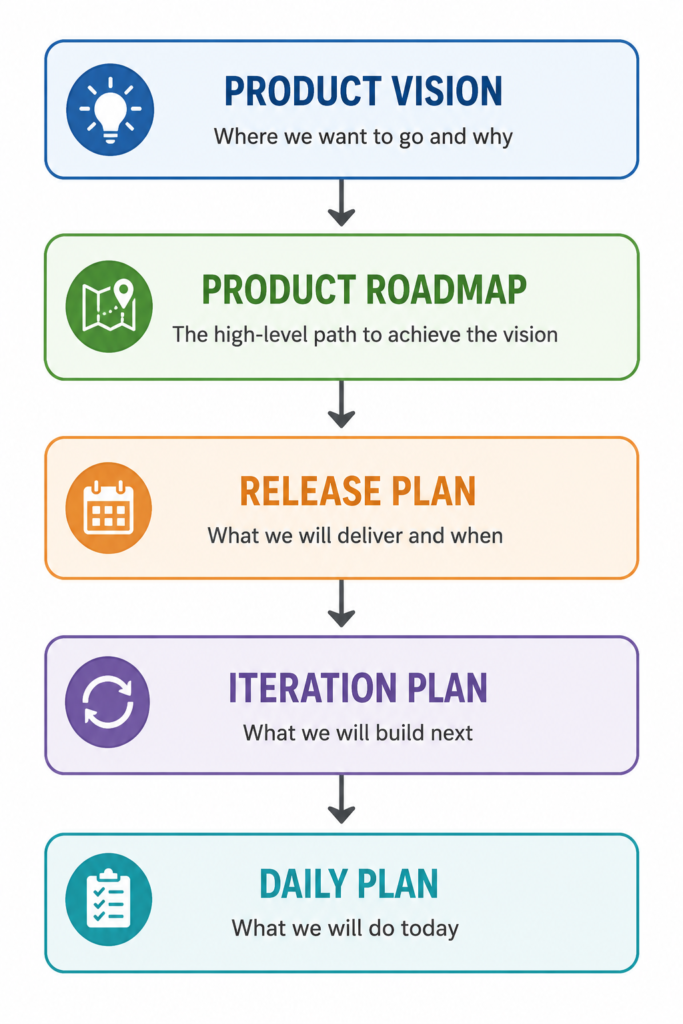
To structure user stories effectively, project managers must first understand where these stories sit within the broader framework known as The Agile Planning Onion.
The Agile Planning Onion demonstrates how high-level corporate goals cascade down to daily technical execution:
Product Vision: The ultimate strategic objective.
Product Roadmap: The chronological strategy of releases over quarters or years.
Release Plan: A specific group of features/epics that deliver target value.
Iteration / Sprint Plan: The 2-to-4-week cycle where specific user stories are built.
Daily Plan: The 24-hour cycle where developers execute against story criteria.
When you write user stories at the iteration layer, you are translating the Release Plan into actionable value. If you frame those stories around IT infrastructure instead of the customer’s path, you lose alignment with the Product Vision.
The Mechanics of User-Centric Story Architecture
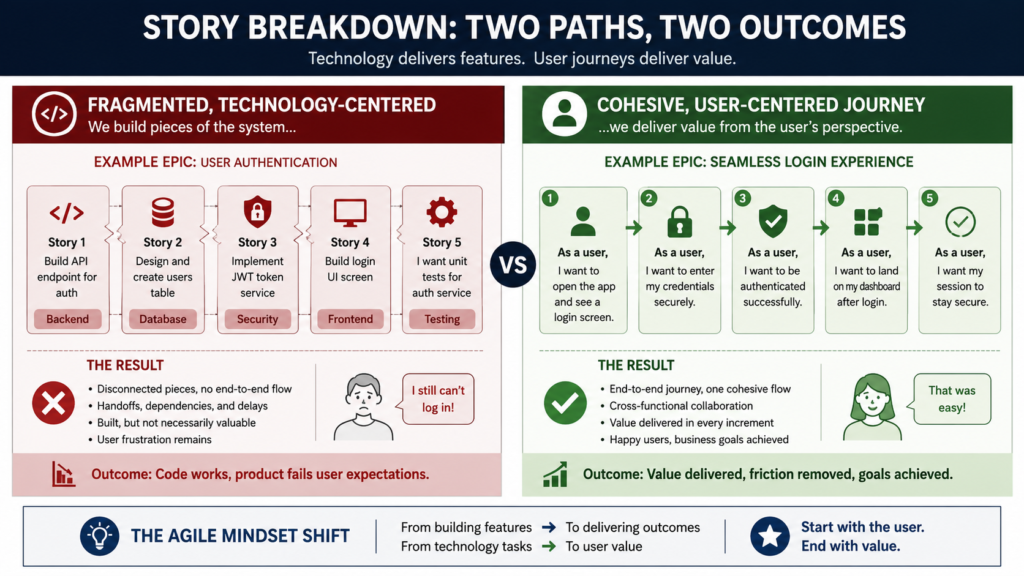
A properly structured user story shifts the focus from what code to write to what outcome the user experiences.
1. The Classic Narrative Standard
A user story must always utilize the standard three-part template:
As a [Type of Consumer/User]
I want to [Perform an action/Achieve a goal]
So that [Receive a clear benefit/value]
Key Rule: Never let an IT developer write “As a System Administrator, I want a SQL table update…” unless the target consumer truly is the administrator. If the story serves an end consumer, frame it around their journey.
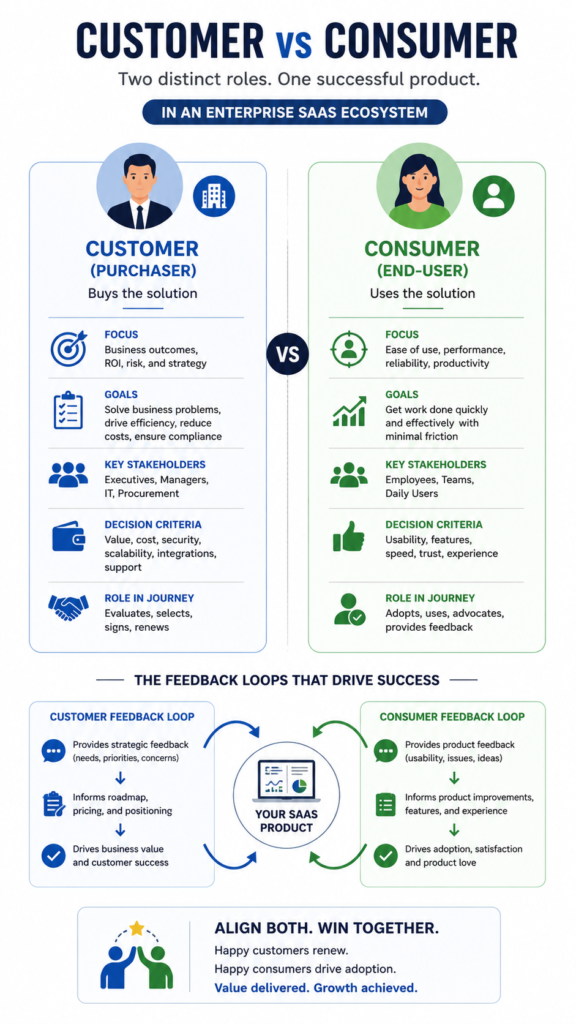
2. The Distinction Between Customer and Consumer
Understanding your true target persona is vital for structuring effective stories:
Customer: The individual or entity paying for the solution.
Consumer / User: The person actively interacting with the product interface to extract value.
For example, when building corporate learning software, an enterprise HR director is the customer (who pays), but an employee is the consumer (who completes modules). User stories must be drafted to solve the consumer’s pain points while satisfying the customer’s governance expectations.
Step-by-Step Implementation Framework for Project Managers
Follow this four-step implementation process to transform raw features into user-centric story structures:
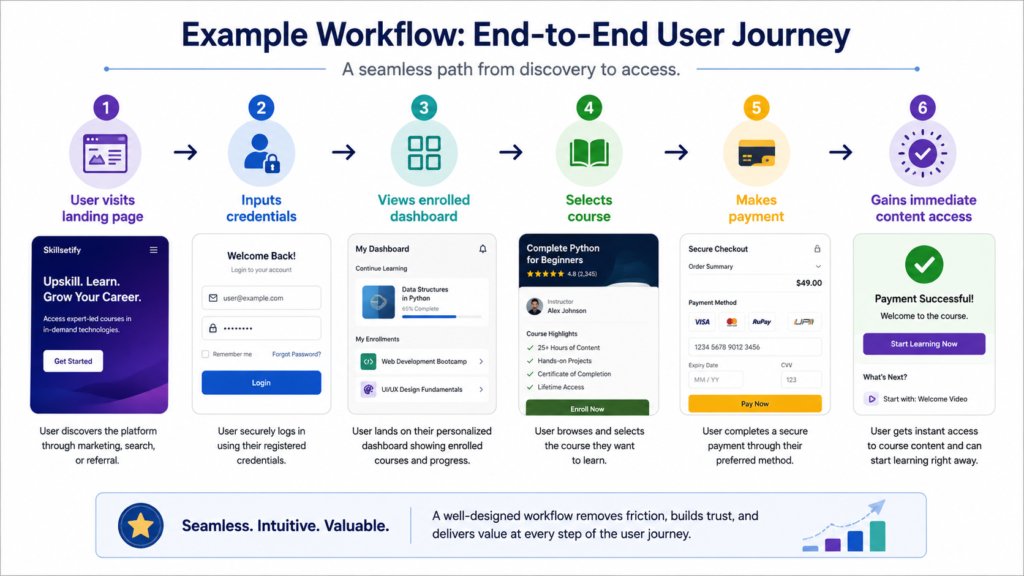
Step 1: Map the Functional User Journey
Before creating backlog items, map out the user’s sequential workflow. Do not look at server architecture; look at steps taken by the human user.
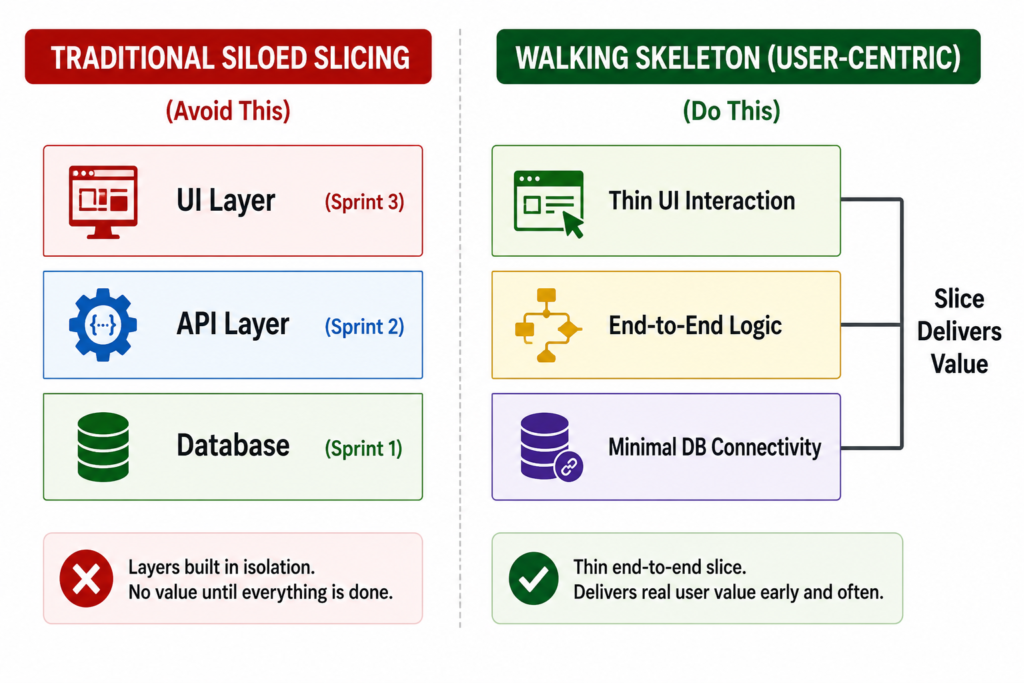
Step 2: Slice Features Horizontally (The "Walking Skeleton")
Avoid vertical technical slicing where Sprint 1 is “Database,” Sprint 2 is “Backend API,” and Sprint 3 is “UI”. Instead, utilize a Walking Skeleton approach. Build a thin, end-to-end functional thread across all layers in a single story so the full user flow works right away.
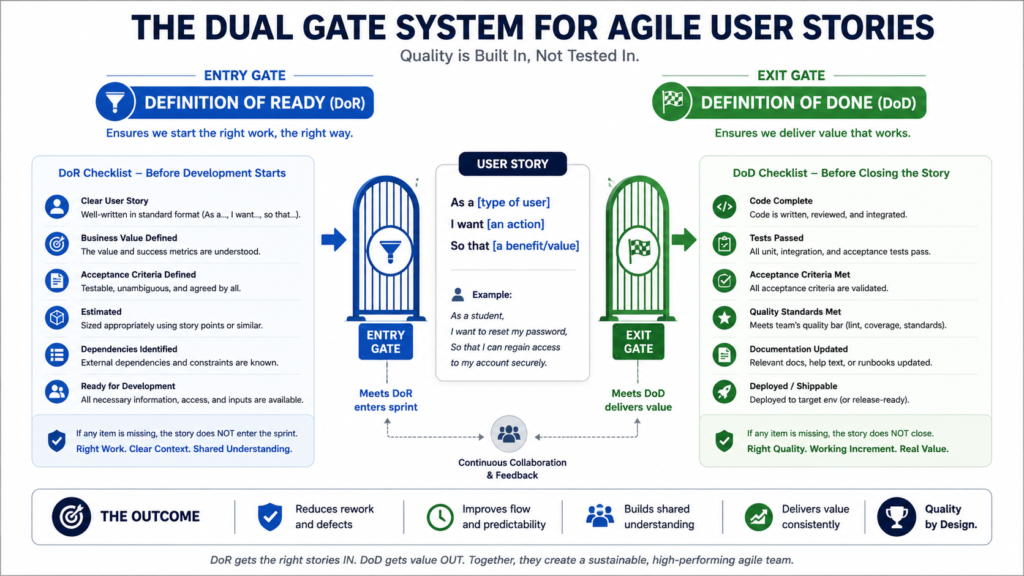
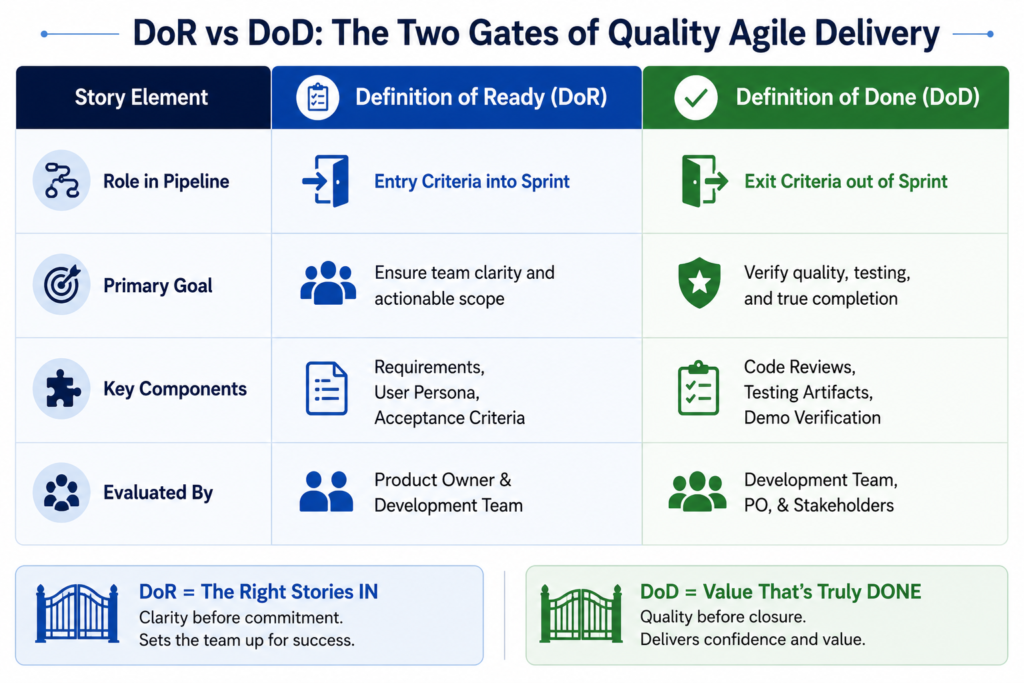
Step 3: Establish Definition of Ready (DoR) - The Entry Gate
A story cannot enter a Sprint planning session without meeting strict Definition of Ready criteria. This acts as the entry guardrail:
Purpose Statement: Clearly outlined user value.
Actionable Narrative: Written in the “As a / I want / So that” format.
Resolved Dependencies: Technical or cross-functional blockers cleared.
Explicit Requirements: Clear scope boundaries.
Acceptance Criteria: Objective conditions that must be tested
Step 4: Establish Definition of Done (DoD) - The Exit Gate
The story is not complete simply because code is written. The Definition of Done serves as the exit guardrail ensuring delivery quality:
Peer code reviews completed.
Automated unit and integration tests passed.
End-to-end functionality demonstrated against Acceptance Criteria.
User-facing documentation updated.
The Career Transformation of Elite Delivery
Mastering user-centric story structure changes how your entire organization views project execution.
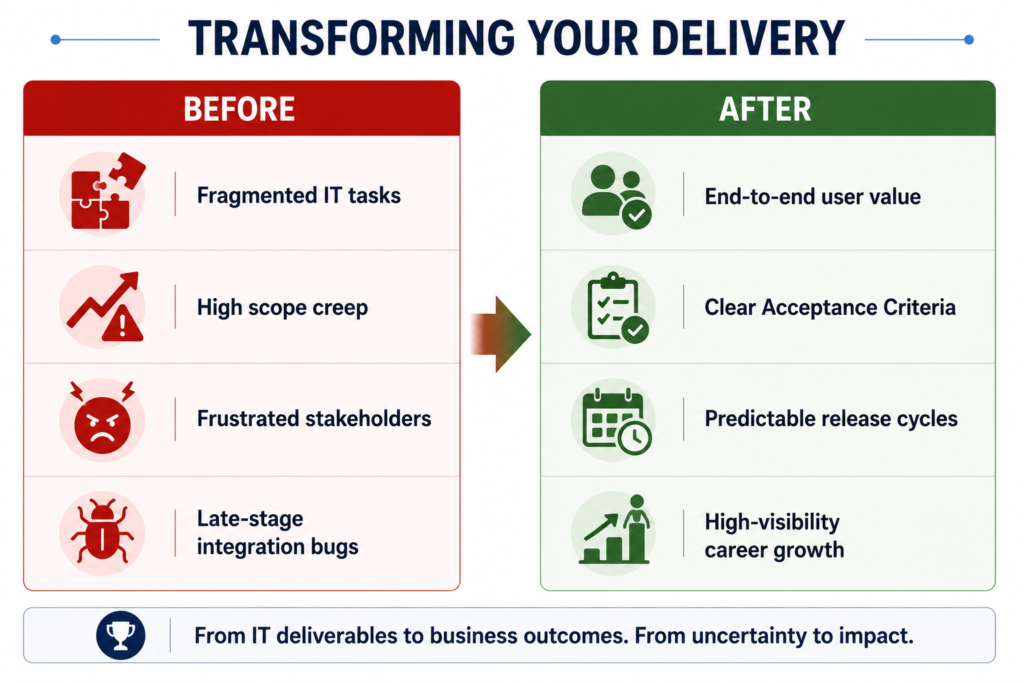
When you shift from managing isolated technical tickets to driving functional user journeys, project chaos melts away. Last-minute release failures vanish because software is validated end-to-end during every single iteration. Scope creep diminishes because Acceptance Criteria explicitly define what success looks like before development ever begins.
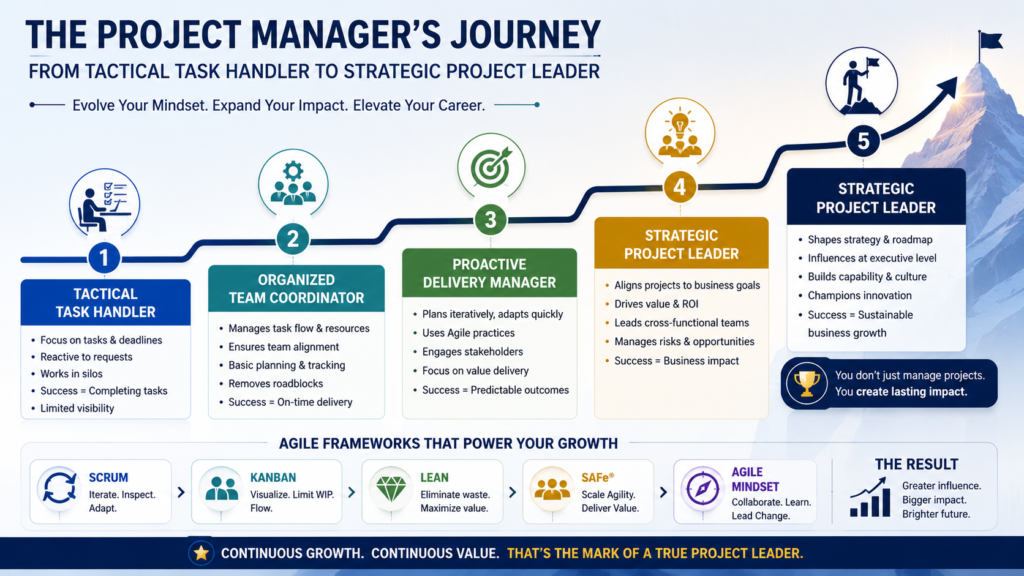
For project managers, Scrum masters, and delivery leads, this transition is career-defining. Senior executive teams do not promote project professionals because they know how to move Jira cards across a board. They promote leaders who can bridge the gap between corporate business strategy and tactical execution.
By aligning user stories directly with the Agile Planning Onion, you prove that you can protect capital investments, increase delivery predictability, and build products customers actually love.
Master Project Management the Right Way with Skillsetify
Structuring user stories correctly is just one layer of modern, high-impact project management. To truly stand out in today’s competitive corporate landscape, you need mastery over top-down portfolio alignment, release architecture, and strategic execution.
Stop guessing how to structure your backlogs. Stop letting vague technical tickets ruin your product launches. It is time to step up and lead projects with absolute authority and proven frameworks.
If you are ready to stop guessing, move up the corporate ladder, and learn project management the right way, reach out to Skillsetify. We do not just teach frameworks: we show you your exact career growth trajectory.
Key Takeaways for Immediate Application:
Focus on the Journey: Never structure a story purely as an internal database task; tie every line of effort to an end consumer interaction.
Respect the Onion: Ensure every two-week user story directly supports a release plan, roadmap item, and strategic vision.
Enforce Dual Gates: Use a strict Definition of Ready to allow work into Sprints and an unyielding Definition of Done to validate work coming out.