Architecting Board Quality Control and Ironclad Feedback Loops
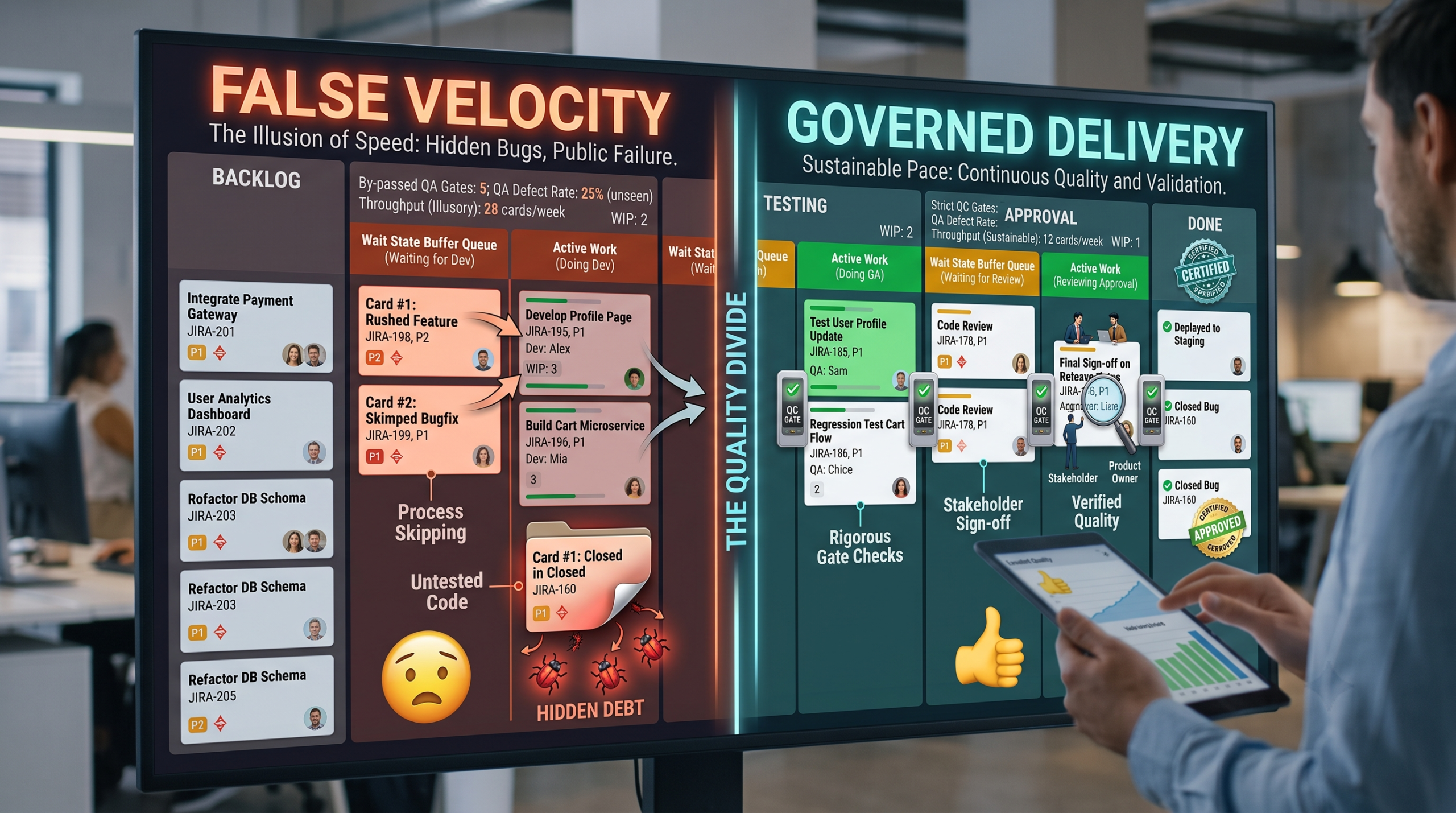
The executive leadership team is preparing for a quarterly product review with a marquee enterprise client. On the project management board, every single high-priority card sits proudly in the “Done” column. Velocity metrics look staggering. The project lead posts a confident update: 100% complete ahead of schedule.
Then the client logs into the staging environment. Within four minutes, they hit a critical authentication failure, discover three missing compliance fields, and realize the core analytics dashboard operates on outdated mock data.
The project board reported complete success, but the business reality was operational chaos. The cards moved right, but quality was left behind.
This nightmare scenario unfolds daily across corporate enterprise teams. It stems from a pervasive myth in modern project management: the belief that “Done” simply means the primary contributor finished drafting the asset or writing the initial code.
When project boards treat task completion as an honor system based on individual contributor handoffs, they are not managing delivery. They are managing illusion. High-performing workflow architecture demands explicit Quality Control (QC) gates, rigorous verification protocols, and structured feedback loops. Task cards must satisfy strict technical testing, peer review, and formal stakeholder sign-offs before earn the right to enter the “Done” column.
The Mechanics of Board Architecture and Quality Control
To build a delivery engine that guarantees quality at scale, project management leaders must separate motion from progress. Visualizing work on a Kanban or Scrum board is useless if the board permits defective deliverables to leak downstream.
1. The Critical Distinction: Acceptance Criteria vs. Definition of Done
A fundamental breakdown in workflow governance is confusing Acceptance Criteria (AC) with the Definition of Done (DoD).
Acceptance Criteria (AC): Micro-level functional requirements unique to a specific card or feature. For example: “The user settings page must allow profile picture uploads under 5MB and support JPEG/PNG formats.”
Definition of Done (DoD): Macro-level quality standards that every single card on the board must meet regardless of its unique feature set. For example: “The code passes automated regression testing, security scanning clears with zero critical vulnerabilities, documentation is updated, and formal product owner sign-off is logged.”
A task card that satisfies its unique Acceptance Criteria but fails the team’s Definition of Done is not “almost complete.” It is work-in-progress (WIP) that carries operational risk.
2. Eliminating False Velocity with Wait-State Buffer Queues
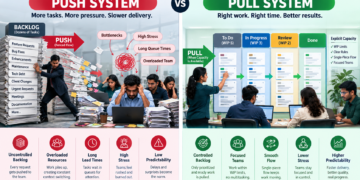
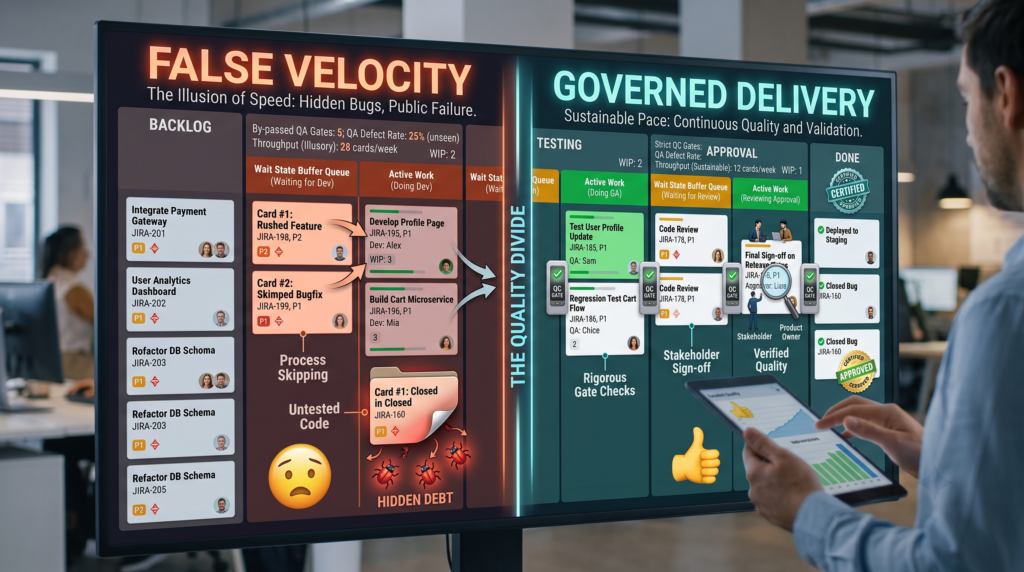
When a contributor finishes their portion of a task, their natural instinct is to drag the card directly into the “QA” or “Review” column. However, if the assigned quality tester or compliance officer is actively working at full capacity, pushing that card creates a false reality. The board signals that review is actively underway when, in reality, the card is sitting idle in a backlog.
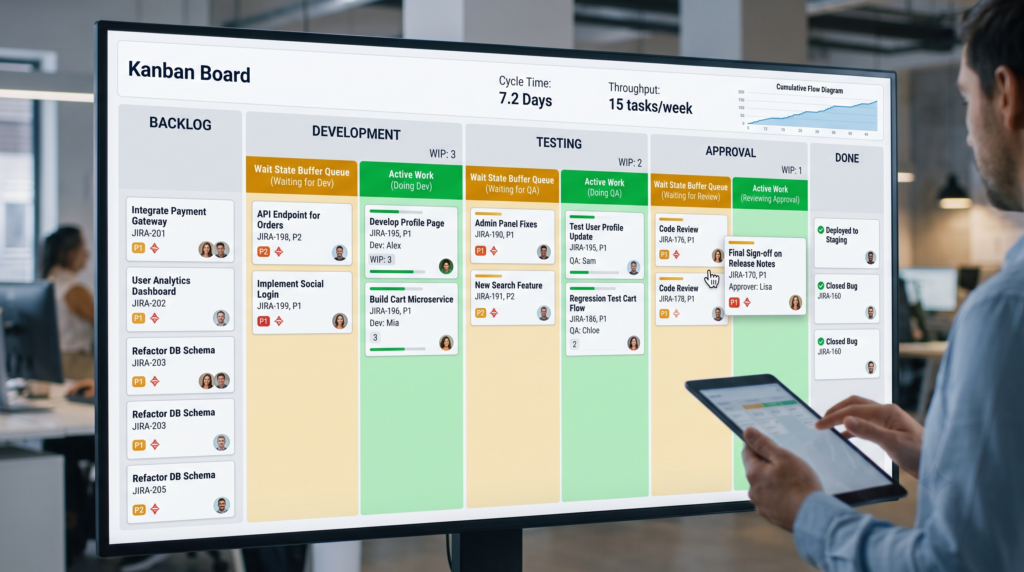
Elite board architecture solves this by integrating explicit buffer queues and wait states:
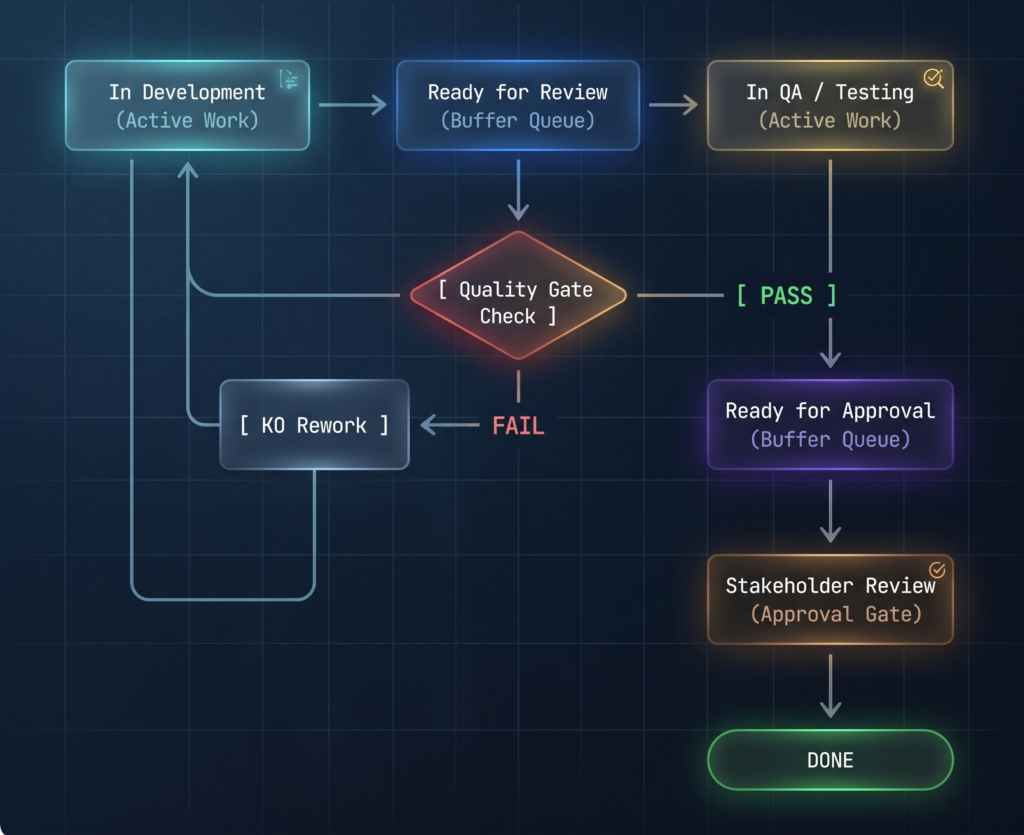
In Development (Active Work): Primary owner is actively drafting or coding.
Ready for Review (Wait State): Work is complete from the author’s side and queued for verification capacity.
In Review / Testing (Active Work): Active evaluation by a dedicated QA specialist, peer reviewer, or legal compliance officer.
Ready for Approval (Wait State): Technical validation is complete, queued for business stakeholder sign-off.
By separating active work columns from passive wait-state queues, project managers gain immediate visibility into operational bottlenecks, accurate queue times, and true team velocity.
3. The Knock-Out (KO) Rework Loop Protocol
What happens when a deliverable fails quality testing or gets rejected by a stakeholder? In ungoverned organizations, team members frequently hide rejected tasks, leave them lingering in QA while quiet off-the-record fixes are pushed, or mark them “Done” with a promise to fix errors in the next cycle.
Governed board architecture treats rework not as an emergency, but as an explicit, measurable state known as the KO Rework Loop:
Tag and Flag: When a card fails a quality gate, it receives a visual “Rework” flag and a detailed defect note citing the exact failed criteria.
Return to Active Development: The card is moved backward into the “In Development” column with high-priority status.
Full Re-Verification: Once corrected, the card must re-enter the QA gate from scratch. It is never permitted to bypass automated testing or peer review simply because it was reviewed earlier.
Tracking how often cards enter the KO loop provides project managers with critical metrics: First-Pass Yield (FPY) and Defect Escape Rates. High rework loops signal unclear requirements, overburdened teams, or insufficient developer-level testing.
Step-by-Step Implementation Framework for Project Managers
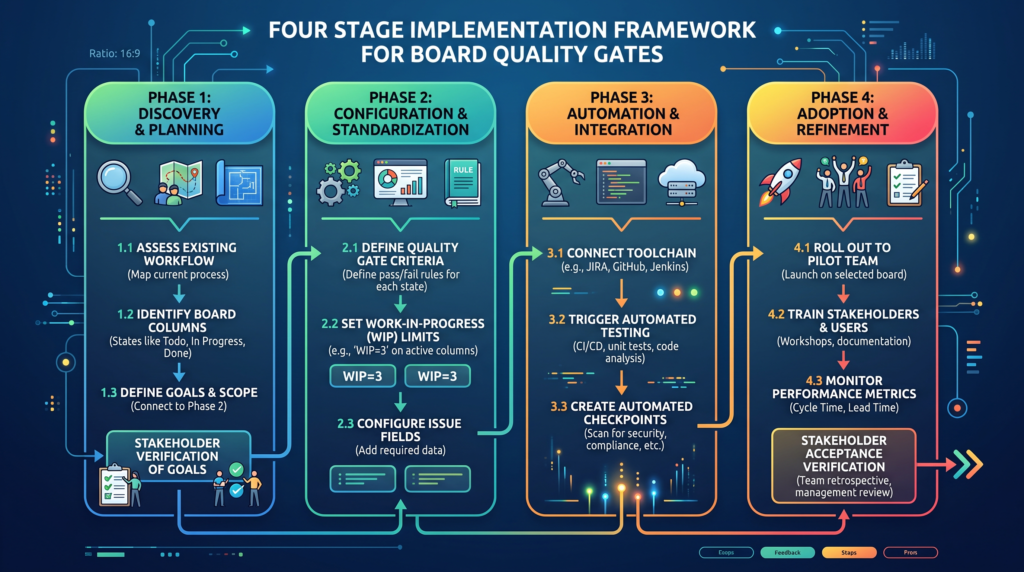
To implement these governance controls on your project board today, follow this structured four-stage rollout plan:
Stage 1: Architect Board Columns and Visual Governance
Reconfigure your workflow board to reflect true operational states. Ensure that every transition point requires a verified action rather than a verbal update.
Action: Split existing review columns into explicit active and wait states.
Action: Restrict card movement privileges so only designated testers or stakeholders can move cards past quality gates.
Stage 2: Establish Explicit Exit Criteria and Work-In-Progress (WIP) Limits
A card cannot exit a column simply because time has passed. It must earn the right to advance by meeting explicit entry and exit rules defined directly on the board.
Action: Define explicit “Definition of Done” checklists on every task template.
Action: Implement strict WIP limits on “Testing” and “Approval” columns. If testing queues fill up, the team must halt new work ingestion and clear the verification bottleneck.
Stage 3: Operationalize the Stakeholder Verification Gate
Internal quality testing ensures technical soundness, but stakeholder approval confirms business alignment.
Action: Build a dedicated “Stakeholder Approval” column immediately prior to “Done.”
Action: Require written confirmation, staging sign-offs, or recorded sign-off notes attached directly to the task card before final transition.
Stage 4: Monitor and Optimize Rework Metrics
Systematically analyze task board data to drive continuous process improvements across project cycles.
Action: Track First-Pass Yield (percentage of cards moving from Development to Done without entering a KO loop).
Action: Conduct targeted retrospectives whenever a card loops back through rework more than twice.
The Professional Transformation: From Firefighting to Elite Governance
Implementing strict quality gates and board-level feedback loops completely transforms the operational landscape of a project team.
The constant cycle of fire-fighting, emergency hotfixes, and defensive client meetings disappears. In its place emerges a calm, predictable, and fully defensible delivery process. Scope creep and requirement misunderstandings are caught early in buffer queues rather than after production deployment. Defect leakage drops dramatically because quality is enforced by structural board design rather than individual memory.
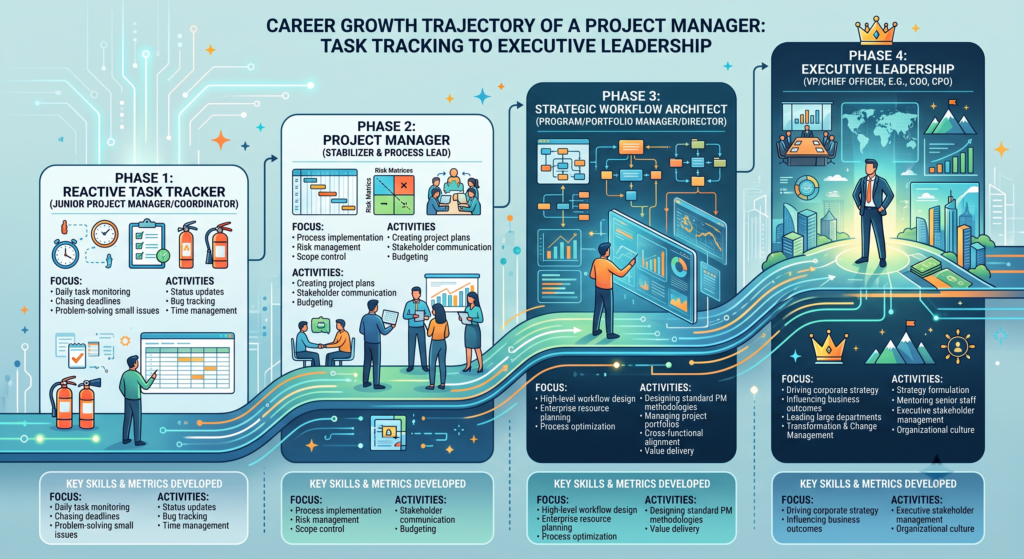
For an ambitious project manager, mastering this architectural level of workflow design marks the transition from basic task tracker to strategic business operations leader.
Executive leaders do not promote project managers simply for moving cards across a screen or running status meetings. They promote professionals who design self-healing, highly governed delivery systems that safeguard margins, protect brand reputation, and guarantee client trust. When you build workflow architecture that enforces uncompromising standards, you establish yourself as an enterprise-grade operator
Master High-Impact Project Management with Skillsetify
Building world-class workflow architectures and managing multi-tiered quality control loops requires deeper mastery than basic drag-and-drop task management. It demands strategic vision, systems thinking, and actionable execution methodologies that drive verifiable corporate outcomes.
If you are ready to stop guessing, move up the corporate ladder, and learn project management the right way, reach out to Skillsetify. We do not just teach frameworks: we show you your exact career growth trajectory.