How Master Delivery Leaders Use the DEEP Framework to Turn Agile Chaos into Elite Execution
A cross-functional software team is awake, exhausted, and staring at a critical delivery failure. The release build is broken, sprint velocity has collapsed, and tension between engineering and product leadership has reached a boiling point.
The culprit behind this multi-million-dollar operational headache is not a rogue line of code or a missing database server. It is Jira ticket #482: a vague, multi-paragraph feature request titled “Optimize Checkout Experience.” The ticket lacks clear acceptance criteria, contains no technical breakdown, and has no defined boundary for success. The Product Owner insisted it was urgent, the engineering team guessed at the implementation details, and the top-down project manager pushed it into the sprint to hit an arbitrary deadline.
This scenario plays out daily across corporate enterprises. It stems from one of the most pervasive myths in modern management: the illusion that a bigger, more exhaustive product backlog equals a thorough project plan.
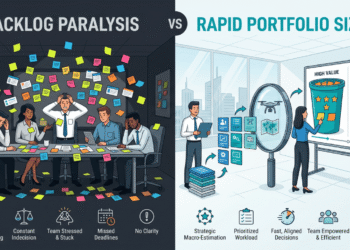
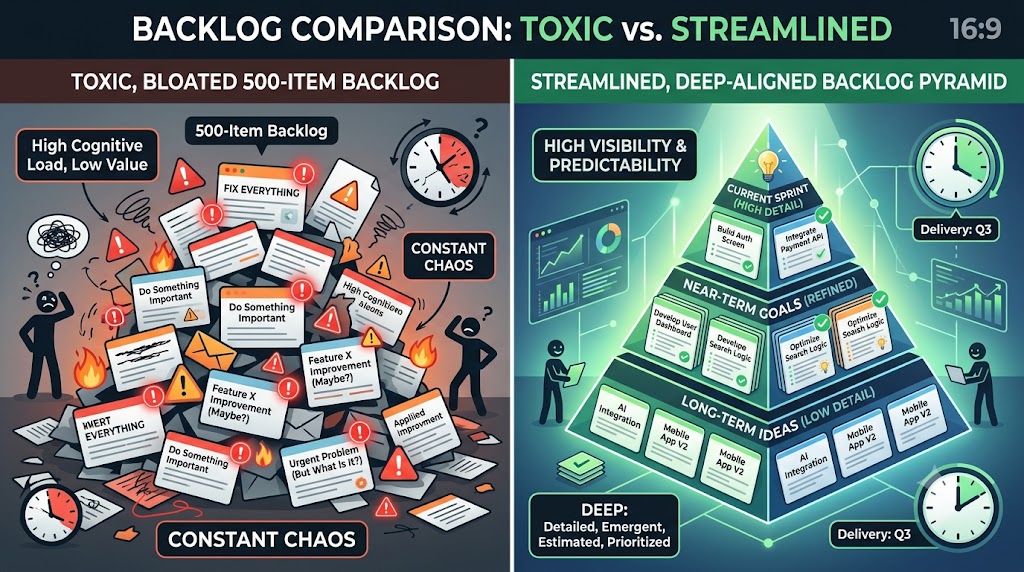
Many traditional leaders believe that a healthy product backlog should be a static, 500-item master repository where every feature for the next two years is mapped out in exhaustive detail. In reality, a massive, static backlog is organizational toxicity. It is technical debt wearing an Agile mask.
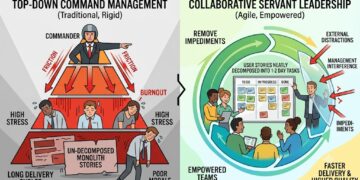
When you clutter a backlog with stale requirements and unrefined epics, you paralyze team autonomy, create massive planning overhead, and invite scope creep. True delivery excellence requires treating the product backlog as a living, emergent tool maintained through servant leadership, structured facilitation, and rigorous quality standards rather than top-down command.
To eliminate backlog bloat and build a reliable engine for continuous delivery, elite project managers rely on the DEEP Framework. Coined by Agile pioneers Roman Pichler and Mike Cohn, DEEP outlines the four essential criteria for backlog quality:
- Detailed Appropriately
- Emergent
- Estimated
- Prioritized
Understanding these four pillars transforms a chaotic collection of requests into a strategic execution roadmap.
Deconstructing the DEEP Framework
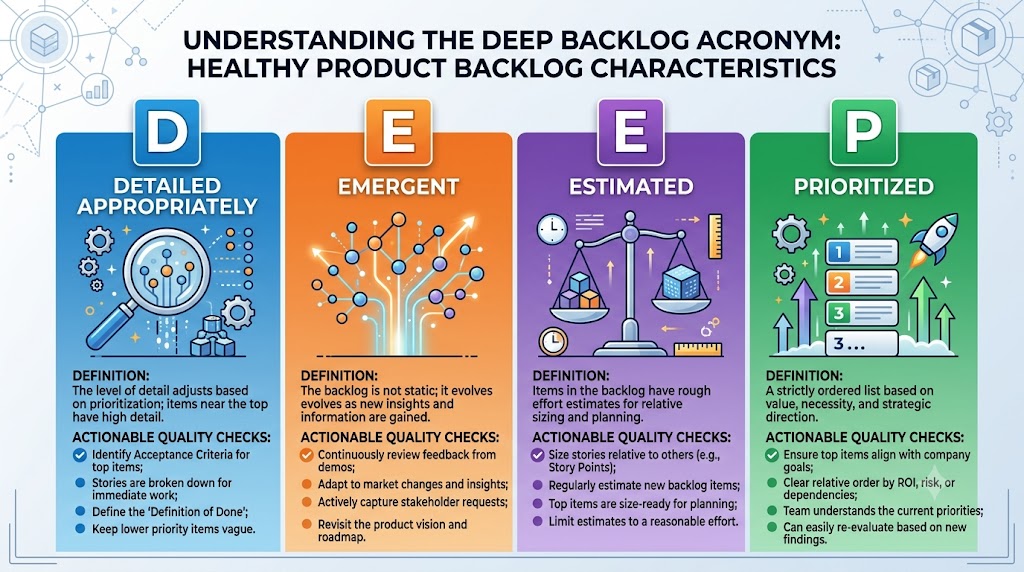
Detailed Appropriately
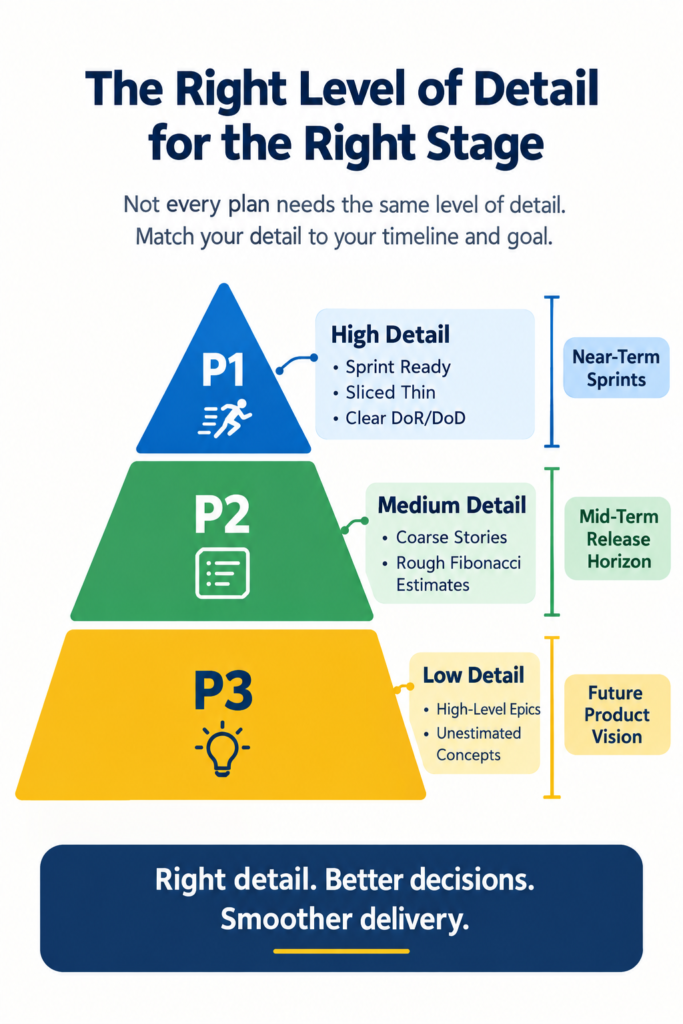
Backlog items should follow a clear structural gradient. Items scheduled for the upcoming sprint sit at the top of the backlog pyramid and must be sliced thin, granular, and fully refined. They require detailed Acceptance Criteria, a clear Definition of Ready (DoR), and an agreed-upon Definition of Done (DoD). Conversely, items targeted for release six months down the line sit at the bottom of the pyramid and should remain high-level epics. Spending dozens of hours writing pixel-perfect requirements for features that may be altered by market feedback in two quarters is pure waste.
Emergent (Dynamic & Evolving)
A healthy product backlog is never static. It is a dynamic organism that continuously evolves based on user feedback, competitive shifts, technical spikes, and team retrospectives. If a backlog looks identical in Quarter 4 to how it looked in Quarter 1, the team is executing Waterfall under an Agile label. As new insights emerge, stories are added, modified, re-prioritized, or aggressively pruned.
Estimated
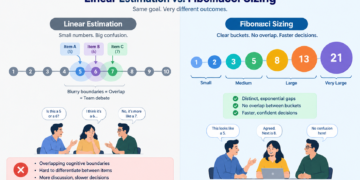
Every item in the backlog must carry a relative estimate to enable capacity planning, release forecasting, and value tracking. Modern delivery teams move away from traditional hour-based estimation in favor of relative sizing using the Fibonacci sequence (1, 2, 3, 5, 8, 13, 21).
Why does the Fibonacci sequence work so effectively? Human cognitive processing struggles to differentiate between 6 and 7 hours of work, leading to endless debates. However, the human brain instantly grasps the structural jump between 5 and 8 effort points. The exponential gaps force team consensus, account for uncertainty, and accelerate refinement.
Prioritized (Ordered by Value & Risk)
Items in the product backlog must be strictly prioritized based on business value, dependency order, and risk mitigation. High-value, high-risk items are moved to the top of the queue so the team delivers maximum ROI and resolves technical ambiguity early in the development lifecycle. If everything is labeled a top priority, nothing is a priority.
Step-by-Step PM Implementation & Facilitation Framework
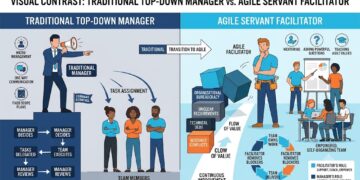
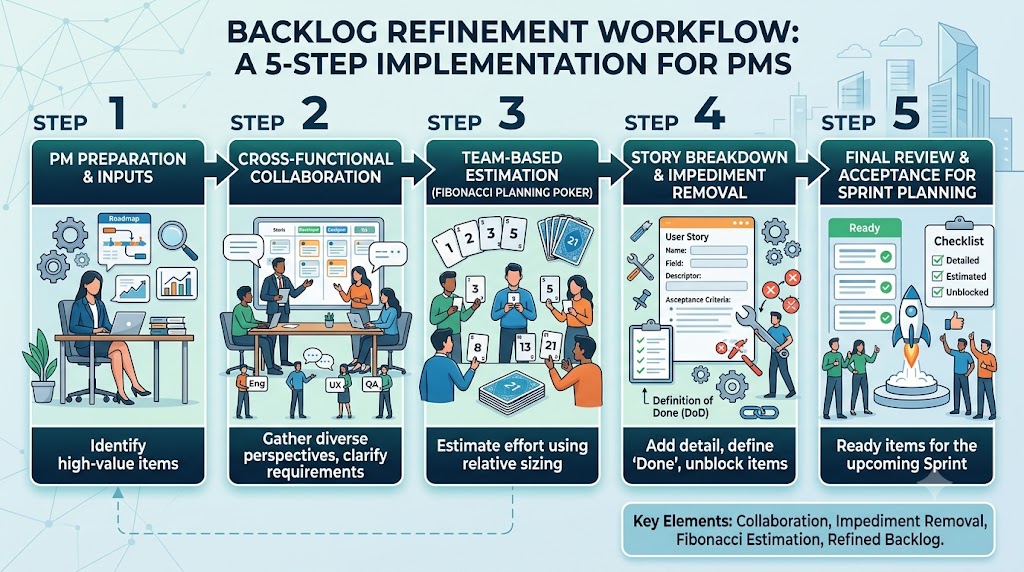
As a delivery leader, your role is not to dictate backlogs top-down. Your goal is to facilitate collaboration, coach the team, mentor Product Owners, and actively remove operational impediments. Here is a step-by-step framework to operationalize DEEP across your organization.
Step 1: Establish Strict Quality Gates (Definition of Ready)
Work with your Product Owner and cross-functional team to set an uncompromising Definition of Ready (DoR). A story is only ready for sprint planning when it meets three criteria:
It solves a single, well-defined user problem.
It has clear, testable acceptance criteria.
It has no unresolved external dependencies blocking development.
Act as the guardian of the team’s focus. If a story lacks a DoR, coach the Product Owner to keep it in the refinement pipeline rather than pushing incomplete work into execution.
Step 2: Facilitate Continuous Refinement Cadences
Avoid marathon, 4-hour backlog grooming sessions that drain team energy. Instead, host weekly 45-to-60-minute refinement sessions. Structure these sessions around collaborative problem-solving:
The Product Owner presents the business problem and desired user outcome.
The cross-functional development team (backend, frontend, QA, database) discusses implementation options.
The team breaks down massive stories into smaller, vertical slices that can be delivered independently.
Step 3: Standardize Relative Sizing via Planning Poker
During refinement, run Planning Poker using Fibonacci story points. Have team members reveal their effort estimates simultaneously to avoid anchoring bias.
If a senior developer estimates a story at a 3 while a junior QA analyst estimates it at an 8, do not average the numbers. Facilitate a discussion around the disconnect. Often, the higher estimate reveals hidden testing complexity or unmapped dependencies that the senior engineer overlooked. Use relative sizing as a mentoring mechanism to align technical understanding.
Step 4: Conduct Quarterly Backlog Pruning
Set a recurring calendar trigger every quarter to audit your backlog. If a user story has been sitting at the bottom of the backlog for more than six months without movement, archive or delete it. If a feature request were truly critical to business growth, it would have risen in priority. Pruning reduces visual noise, lowers cognitive load, and keeps the backlog lean and actionable.
Step 5: Master Active Impediment Shielding
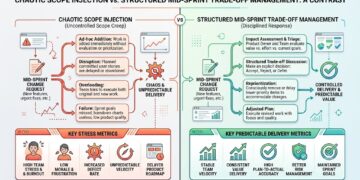
When business stakeholders request urgent scope changes mid-sprint, do not act as a passive order taker or a rigid gatekeeper. Facilitate a trade-off conversation. Educate stakeholders on sprint stability: if a new 5-point story must be added to the active sprint due to a critical business shift, an existing 5-point story must be returned to the product backlog. Protect team capacity while remaining responsive to real corporate emergencies.
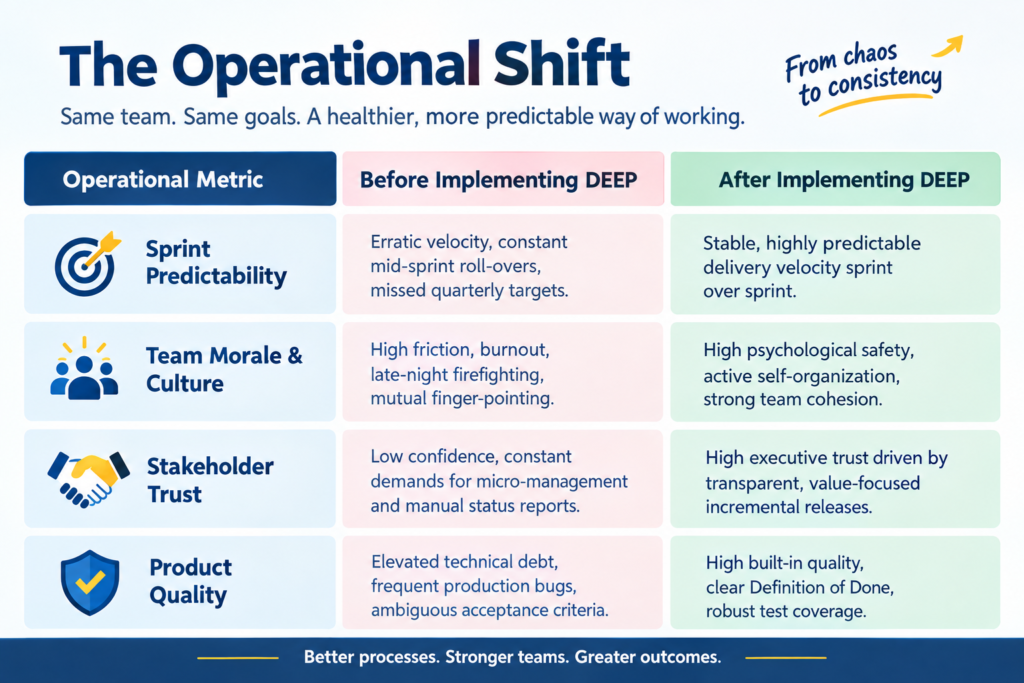
When you master the DEEP framework and shift from a traditional top-down manager to an empowering servant-leader, your operational reality changes dramatically.
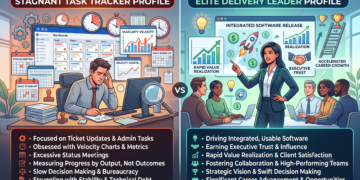
Beyond operational efficiency, mastering this framework reshapes your career trajectory. Executives do not promote project managers who merely update Gantt charts, forward emails, and report delays. They promote delivery leaders who build resilient systems, mentor cross-functional teams, and consistently translate strategic vision into high-impact software execution.
By positioning yourself as a master of backlog quality and an expert facilitator of self-organizing teams, you become an indispensable strategic asset in any modern enterprise.
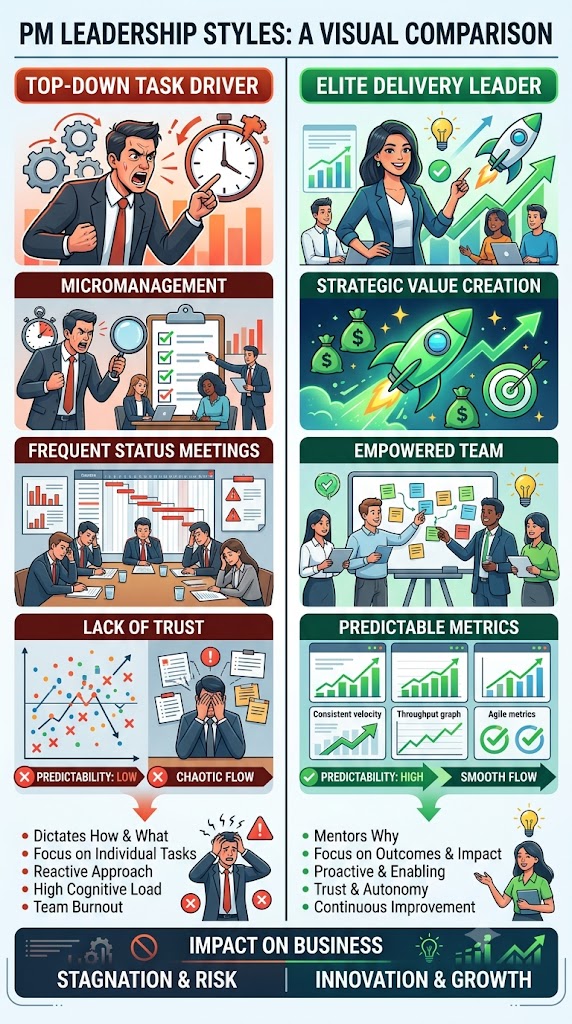
Building a high-performing Agile engine requires more than memorizing acronyms: it requires mastering the nuance of corporate facilitation, team mentorship, and strategic delivery management. The DEEP framework is your foundational blueprint for eliminating backlog chaos and driving predictable outcomes.
If you are ready to stop guessing, move up the corporate ladder, and learn project management the right way, reach out to Skillsetify. We do not just teach frameworks: we show you your exact career growth trajectory.