Why 'Product Owner by Committee' Is Sabotaging Your Value Stream
Ahead of a major product release, an enterprise engineering team is grinding through intensive workweeks to deliver a critical infrastructure update. Suddenly, the Chief Revenue Officer swoops into a team chat channel demanding an unvetted bespoke reporting dashboard for a single prospective client. Simultaneously, the Head of Marketing insists on pushing a brand redesign into the active sprint, completely bypassing the intake process.
Caught in the crossfire is the team’s titled Product Owner, who operates not as an empowered decision-maker, but as an administrative note-taker. Desperate to appease every executive in the room, the Product Owner yields, alters the sprint scope mid-flight, and forces the team to juggle competing mandates.
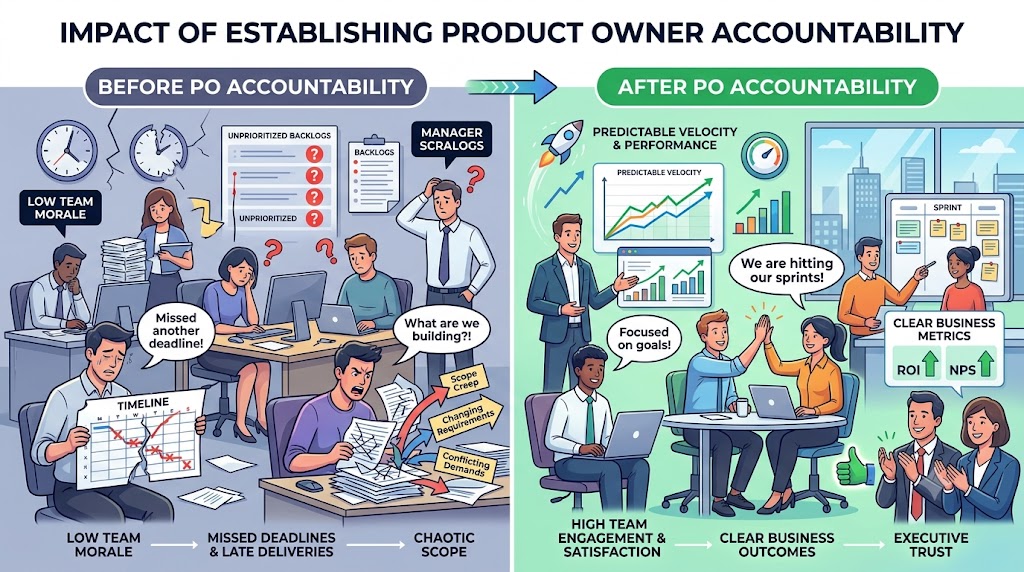
The result is a predictable corporate disaster. Sprint commitments collapse, the core infrastructure release is delayed by six weeks, engineering team morale plummets, and the custom feature delivered for the prospective client turns out to be functionally flawed due to rushed requirements. The organization burned over $300,000 in technical capacity to ship organizational friction rather than business value.
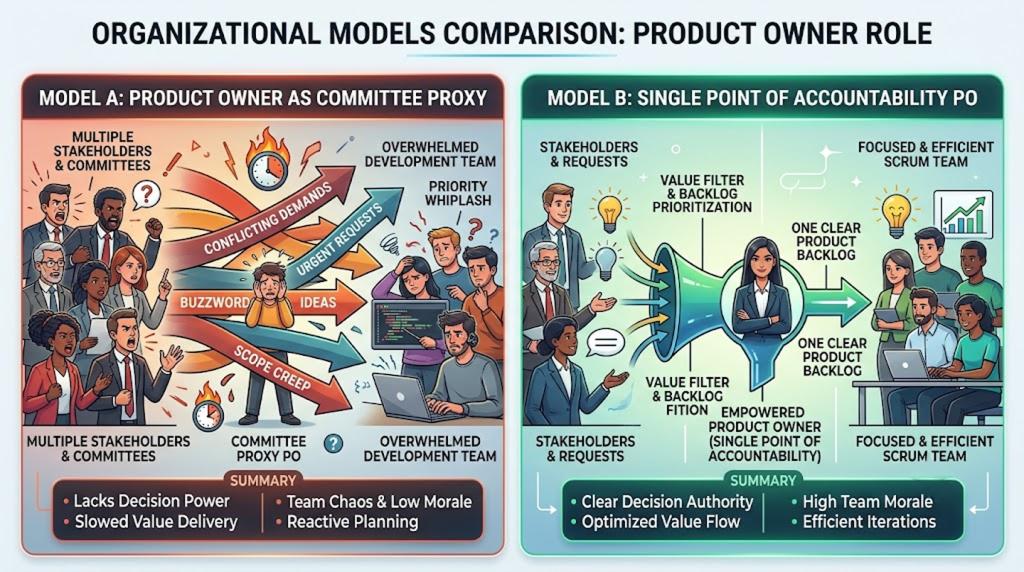
This breakdown plays out daily across modern organizations due to a widespread operational myth: the belief that Product Ownership is a shared committee responsibility or a diplomatic proxy role meant to satisfy every vocal stakeholder. Organizations frequently assign the Product Owner title while withholding true decision-making authority, reducing the individual to a backlog clerk who simply routes demands to developers.
In practice, high-performing Agile delivery requires the Product Owner to serve as the single accountable decision-maker positioned firmly between external stakeholders and the execution team. They are not a proxy, nor are they a committee. They are the sole individual empowered to say “no” to low-value distractions, prioritize business outcomes, and maximize the return on investment generated by the delivery team.
The Core Mechanics of Product Owner Accountability
To understand why single-point accountability is non-negotiable, project leaders must examine the core mechanics of the Product Owner role. The Product Owner is fundamentally accountable for maximizing the value of the product resulting from the work of the delivery team. This single responsibility mandates strict authority over both strategic vision and day-to-day execution.
The Dual Interface: Bridging Stakeholder Vision and Technical Execution
An effective Product Owner functions as a bi-directional translation mechanism, operating fluidly across two distinct domain interfaces:
Stakeholder Alignment (Business Domain): When interacting with executives, clients, sales teams, and regulatory bodies, the Product Owner speaks the language of strategic outcomes, return on investment, and user metrics. They gather raw market feedback and business constraints without allowing stakeholders to dictate task-level technical solutions.
Team Collaboration (Technical & Delivery Domain): When working with the cross-functional delivery team, the Product Owner translates high-level strategic objectives into clear, actionable user stories. They define the “what” and the “why” behind every request, establishing functional scope and acceptance criteria while leaving the “how” entirely to the technical expertise of the team.
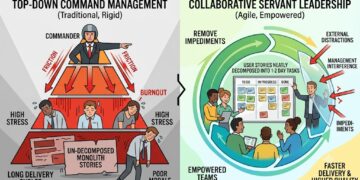
When a Product Owner lacks final decision-making authority, this bridge collapses. Stakeholders bypass the PO to lobby developers directly, injecting untracked scope into active iterations and creating conflicting priorities that paralyze delivery velocity.
Product Backlog Mastery and the DEEP Framework
The primary mechanism through which a Product Owner drives value is the Product Backlog. A common organizational anti-pattern is treating the backlog like an uncurated storage closet, a dumping ground for every idea ever mentioned in an executive meeting. Overloaded backlogs create cognitive noise, dilute strategic vision, and obscure critical path items.
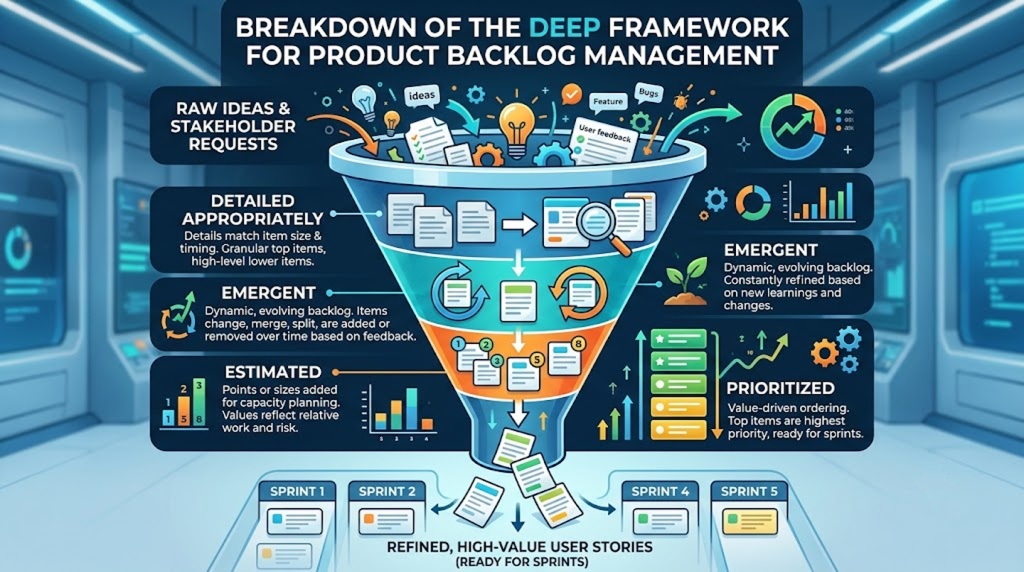
Disciplined Product Owners maintain a lean, actionable backlog by adhering to the DEEP framework:
Detailed Appropriately: Items near the top of the backlog, targeted for immediate implementation, are thoroughly defined with explicit acceptance criteria. Items further down the roadmap remain high-level epics or concepts until their execution window approaches.
Emergent: The backlog is never static. It continuously evolves, expands, or contracts based on real-time market feedback, technical findings, customer usage data, and shifting corporate strategy.
Estimated: Items carry relative complexity estimates developed collaboratively with the delivery team. This provides the transparency necessary to calculate team velocity and evaluate trade-offs.
Prioritized: Items are strictly ordered from top to bottom based on delivered value, risk mitigation, dependency management, and strategic urgency. There is no operational state where “everything is priority one.”
A vital element of accountability is backlog pruning. An empowered Product Owner regularly removes stale or low-value user stories. Declining a feature request is not a failure of customer service; it is the fundamental duty of product value stewardship.
The Boundaries of Authority: Protecting Focus and Enforcing Quality
Accountability requires defined operational boundaries supported by clear team agreements:
Definition of Ready (DoR): The Product Owner ensures that no user story enters execution planning unless it meets strict preparation criteria. A story must feature a documented business outcome, clear acceptance criteria, resolved external dependencies, and a relative size estimate. If a stakeholder pushes an unrefined concept at the last minute, the Product Owner uses the DoR as an objective quality gate.
Definition of Done (DoD): While the cross-functional delivery team enforces technical quality standards, the Product Owner serves as the ultimate acceptor of completed work. They review functional deliverables against acceptance criteria during iteration reviews, ensuring that delivered features resolve the intended customer problem.
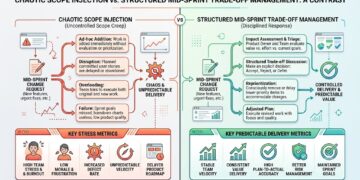
Protecting the Iteration Scope: Once an iteration begins, the work plan is locked. The Product Owner shields the team from external noise and scope creep. If an genuine business emergency emerges that invalidates the iteration goal, the Product Owner holds the sole authority to cancel or re-plan the iteration, making the financial trade-offs visible to leadership.
The Step-by-Step Implementation Framework for Project Leaders
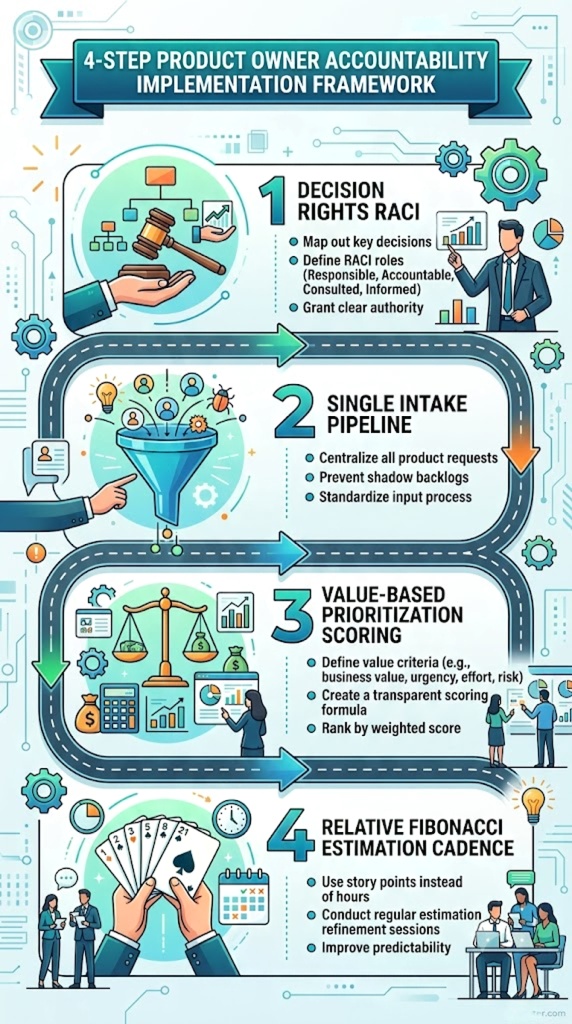
Transitioning an organization from proxy-driven chaos to authoritative Product Owner accountability requires a structured governance framework. Senior project managers and agile leaders can implement the following four-step model to establish clear role ownership.
Step 1: Establish the Decision-Rights Baseline (RACI Matrix)
Codify authority boundaries across corporate leadership by mapping decision rights using a tailored RACI matrix:
Product Vision & Strategy: Product Owner (Accountable), Executive Leadership (Consulted), Delivery Team (Informed).
Backlog Ordering & Prioritization: Product Owner (Solely Accountable), Stakeholders (Consulted), Delivery Team (Consulted).
Technical Implementation & Task Estimation: Delivery Team (Accountable), Product Owner (Consulted), Stakeholders (Informed).
Acceptance of Functional Deliverables: Product Owner (Accountable), Stakeholders (Informed).
Securing explicit executive endorsement on this model prevents stakeholder bypass anti-patterns before they start.
Step 2: Implement a Single-Funnel Stakeholder Intake Pipeline
Eliminate direct stakeholder-to-developer requests by establishing a unified request intake pipeline. All feature proposals, bug reports, and enhancement ideas must enter through a single transparent intake system managed exclusively by the Product Owner.
Require stakeholders to define the business problem, target key performance metrics, and estimated financial impact for every submission. Additionally, establish a regular Stakeholder Alignment Forum where the Product Owner reviews roadmap trade-offs and presents prioritized items without surrendering decision rights.
Step 3: Operationalize Value-Based Prioritization Mechanics
Replace subjective prioritization with objective scoring models. The Product Owner should evaluate candidate backlog items using frameworks such as Weighted Shortest Job First (WSJF) or Value vs. Effort matrices.
Calculate cost of delay and business value against engineering effort, then publish these prioritization scores openly in management tools like Jira or Azure DevOps. When stakeholders observe that roadmap ordering is grounded in objective business logic rather than executive rank, friction decreases.
Step 4: Institute Relative Sizing and Estimation Discipline
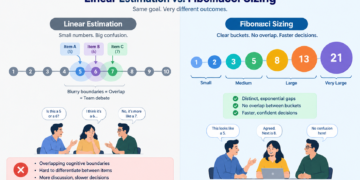
Enforce relative estimation techniques, such as story points based on the Fibonacci sequence (1, 2, 3, 5, 8, 13, 21), during backlog refinement cadences.
Guide the team to estimate relative complexity, risk, and effort rather than committing to rigid hour estimates up front. Utilizing the numerical gaps in the Fibonacci sequence prevents unnecessary debate over minor variances (such as choosing between a 5 or a 6), forcing the team to categorize work into distinct complexity bands.
From Feature Factory Chaos to High-Velocity Business Impact
When an organization successfully transitions to single-point Product Owner accountability, the operational transformation is immediate.
The most prominent outcome is the elimination of feature factory burnout. Teams no longer waste engineering capacity building unvalidated features, chasing shifting executive requests, or context-switching across ill-defined tasks. Delivery velocity stabilizes and release predictability increases significantly. Engineers focus on building robust technical solutions because they trust that the Product Owner has validated the strategic necessity of every item in the sprint.
For executive leadership, transparency replaces operational uncertainty. Rather than guessing when a project will land or why a specific request was deferred, leadership gains clear visibility into the product roadmap, backed by concrete data on team capacity, trade-offs, and return on investment.
Balancing stakeholder input with decisive authority is the defining capability for modern project leaders. In an industry crowded with tactical coordinators who merely track schedules, leaders who master value optimization, backlog governance, and decisive accountability stand out immediately. Developing these competencies elevates a project professional from a back-office administrator into a strategic business driver.
Elevate Your Project Leadership with Skillsetify
Navigating the complexities of Agile roles, stakeholder friction, and value optimization requires more than reading theoretical guides. It demands structured mentorship, practical case studies, and real-world application that translates directly into corporate authority.
If you are ready to stop guessing, move up the corporate ladder, and learn project management the right way, reach out to Skillsetify. We do not just teach frameworks: we show you your exact career growth trajectory. Whether you are aiming to transition into a Senior Product Owner role, optimize your enterprise delivery team, or master executive-level agile leadership, Skillsetify provides the industry-validated training and personalized guidance needed to turn professional ambition into measurable career advancement.