Why Your Agile Artifacts Are Failing (And How Core Roles Can Fix Them)
The executive suite is expecting a fully functional enterprise feature rollout. The Product Owner is assuring leadership that the sprint completed with 100 percent velocity. However, when the staging environment is deployed, chaos erupts. The payment gateway crashes, user permission controls fail, and the core checkout flow is completely broken.
In the ensuing post-mortem, the truth emerges. “Done” meant four different things to four different developers. The backend team finished their code without running integration tests, QA never received the final criteria, and the front-end team built against an outdated design mockup buried deep within a bloated backlog. The team spent two weeks sprinting on individual tasks, but they delivered zero cumulative business value.
Dispel the Myth: Artifacts Are Not Administrative Overhead
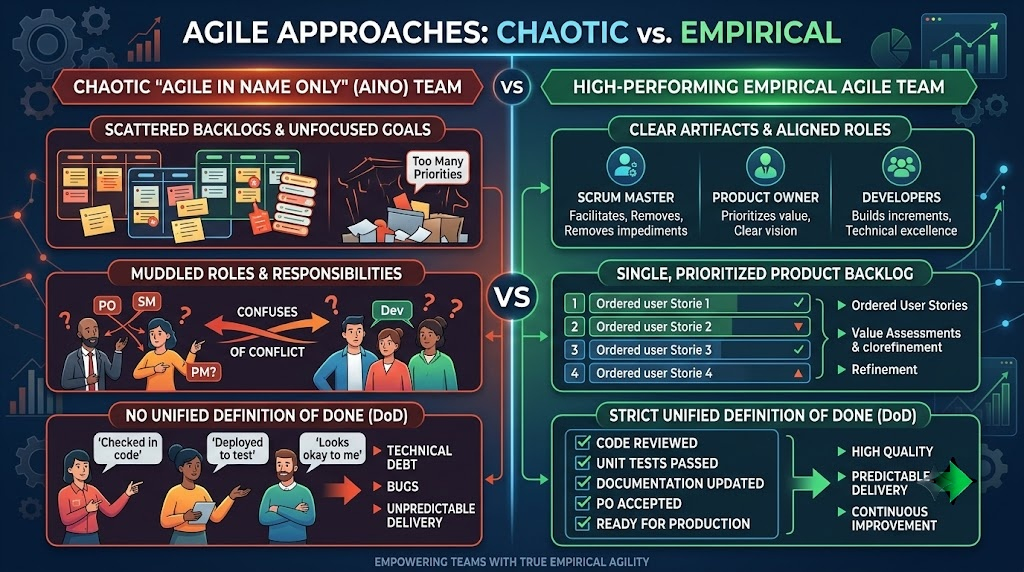
This crisis illustrates the classic corporate trap: practicing “Agile in name only.” Many organizations adopt Agile terminology while completely missing its structural foundation.
The most persistent corporate myth in modern project management is that Agile implies a lack of governance, where backlogs serve as dumping grounds for raw ideas and Scrum Masters act as glorified calendar managers. In reality, Agile is not chaotic freedom. It is a disciplined framework of empirical process control. At the heart of this discipline are Agile Artifacts and Core Agile Roles. When mismanaged, artifacts become invisible, misleading, or toxic. When defined and executed correctly, they transform project management from reactive firefighting into predictable, high-value delivery.
Deconstructing Core Roles and Defining Essential Agile Artifacts
To restore order and achieve predictable delivery, project management leaders must understand how core Agile roles steward key artifacts.
The Dynamics of Core Agile Roles: Scrum Master vs. Agile Coach
In modern corporate environments, titles like Scrum Master, Agile Coach, and Delivery Lead are frequently used interchangeably. While their daily tactical focus may shift depending on organizational maturity, their fundamental objective remains identical: serving as a catalyst for team performance and process maturity.
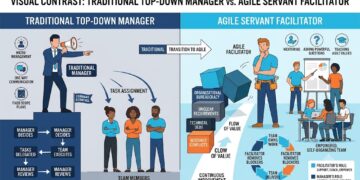
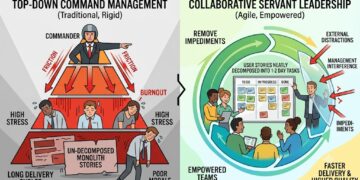
The Scrum Master: Operates primarily at the team level as a servant leader, facilitator, and protector. They shield the team from external noise, facilitate team ceremonies, and aggressively eliminate organizational impediments.
The Agile Coach: Operates at a broader programmatic or enterprise level. They focus on organizational change management, cross-team alignment, scaling frameworks, and mentoring Scrum Masters and executives in Agile mindsets.
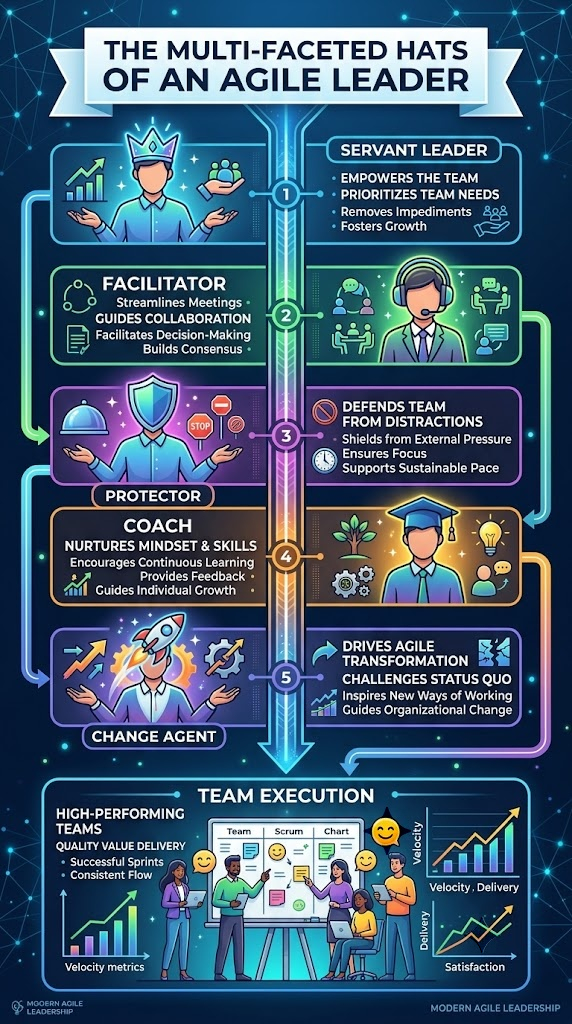
Despite title variations, both roles must act as Adaptive Leaders. Depending on the situation, an effective Agile lead toggles between multiple operational hats:
Servant Leader: Putting the team’s operational needs first to clear blockers.
Facilitator: Creating structured environments where cross-functional team members self-organize and solve complex problems.
Protector: Shielding the team from scope creep, executive pressure, and demoralizing distractions.
Change Agent: Driving structural transformations in workflows to remove systemic inefficiencies.
Complementing this facilitation role is the Product Owner, who acts as the voice of the customer and business value, maintaining ultimate authority over backlog prioritization and release goals.
The Three Official Agile Artifacts and Their Binding Commitments
Scrum defines exactly three core artifacts. Crucially, each artifact is bound to an explicit commitment that ensures transparency, inspection, and adaptation. Without its commitment, an artifact degenerates into administrative clutter.
| Core Agile Artifact | Associated Commitment | Primary Role Owner | Strategic Business Function |
| Product Backlog | Product Goal | Product Owner | Force-ranked single source of truth for all future product capabilities. |
| Sprint Backlog | Sprint Goal | Development Team | Time-boxed plan created by and for developers to achieve a specific outcome. |
| Product Increment | Definition of Done | Cross-Functional Team | Cumulatively built, usable product extension meeting strict quality gates. |
1. The Product Backlog and The Product Goal
The Product Backlog is an emergent, force-ranked list of everything needed in the product. It is never complete: it evolves alongside customer needs and market dynamics.
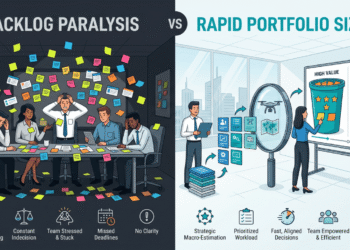
The Anti-Pattern: Treating the backlog as an unmanaged dumping ground containing hundreds of outdated tickets, unrefined epics, and duplicate requests.
The Best Practice: Applying the Iceberg Principle. Items at the top of the backlog must be granular, small, well-defined user stories with clear acceptance criteria. Items lower down remain coarse epics. The Product Goal serves as the target, giving the team a long-term direction rather than a disjointed feature checklist.
2. The Sprint Backlog and The Sprint Goal
The Sprint Backlog is the set of Product Backlog items selected for the current sprint, along with a tactical plan for delivering them.
The Anti-Pattern: Treating the Sprint Backlog as a rigid contract or a random collection of individual task assignments.
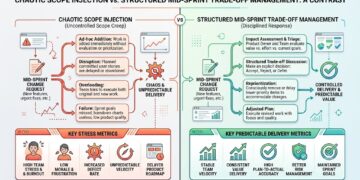
The Best Practice: Aligning all selected items around a single, compelling Sprint Goal. The Sprint Goal represents the empirical value outcome the team promises to deliver. If unforeseen technical obstacles arise during execution, the team negotiates scope with the Product Owner while protecting the Sprint Goal.
3. The Product Increment and The Definition of Done (DoD)
The Increment is the sum of all completed Product Backlog items during a sprint, combined with the value of increments delivered in previous sprints.
The Anti-Pattern: Declaring features “done” when code is written, but leaving integration, security checks, and automated testing for a future hardening sprint.
The Best Practice: Every increment must strictly satisfy a shared, non-negotiable Definition of Done (DoD). The DoD is a comprehensive quality contract specifying that code must be written, reviewed, integrated, tested, documented, and deployable. An increment that meets the DoD is in a usable, potentially releasable state at the exact moment the sprint ends.
Extended Artifacts and Information Radiators
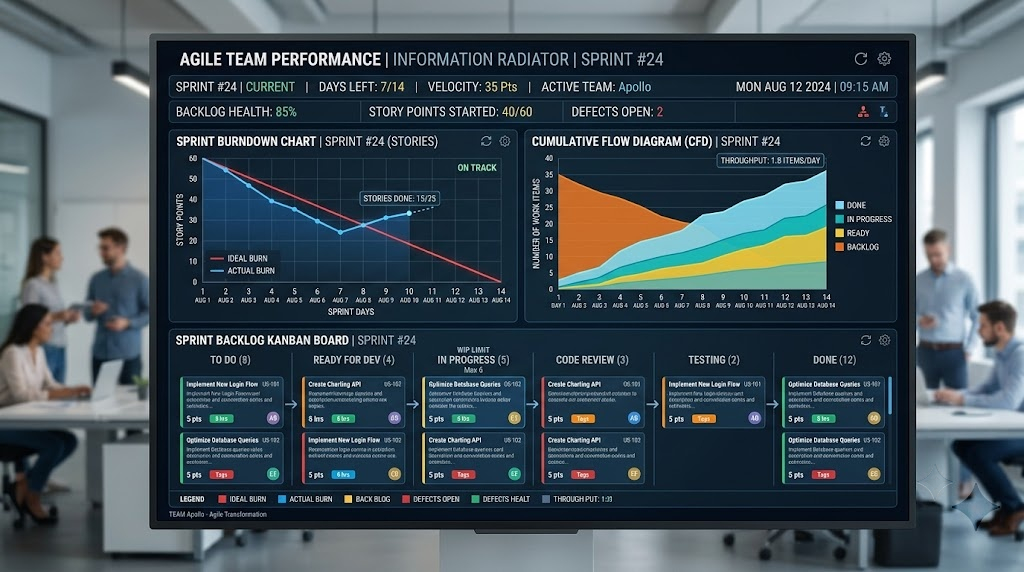
Beyond the three core artifacts, high-performing project managers leverage Information Radiators to expose real-time metrics without requiring status meetings:
Sprint Burndown Charts: Display remaining work within a sprint day-by-day, visually alerting the team to capacity bottlenecks or scope creep.
Cumulative Flow Diagrams (CFDs): Track work items across pipeline stages (To Do, In Progress, Review, Done) to expose process bottlenecks, aging work-in-progress, and cycle time inefficiencies.
Big Visible Charts (BVCs) & Digital Boards: Visual kanban or scrum boards that allow team members and stakeholders to inspect current work status at a single glance.
The PM Tactical Implementation Framework: 4 Steps to Artifact Mastery
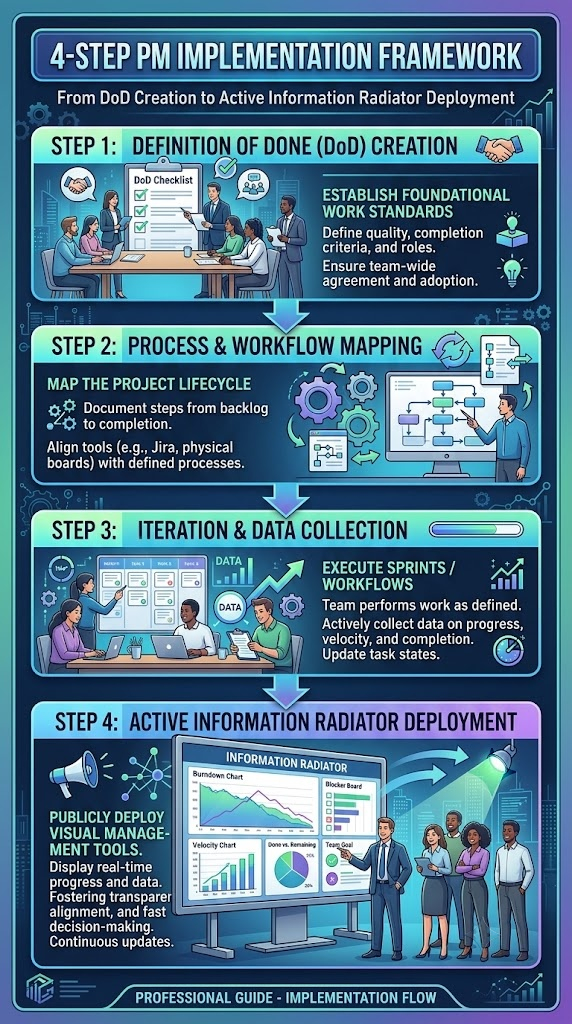
For Project Managers and Scrum Masters seeking immediate operational turnaround, execute this step-by-step framework:
Audit and Co-Create the Definition of Done (DoD): Gather developers, QA, operations, and product owners to write an explicit, non-negotiable DoD checklist. Include unit test coverage thresholds, security scanning, performance benchmarks, and deployment criteria.
Enforce Progressive Backlog Refinement: Schedule regular refinement sessions to split large epics into small, testable user stories using the INVEST criteria (Independent, Negotiable, Valuable, Estimable, Small, Testable). Keep the top 2 to 3 sprints’ worth of work refined and prioritized.
Shift from Task Lists to Outcome-Based Sprint Goals: During Sprint Planning, ask the Product Owner: “What business value must we prove by the end of this sprint?” Draft a single sentence Sprint Goal before selecting specific tickets.
Deploy Active Information Radiators: Automate your project tracking tool (such as Jira or Azure DevOps) to generate burndown charts and CFDs automatically. Ensure all stakeholders have immediate, frictionless visibility into execution health.
Transforming Project Chaos into Elite Career Acceleration
Imagine stepping into your organization on Monday morning with total operational clarity. No more panicked status calls, no more finger-pointing during release failures, and no more scope creep derailing your deadlines.
When you master Agile artifacts and lead core roles effectively, your projects shift from unpredictable chaos to structured, repeatable excellence. Backlogs become refined engines of strategy. Sprints transform into focused, high-throughput execution cycles. Increments deliver clean, production-ready value every single iteration. Executives notice when projects consistently ship on time with zero release-day surprises.
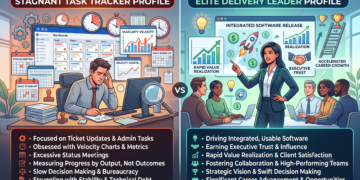
Mastering these core mechanics elevates your status from a reactive project coordinator who merely chases updates to a strategic delivery leader who drives measurable business velocity. Organizations actively seek professionals who can bridge the gap between high-level business strategy and tactical software execution. Learning project management the right way equips you with the authority, framework, and leadership presence required to command higher compensation, lead enterprise initiatives, and fast-track your executive trajectory.
Elevate Your Project Leadership with Skillsetify
Navigating modern project delivery requires more than memorizing terminology: it demands real-world execution mastery. If you are ready to stop guessing, move up the corporate ladder, and learn project management the right way, reach out to Skillsetify. We do not just teach frameworks: we show you your exact career growth trajectory. Partner with Skillsetify today to master elite B2B project leadership and unlock your full professional potential.