How Practical Management Dynamics Redefines Agile Execution
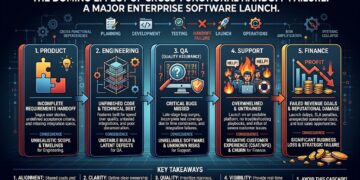
The executive sprint review starts in thirty minutes, and the core user authentication module is missing from the staging environment. The lead software engineer sits at their desk, unbothered, waiting on a third-party security approval submitted five days prior. When asked why there was no proactive follow-up or escalation, the Scrum Master responds with a passive shrug: “Agile teams are self-organizing. I did not want to micro-manage.”
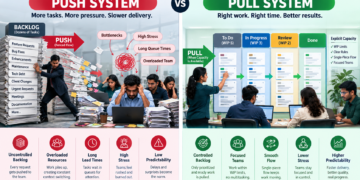
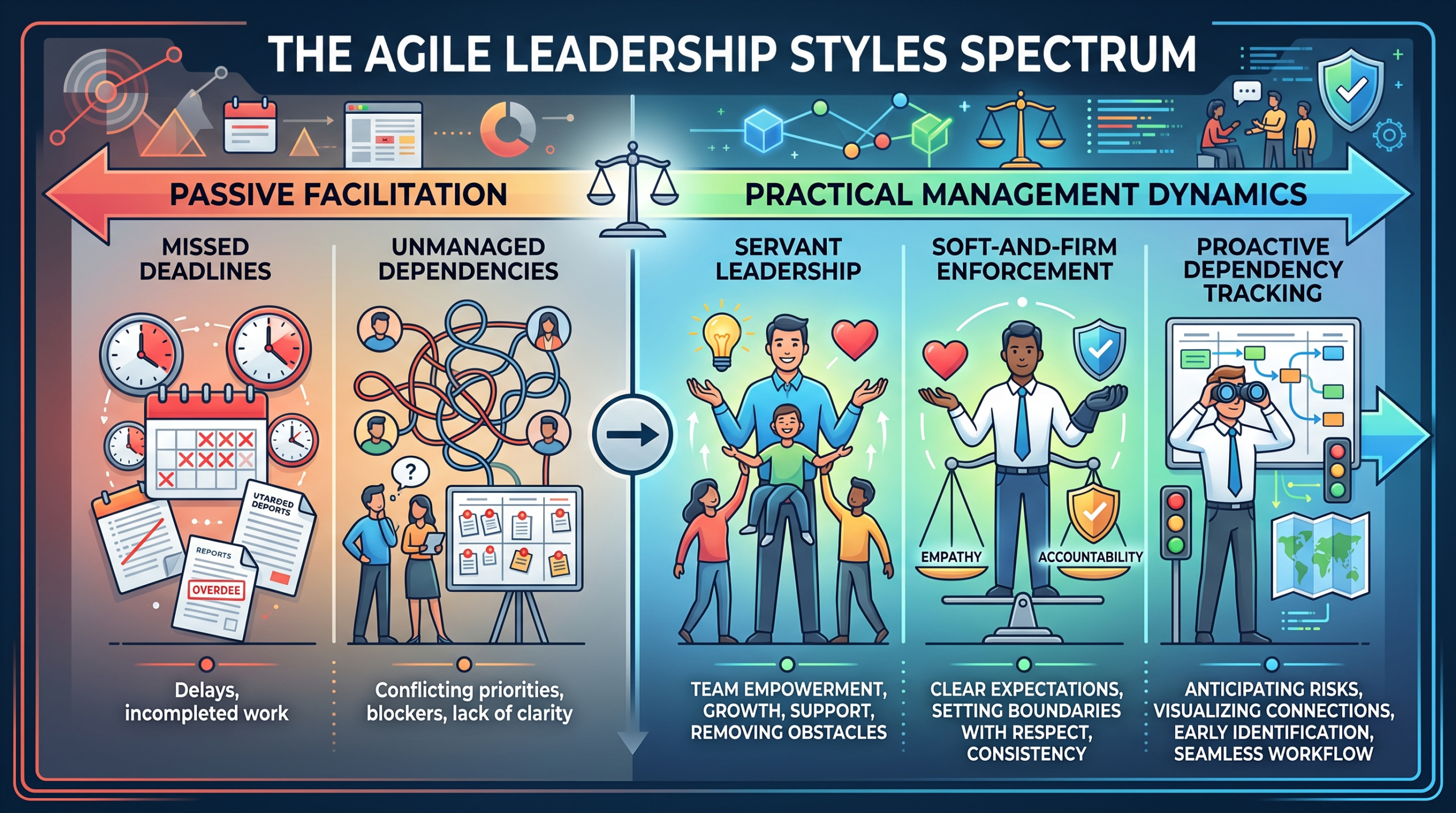
This crisis plays out across enterprise organizations every single week. Modern software development has fallen victim to a damaging myth: the belief that Agile leadership requires passive, hands-off facilitation where managers clear occasional blockers and step back entirely. Leaders have become hesitant to enforce deadlines or demand persistent follow-through, fearing that holding team members accountable will be labeled as micromanagement.
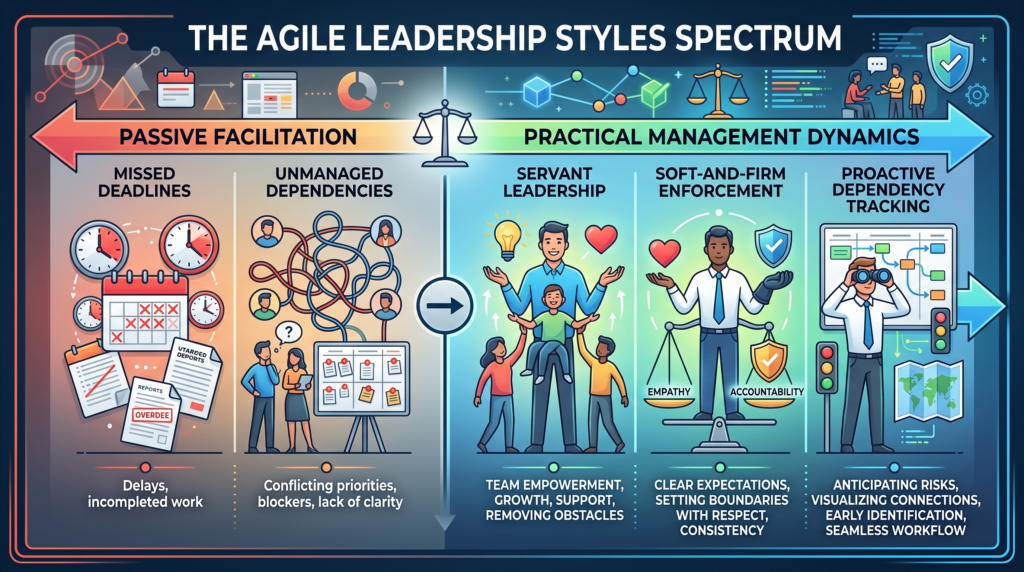
The operational reality is stark. Self-organization without structural boundaries and persistent follow-up is not Agile: it is unguided friction. Predictable, high-quality delivery does not happen by chance. It requires Practical Management Dynamics: an agile leadership approach that balances genuine servant leadership with persistent follow-ups, soft-and-firm enforcement, and systemic root-cause resolution.
Understanding Practical Management Dynamics in Modern Delivery
Practical Management Dynamics bridges the gap between high-level Agile philosophy and the gritty reality of complex business environments. Frameworks like Scrum, Kanban, and SAFe establish procedural rules, but management dynamics govern how human beings interact, communicate, and deliver value within those frameworks.
Rather than viewing Agile leadership as a static posture, elite leaders operate adaptively. They recognize that while servant leadership serves as an essential baseline for empowering teams, real-world project delivery demands active operational follow-through, continuous alignment, and courageous boundary enforcement.
Pillar 1: The 50/50 Execution and Follow-Up Rule
A pervasive failure mode in project execution is assuming that assigning a task equates to completing it. In cross-functional, highly interdependent enterprise environments, technical execution represents only half of the equation.
The 50/50 rule dictates that 50% of project success comes from direct technical execution, while the remaining 50% relies entirely on structured, persistent follow-up. High-performing project leaders teach their teams that submitting a ticket, sending an email, or requesting an API key is step one of a process, not the final deliverable. Persistent follow-up ensures that cross-departmental bottlenecks, pending sign-offs, and vendor delays are proactively managed long before they escalate into sprint-ending roadblocks.
Pillar 2: Soft-and-Firm Enforcement (The Shield and the Sword)
Agile frameworks emphasize the leader’s role as a protector who cushions the delivery team from corporate noise, shifting executive demands, and external client pressure. However, an unexamined protective cushion introduces severe systemic risk. When a manager absorbs all external heat while failing to enforce internal commitments, the team slowly becomes complacent, loses situational awareness, and allows critical deadlines to slip.
Soft-and-firm enforcement resolves this operational paradox through a dual approach:
Soft on the Outside (The Shield): You absorb executive pressure, defend team psychological safety, and refuse to let external stakeholders publicly reprimand your team members.
Firm on the Inside (The Sword): You maintain unyielding standards within the team environment. You address missed commitments directly, expose procrastination, and hold individuals accountable in private, structured one-on-one sessions.
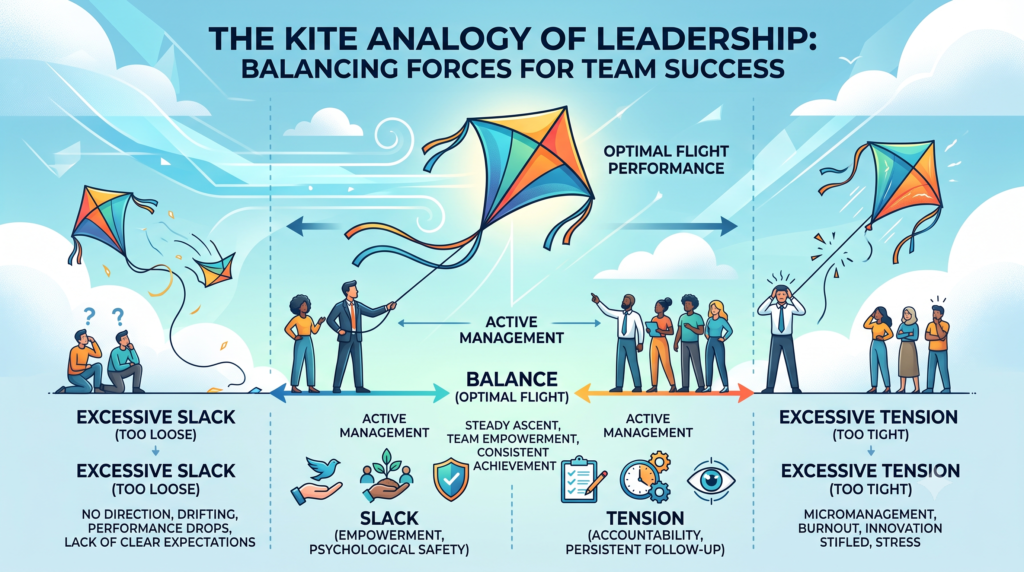
Managing team dynamics is remarkably similar to flying a kite. If you pull the line continuously without giving slack, the string snaps under excessive tension. If you let the line out completely without maintaining structural tension, the kite plummets to the ground. Strategic leadership lies in knowing precisely when to give slack and when to pull firm.
Pillar 3: Root Cause Diagnostics Over Band-Aid Fixes
When commitments fall short, inexperienced project managers instinctively apply quick fixes: extending working hours, cutting scope arbitrarily, or issuing superficial process directives. Elite leaders look deeper, conducting root cause diagnostics to identify whether the breakdown stems from behavioral patterns, environmental blockers, or systemic process gaps.
Behavioral Issues: Intentional procrastination, avoidance of difficult communication, or lack of individual ownership. These challenges require clear behavioral feedback, transparent performance expectations, and direct one-on-one resetting.
Environmental Blockers: Restrictive access permissions, unstable staging environments, or uncooperative third-party vendors. These obstacles require direct leadership escalation, administrative negotiation, and barrier removal.
Systemic Process Gaps: Ambiguous user stories, flawed estimation techniques, or ill-defined acceptance criteria. These breakdowns require structural retrospective revisions and workflow redesign.
The Practical PM Implementation Framework
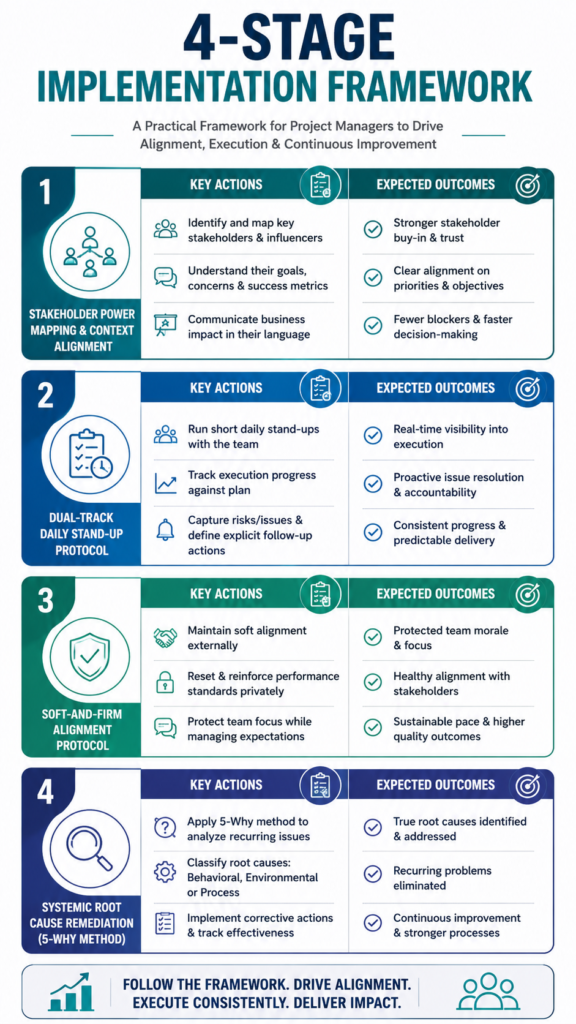
To integrate Practical Management Dynamics into your organization’s daily delivery engine, implement this structured four-stage implementation framework.
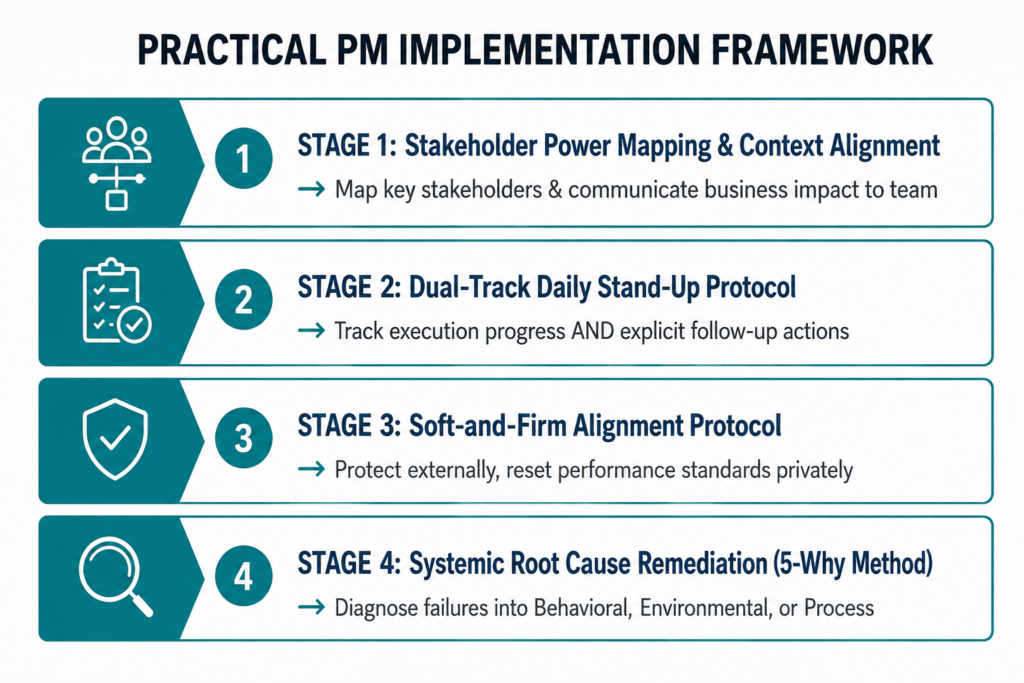
Stage 1: Stakeholder Power Mapping & Context Alignment
Educate your delivery team on organizational dynamics and dependency maps. Ensure every developer and designer understands who key project stakeholders are, their relative influence, and the broader business implications of missed milestones. Context breeds natural urgency; when team members understand why an executive approval or security audit is critical to company strategy, voluntary follow-through increases exponentially.
Stage 2: Dual-Track Daily Stand-Up Protocol
Transform daily stand-ups from passive status reports into active operational syncs. Require team members to account for both direct task progress and active follow-up efforts:
What technical commitments were completed yesterday?
What external dependencies or follow-ups are pending, and who owns the follow-up action today?
Are there unresolved friction points that require leadership escalation?
Stage 3: The Soft-and-Firm Alignment Protocol
When a team member repeatedly misses commitments or hides behind your protective buffer, initiate a private alignment session using this precise narrative structure:
Step 1: Acknowledge the Shield
“I protected our team during the executive briefing today regarding the delayed deployment.”
Step 2: State the Firm Internal Reality
“However, allowing a key dependency to sit unaddressed for three days without early escalation does not meet our team’s operational standard.”
Step 3: Diagnose the Root Cause
“Help me understand the breakdown. Is this a technical blocker, an environmental access issue, or a prioritization challenge?”
Step 4: Establish Mandatory Escalation Triggers
“Moving forward, you own the follow-up process directly. If a external dependency remains unacknowledged for more than four hours, escalate it directly to me.”
Stage 4: Systemic Root Cause Remediation
Replace emotional retrospective complaints with disciplined root cause analysis. When a sprint goal fails, apply the 5-Why Method to drill down past superficial excuses. Determine whether the breakdown was behavioral, environmental, or procedural, and implement targeted structural fixes rather than temporary workarounds.
Shifting from Delivery Chaos to Predictable Success
Adopting Practical Management Dynamics transforms both project outcomes and team culture. Organizations move away from reactive firefighting, passive-aggressive friction, missed sprint commitments, and sudden executive escalations.
In their place, leaders establish a predictable delivery engine built on mutual respect, operational clarity, and high execution velocity. Teams thrive in an environment of psychological safety because they know their leader protects them externally, while maintaining high performance standards internally.
For ambitious project managers, Scrum Masters, and delivery leaders, mastering these practical dynamics is the single fastest catalyst for professional advancement. Senior executives do not promote passive coordinators who merely schedule meetings and record notes. They champion operational leaders who navigate human complexity, resolve deep root causes, enforce standards with poise, and reliably turn strategic visions into delivered reality.
Mastering Agile execution requires moving beyond theoretical frameworks to embrace the real-world dynamics of human leadership. By combining relentless follow-up discipline with courageous accountability, project managers elevate their practice from basic coordination to strategic organizational impact.
If you are ready to stop guessing, move up the corporate ladder, and learn project management the right way, reach out to Skillsetify. We do not just teach frameworks: we show you your exact career growth trajectory.