Imagine it is the final week of the third quarter.
You are sitting in a tense executive briefing, facing your company’s senior leadership team.
The flagship enterprise integration project you are leading has just missed a critical milestone.
Your stakeholders are frustrated, your cross-functional team is on the verge of total burnout, and unchecked scope creep has completely depleted your budget reserves.
As the silence in the room grows heavy, you feel an overwhelming urge to explain the technical blockers, the vendor delays, and the resource shortages.
The executives do not want a list of technical excuses. They want a strategic path forward.
This highly stressful, entirely relatable reality is a daily occurrence for professionals who rely solely on tactical project coordination.
When a project derails at this level, it is rarely a failure of scheduling. It is almost always a failure of strategic leadership.
Let us dispel a massive corporate myth right now. Advancing your career and commanding respect in the boardroom does not happen simply because you acquired another methodology certification.
It does not happen because you are the most proficient person at operating a Gantt chart. Technical execution has a hard ceiling.
If you want to ascend the corporate ladder, advancing requires adopting a strategic project management identity internally first.
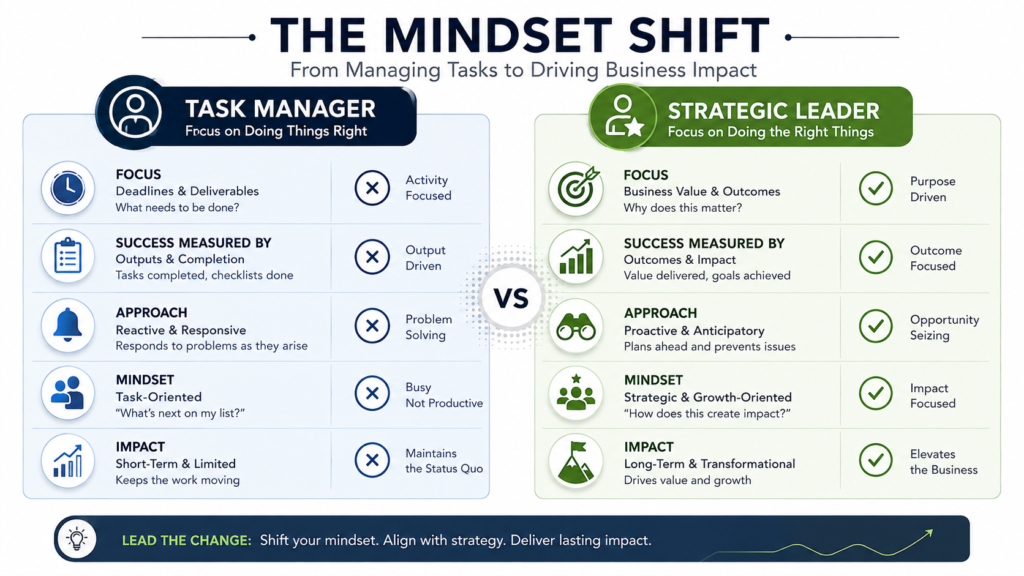
You must stop identifying as a reactive taskmaster and start identifying as a proactive business leader.
The Core Mechanics of Leadership Mindset Transformation
To understand how to escalate your career, we must first break down the “What” and the “Why” of a leadership mindset transformation.
At its core, this transformation is the psychological and operational shift from executing deliverables to driving overarching business value.
Why do so many highly skilled, detail-oriented project professionals stall at the mid-level of their organizations? They stall because they fail to speak the language of the business.
The leadership team operates in a strategic layer focused on market share, profitability, risk mitigation, and long-term growth. When a project manager approaches them with updates about sprint velocity or granular software bugs, a massive disconnect occurs.
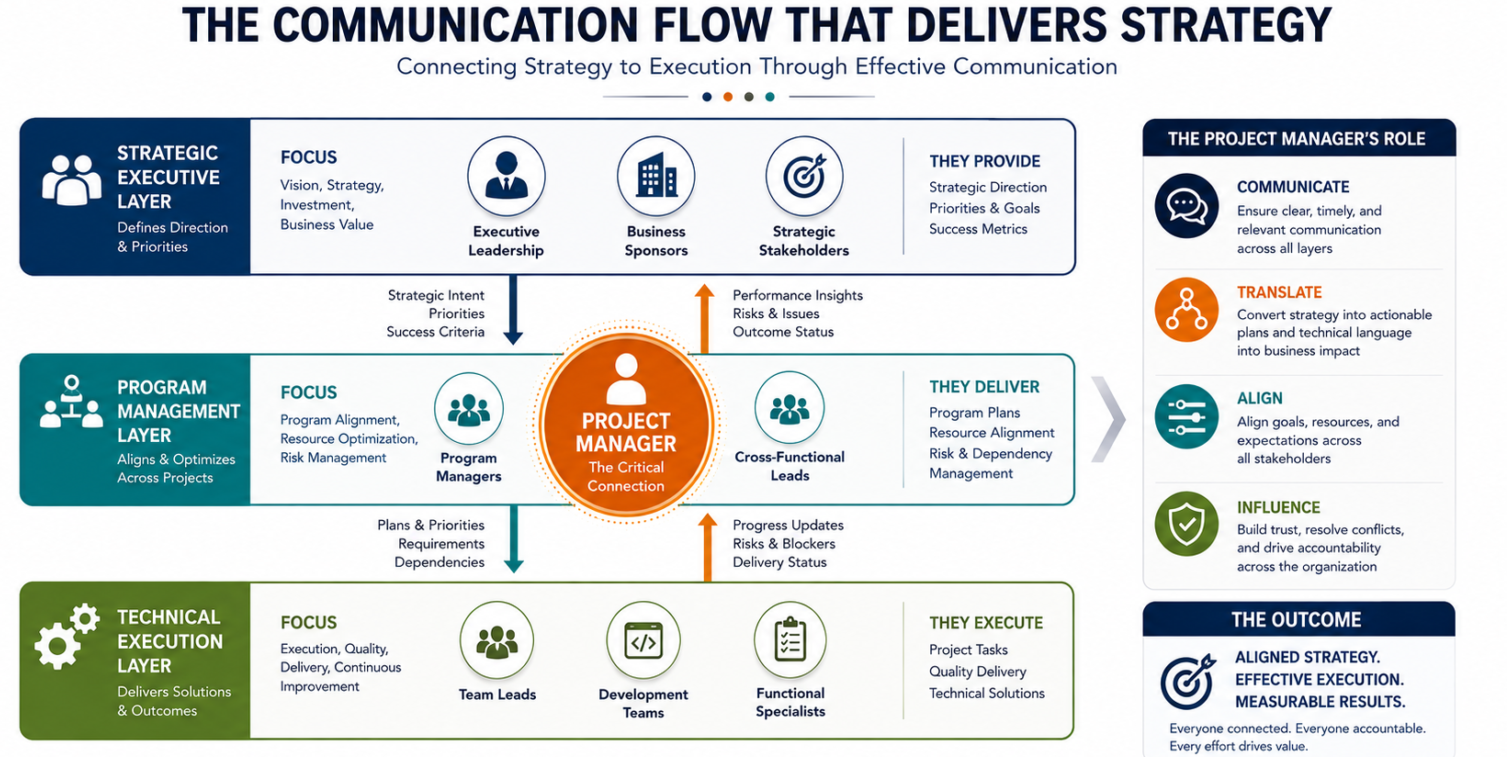
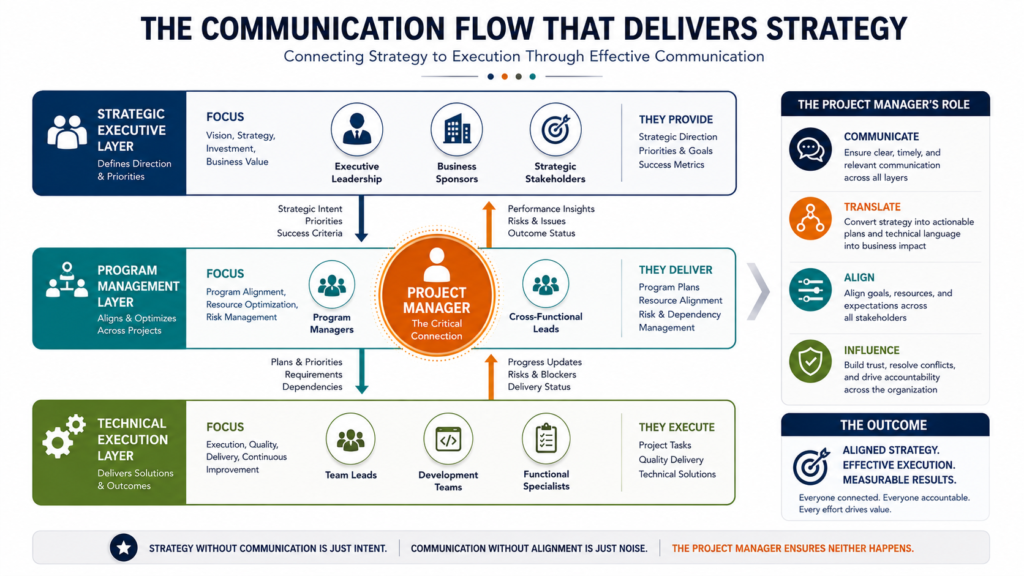
The transformation requires you to become the critical bridge between the strategic vision of the C-suite and the technical execution of your delivery teams.
The Strategic Project Management Framework
To bridge this gap and establish your authority, you must adopt a proven methodology. Below is a highly detailed, step-by-step implementation framework that any ambitious professional can copy and use immediately to reframe their identity and command the room.
Step 1: Contextualize the Strategic Layer
Before you build a single project plan, you must understand how your project makes or saves the company money.
Identify the core business objective driving the initiative.
Map your project deliverables directly to a key performance indicator favored by your executive sponsors.
Communicate the purpose of the project to your team in terms of business impact, not just feature delivery.
Step 2: Master Executive Translation
You must filter all project communications through a strategic lens. Executives do not need to know how the watch is built: they just need to know the time.
Stop reporting on the number of tasks completed.
Start reporting on the percentage of business value realized.
Frame project risks in terms of potential financial or reputational impact, accompanied by a definitive mitigation strategy.
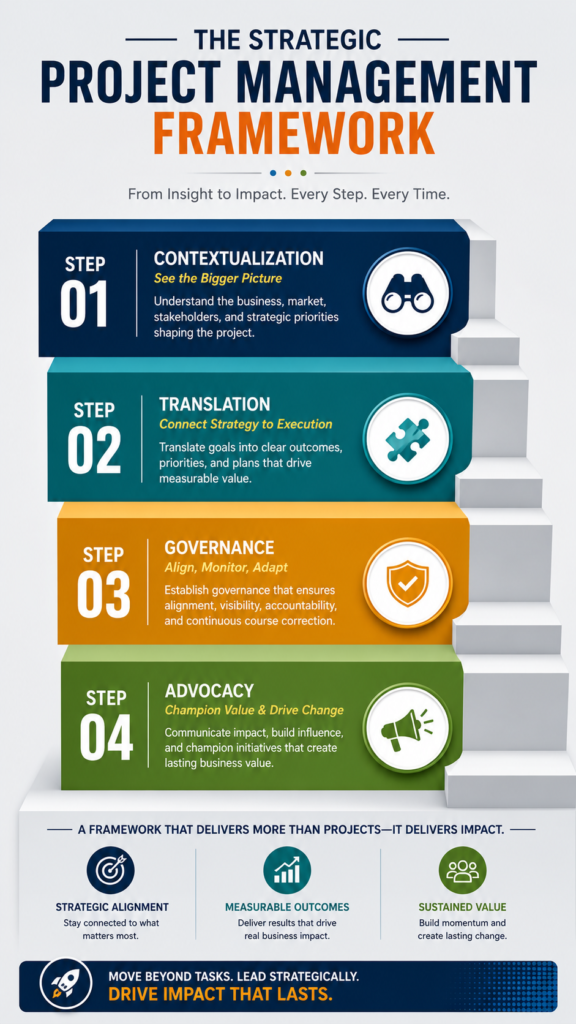
Step 3: Architect Proactive Governance
Governance is often viewed as a bureaucratic hurdle. A strategic leader transforms governance into a business enabler.
Design approval workflows that accelerate decision-making rather than bottlenecking it.
Establish clear thresholds for escalation so the executive team only intervenes when their specific authority is required.
Position your governance model as a risk mitigation tool that protects the organization’s investment.
Step 4: Engineer Radical Stakeholder Advocacy
Your career growth will ultimately depend upon the perception of your stakeholders. It does not matter if you delivered a project flawlessly if the stakeholder feels ignored or undervalued.
Treat the project sponsor as a strategic partner, not just a source of funding.
Anticipate their concerns and address them before they are formally raised.
Act as an advocate for your client internally, fighting for their business outcomes while balancing your company’s capacity.
Step 5: Cultivate a Value-Driven Culture
The final step in this transformation is projecting your new mindset onto the people you lead. You must elevate your team’s perspective.
Host regular alignment sessions to connect the daily work to the corporate mission.
Reward team members who identify strategic risks, not just those who complete tasks quickly.
Foster an environment where strategic questioning is encouraged over blind execution.
Life on the Other Side of Transformation
When you successfully internalize this leadership mindset, the trajectory of your daily professional life shifts dramatically.
You transition away from the exhausting cycle of project chaos, endless scope negotiations, and constant team burnout.
In its place, you establish a culture of predictable, elite delivery.Paint a mental picture of this new reality.
You are no longer chasing stakeholders for approvals or defending delayed timelines. Instead, senior executives actively seek out your counsel before new initiatives are even funded.
They view you as a trusted advisor who understands the pulse of the organization.
Because you have aligned every sprint, every milestone, and every budget dollar to a strategic corporate objective, your projects flow with a natural momentum.
This transformation is the direct result of learning project management the right way. It is not about memorizing inputs and outputs.
It is about understanding human dynamics, organizational behavior, and the fundamental mechanics of business value.
When your internal identity shifts from “the person who manages the tracker” to “the leader who delivers the strategy”, your career accelerates automatically.
Your managers will notice this shift. Opportunities for promotion, portfolio oversight, and executive visibility will materialize because leadership teams are desperate for professionals who can connect the dots between vision and reality. By stepping into this strategic identity, you make yourself an indispensable asset to the future of the company.
Elevate Your Execution Today
The journey from tactical coordinator to strategic business leader is the most critical pivot you will make in your professional life.
We have explored how a lack of strategic alignment leads to burned-out teams and frustrated executives.
We have dismantled the myth that technical certifications alone will earn you a seat at the table.
By implementing the five-step framework covering strategic contextualization, executive translation, proactive governance, stakeholder advocacy, and value-driven culture, you can fundamentally rewire how you are perceived in the workplace.
The transformation from managing tasks to leading portfolios requires you to adopt a strategic identity internally first. You must embody the leadership qualities you wish to project.
If you are ready to stop guessing, move up the corporate ladder, and learn project management the right way, reach out to Skillsetify.
We do not just teach frameworks: we show you your exact career growth trajectory.