Why Hard Work Will Not Get You Promoted
It is a Friday. You are staring at a Gantt chart that has been color-coded to within an inch of its life. Your team is exhausted. You have successfully resolved a critical technical blocker, managed a scope change, and delivered the project on time.
You breathe a sigh of relief, expecting this to be the milestone that finally secures your promotion to Director.
Instead, three months later, you watch someone else get the job.
This is the most common workplace crisis for ambitious project managers. You master the art of execution, but you remain invisible to the executive board. The corporate reality is harsh but clear: surviving project chaos and working grueling hours will not escalate your career.
In fact, being overly indispensable in the trenches is exactly what keeps you trapped there.
Let us dispel a common corporate myth right now. The belief that executing tasks perfectly will naturally lead to a strategic leadership role is fundamentally flawed.
The skills required to deliver a project are entirely different from the skills required to direct a portfolio. If you only focus on hands-on technical execution, you will inevitably hit a ceiling in your career.
To break through that ceiling, you must understand the architecture of corporate decision-making.

The Three-Tier Organizational Hierarchy
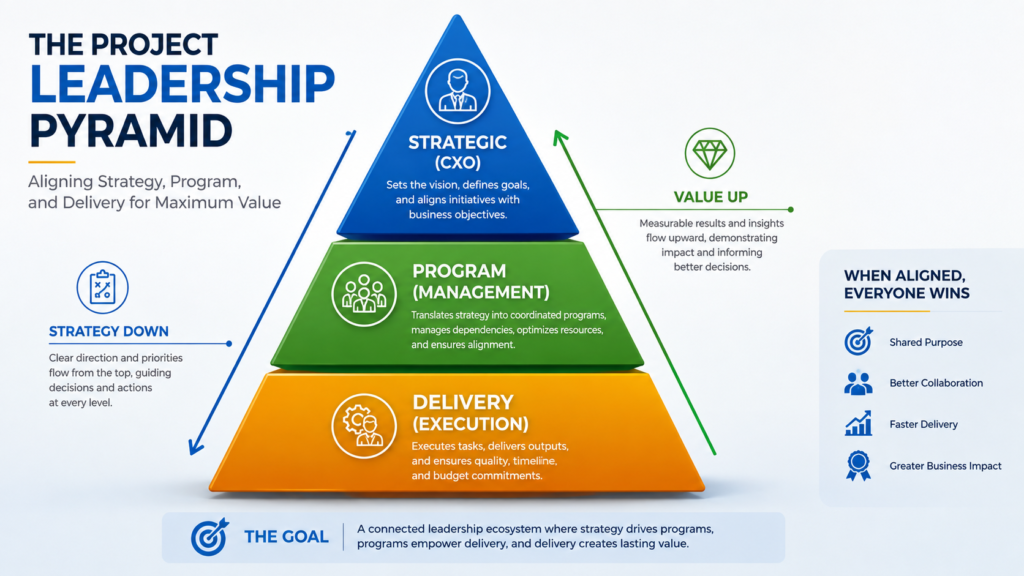
To move up the corporate ladder, you must shift your mindset from tactical execution to strategic alignment. Organizations are structured in a very specific way, and understanding this structure is the key to unlocking elite career growth. The corporate ecosystem is divided into three distinct layers.
1. The Delivery Layer
This is the foundational level where the actual hands-on work takes place. Delivery happens strictly under the guidance of the layers above it.
At this tier, professionals are obsessed with outputs. Success is measured by timelines, scope containment, and budget adherence. The language spoken here is highly technical. Project managers at this level are fighting daily fires, tracking sprint velocities, and removing immediate roadblocks for their teams.
While this work is essential, staying confined to this layer ensures you will always be viewed as a tactical resource rather than a business leader.
2. The Program Layer
Moving up one step brings you to the middle layer of the hierarchy. The program layer is where middle management sits, and its primary focus is delivering business value.
This is where individual projects are grouped together to achieve broader organizational goals. You are no longer just tracking tasks. You are managing resources across multiple initiatives, handling inter-project dependencies, and ensuring that the outputs from the delivery layer actually matter to the business.
Professionals at this tier must act as a crucial interface, translating the strategic vision from the top into actionable technical language for the teams below.
3. The Strategic Layer
At the very top of the hierarchy is the strategic layer, which is the exclusive domain of the leadership team.
The CXO level is where pure strategic alignment happens. Leaders at this tier do not care about sprint burndown charts or minor budget variances. They care about market share, enterprise risk, revenue generation, and competitive advantage.
The leadership team determines why certain projects or programs exist in the first place, aligning them directly with the company’s financial bottom line. If you want to sit at this table, you must stop talking about how the work is done and start talking about why the work matters.
The Core Mechanics of Upward Mobility
Understanding the three tiers is only the beginning. The actual methodology for career escalation requires active integration between these layers.
Projects and programs are born out of strategic alignment. The top layer dictates the direction, the middle layer structures the approach, and the bottom layer executes the work. To prove you are ready for promotion, you must proactively connect the middle program layer to the top strategic layer.
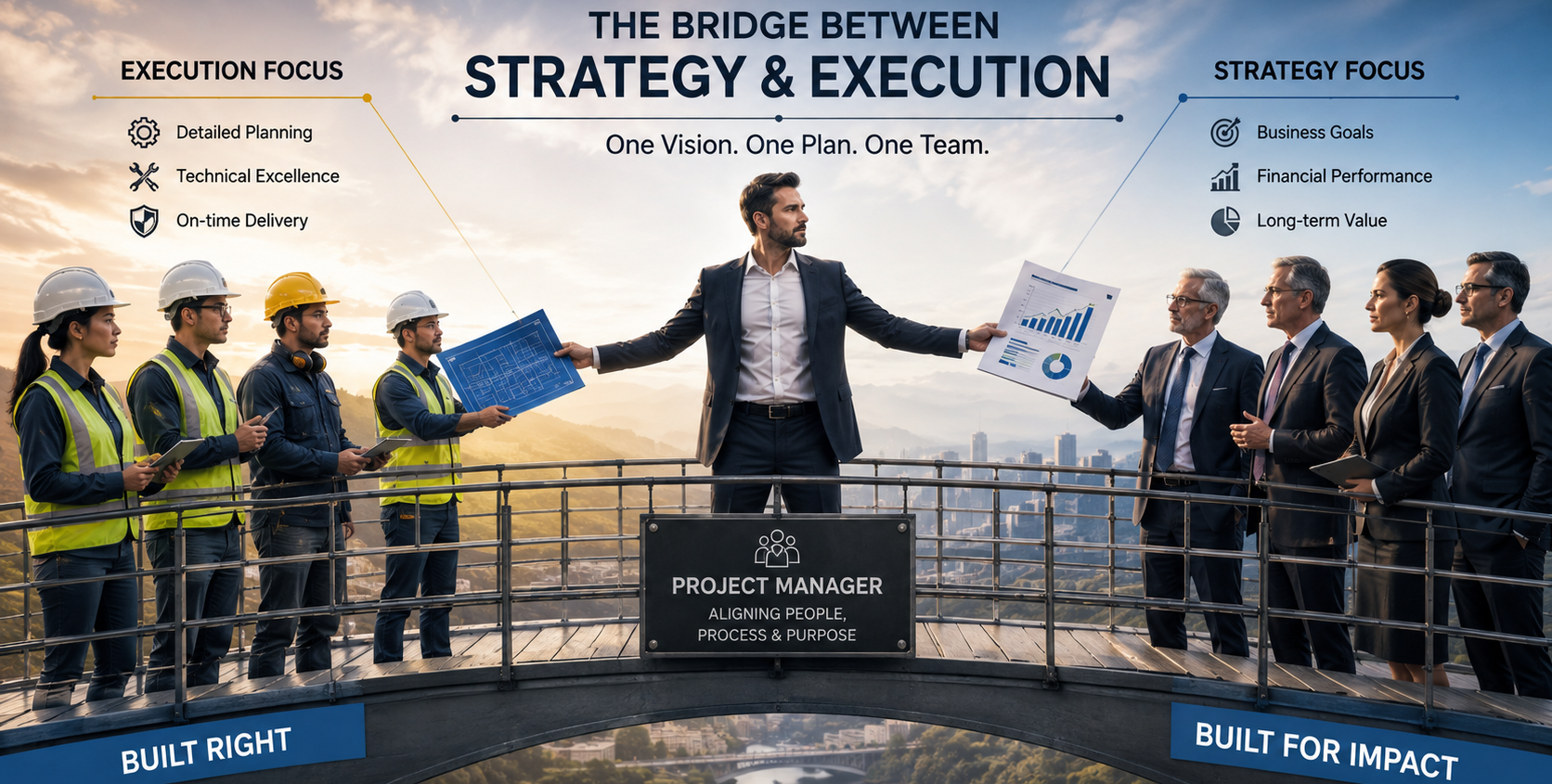
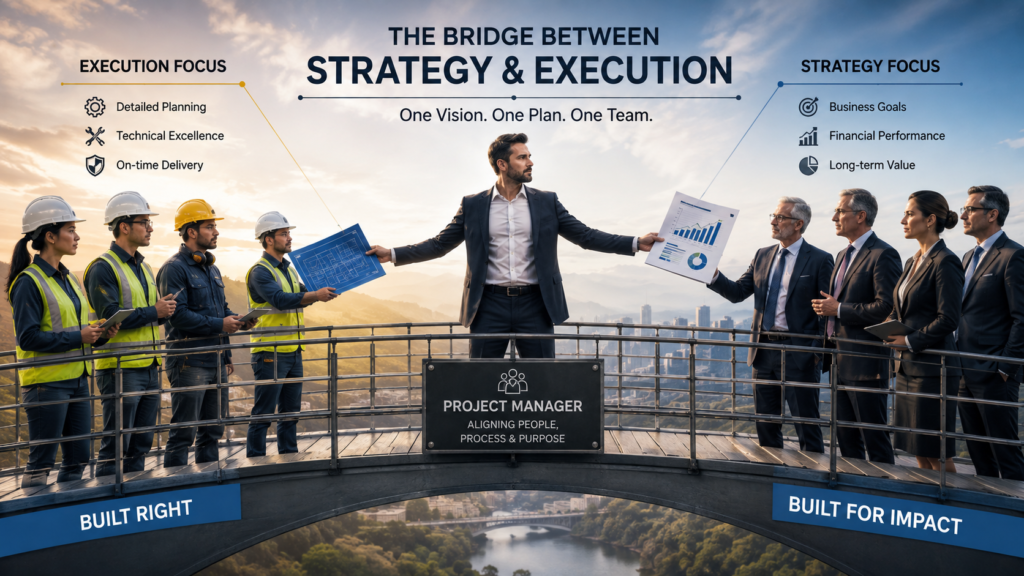
You must demonstrate that you are not just a taskmaster, but a business enabler. You must become the essential bridge between the leadership team and your technical personnel.
Step-By-Step Implementation Framework
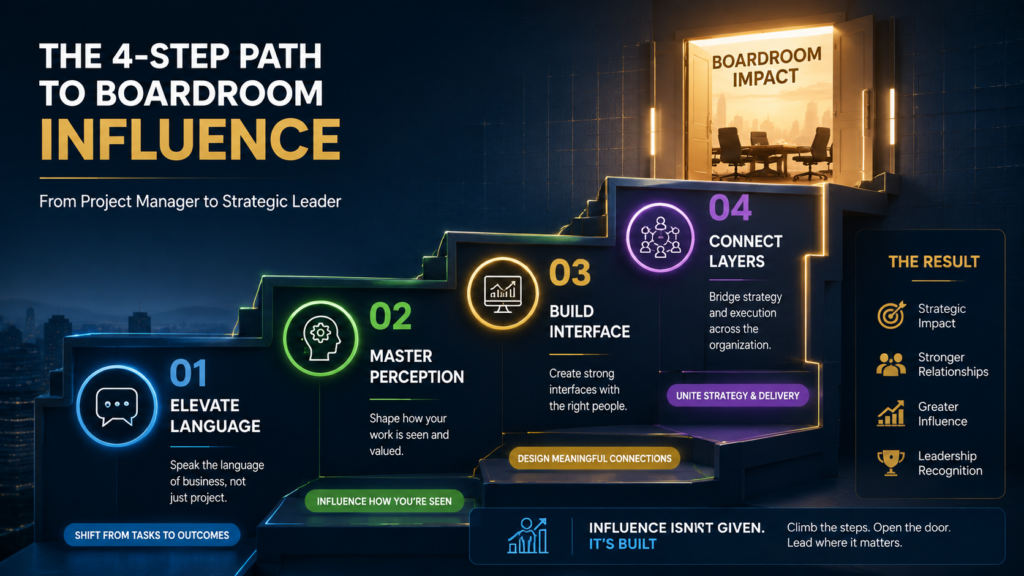
How do you practically transition from the Delivery layer to the Strategic layer? Use this actionable framework to reshape your professional brand immediately.
Step 1: Elevate Your Language
Stop giving status updates based on task completion.
Start framing your updates around business value and return on investment.
When speaking to executives, use metrics that reflect strategic alignment, such as customer acquisition costs or time-to-market advantages.
Step 2: Master Stakeholder Perception
Identify the key decision-makers at the Program and Strategic levels.
Schedule alignment meetings to understand their highest priorities and biggest fears.
Position your project’s success as the direct solution to their strategic problems.
Remember that perception is reality: flawless delivery means nothing if the stakeholders do not perceive the business value.
Step 3: Build the Interface
Delegate the granular, day-to-day tactical tasks to junior team members or Scrum Masters.
Position yourself as the translator between the CXO vision and the technical execution team.
Protect your technical teams from strategic noise, while protecting your executives from technical jargon.
Step 4: Connect the Layers
Draw a direct line from every task your team performs up to a strategic corporate goal.
If a project does not serve the strategic layer, question its existence.
Present business cases for new initiatives by showing exactly how the program layer will deliver the leadership team’s objectives.
The Professional Transformation
When you implement this methodology, your daily professional life will undergo a radical transformation.
Imagine walking into a Monday morning steering committee meeting. You are no longer the stressed project manager defending a delayed timeline. You are the authoritative program leader advising the executive board on resource allocation. You have successfully shifted away from project chaos, scope creep, and team burnout. Instead, you operate a machine of predictable, elite delivery.
Your teams respect you because you provide them with clear, strategic purpose rather than micromanagement. Your executives rely on you because you speak their language and safeguard their investments. You are no longer seen as a cost center. You are recognized as a strategic asset.
This level of operational mastery does not happen by accident. It is the direct result of learning project management the right way. It is about understanding that true career acceleration happens when you stop managing the work and start leading the business. By mastering the Three-Tier Organizational Hierarchy, you position yourself as an indispensable architect of corporate success.
Take Control of Your Escalation
The jump from Delivery to Strategy is the most difficult chasm to cross in the corporate world. You cannot cross it by simply working harder, logging more hours, or earning another generic certification. You must adopt an elite mindset, restructure your daily focus, and align your output with executive priorities.
If you are ready to stop guessing, move up the corporate ladder, and learn project management the right way, reach out to Skillsetify. We do not just teach frameworks: we show you your exact career growth trajectory.