The Silent Execution Killer
It is high-stakes release day. The product deployment schedule is locked, customer communications have fired, and executive leadership is hovering over the delivery dashboard. Then, the integration pipeline fails.
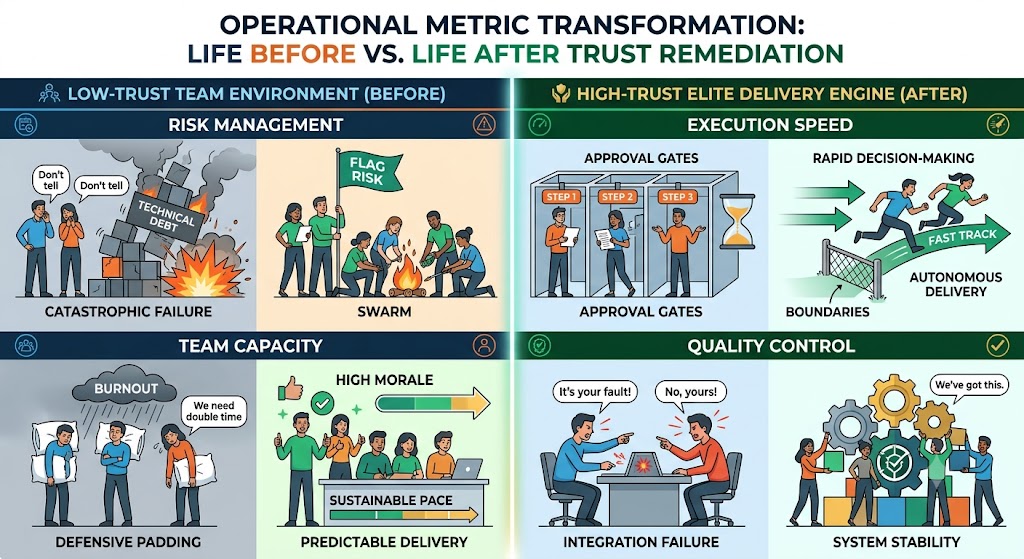
In a psychologically safe, high-trust environment, the team swarms. The backend architect immediately owns a hidden edge-case flaw, the test automation engineer isolates the failing assertion, and the Scrum Master clears technical impediments without assigning blame.
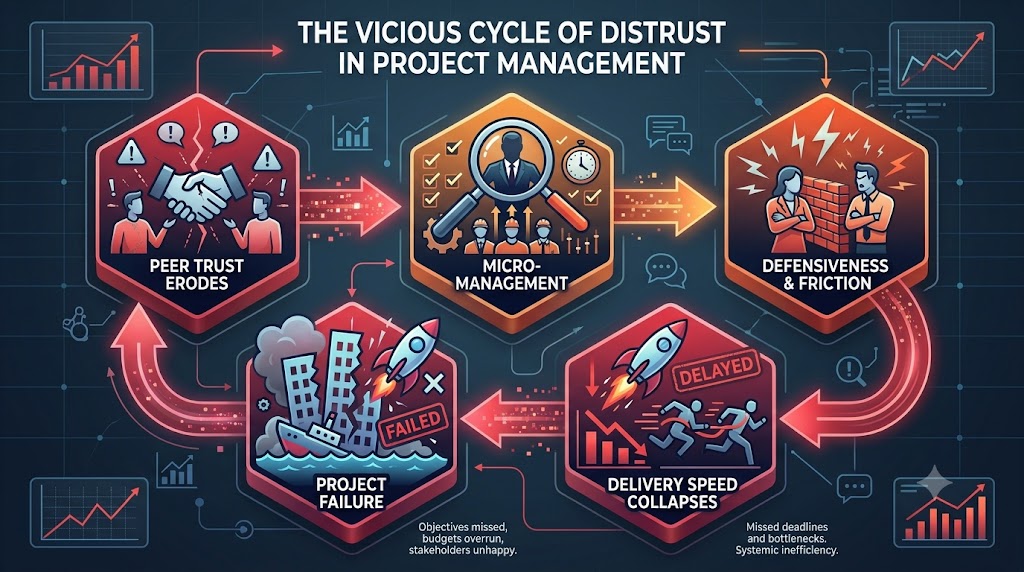
In a team where relational trust has shattered, a very different, highly destructive script plays out.
The architect points to vague API specifications. The test engineer claims the code was pushed without basic unit checks. Developers quietly scrub their commit logs to avoid visibility. The daily standup devolves into defensive litigation. No one asks how to fix the pipeline: everyone is occupied proving it wasn’t their fault.
The Corporate Myth of Pure Process
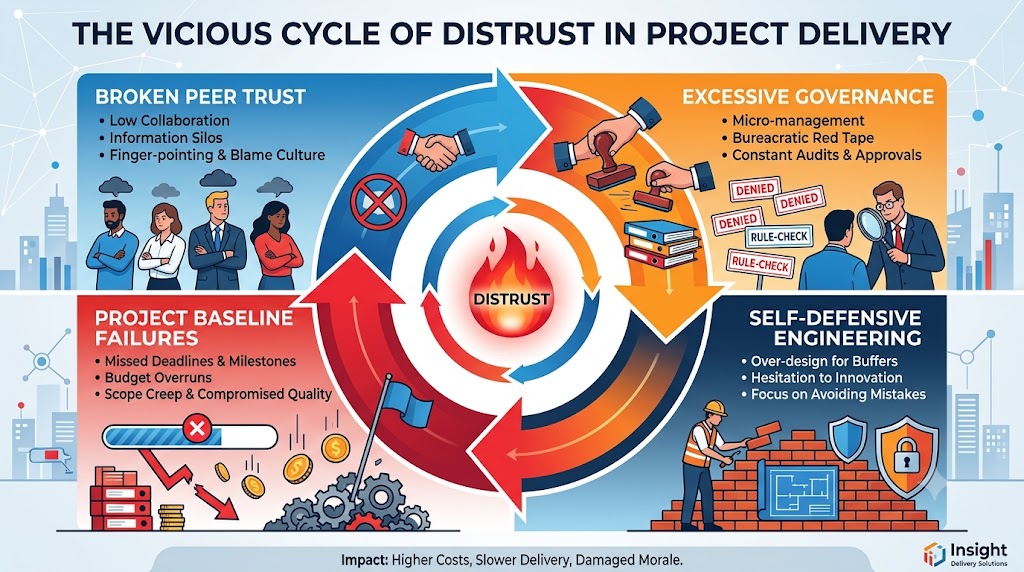
Organizations often attempt to solve collaboration failures by stacking processes on top of existing ones. They add mandatory peer-review checklists, implement rigid governance gates, and demand micro-tracked task estimates.
Here is the hard truth modern software and business operations teams must face: Peer trust serves as the foundational team binder; when broken, all collaborative mechanics instantly unravel.
No framework, Jira workflow, or burn-down chart can compensate for zero relational trust. When trust breaks down, team members stop taking operational risks, stop raising early flags on technical debt, and stop backing each other up during delivery crunches. The machinery of execution grinds to a halt.
Deconstructing Relational Trust Dynamics
To rebuild or fortify execution velocity, project leaders must stop treating trust as a fuzzy, sentimental quality and start managing it as an operational metric.
Relational trust within high-performing teams isn’t built through casual social events or trust exercises. It is forged through structural engineering: how teams communicate, handle failure, manage boundaries, and distribute execution autonomy.
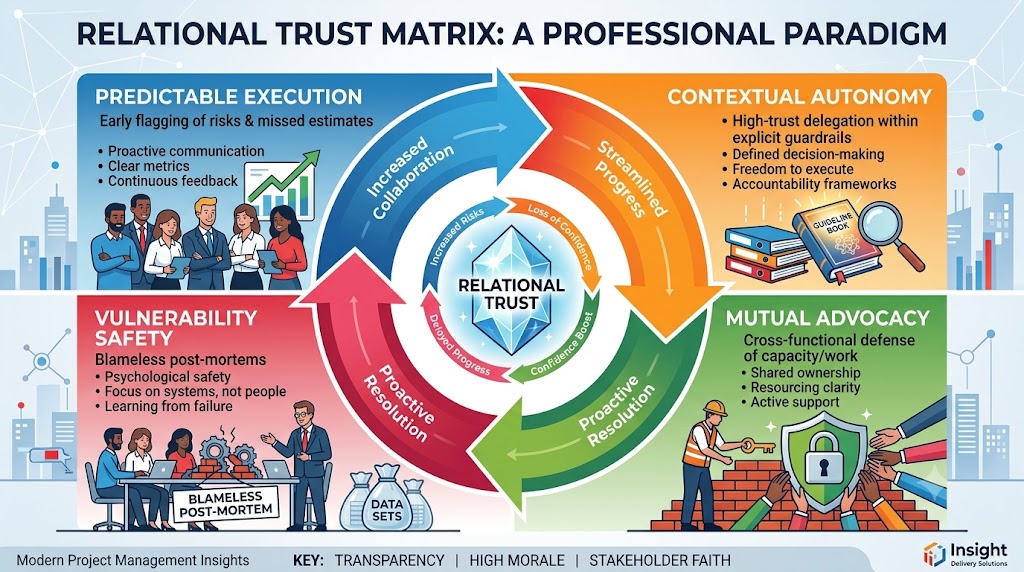
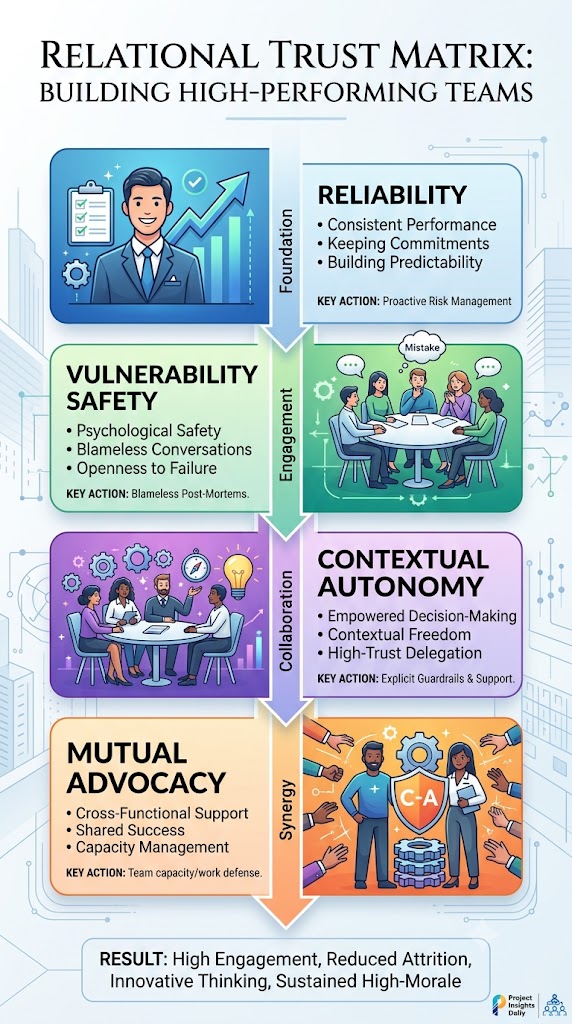
The Four Pillars of Team Relational Integrity
Predictable Execution (Reliability): Trust is built when team members consistently honor their commitments or provide early visibility when dates are at risk.
Vulnerability Safety: The psychological freedom to state “I don’t know,” “I made a mistake,” or “I need help” without fear of penalty.
Contextual Autonomy: Empowering teams to operate independently within explicit risk boundaries rather than micromanaging their daily path.
Mutual Advocacy: Team members actively defending each other’s work, capacity, and professional reputation across organizational boundaries.
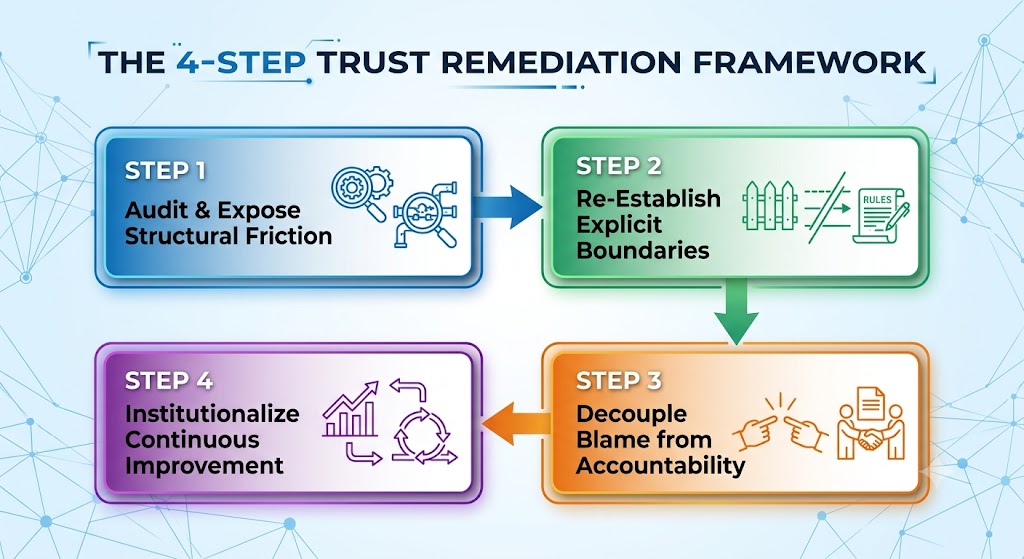
Step-by-Step Implementation Framework: The Trust Remediation Protocol
When a team’s collaborative mechanics unravel due to broken peer dynamics, project managers must step in with an intentional remediation framework.
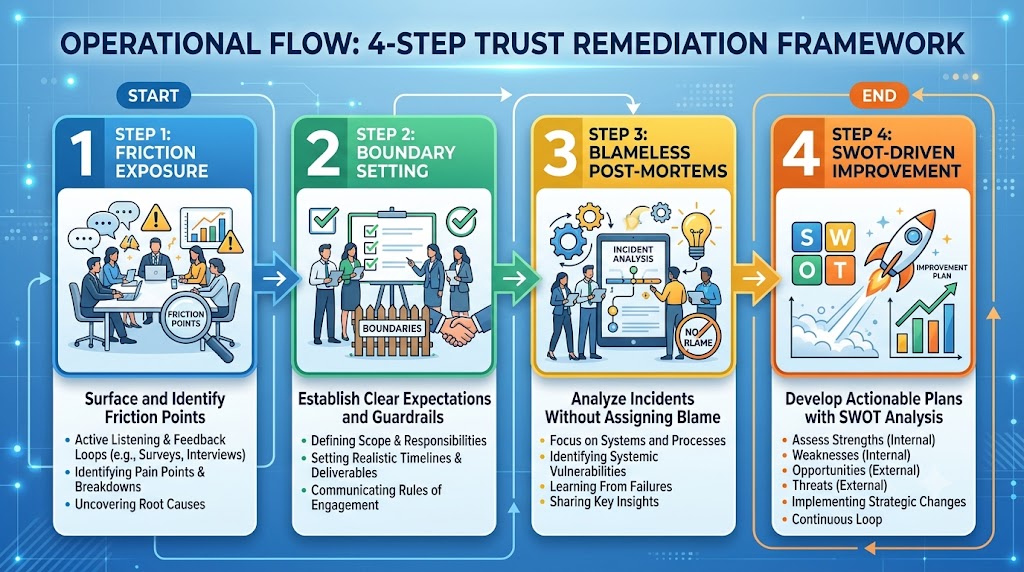
Step 1: Audit and Expose Structural Friction
Conduct a comprehensive operational assessment. Identify where information silos exist, where handoffs cause friction, and where team members feel micromanaged. Focus on structural root causes rather than interpersonal conflicts.
Step 2: Re-Establish Explicit Boundaries with High Autonomy
Empower the team by defining precise guardrails. Establish clear target outcomes, delivery constraints, and budget/timeline limits. Once boundaries are locked, give team members complete autonomy to execute without internal interference.
Step 3: Decouple Blame from Accountability
Reframe system failures into learning loops. Implement blameless retrospectives and post-mortems. Focus discussions on process vulnerabilities and environment constraints rather than personal fault.
Step 4: Institutionalize Continuous Improvement (SWOT Driven)
Run regular team self-assessments to evaluate team strengths, weaknesses, opportunities, and threats. Track improvements over time: what cannot be measured cannot be systematically improved.
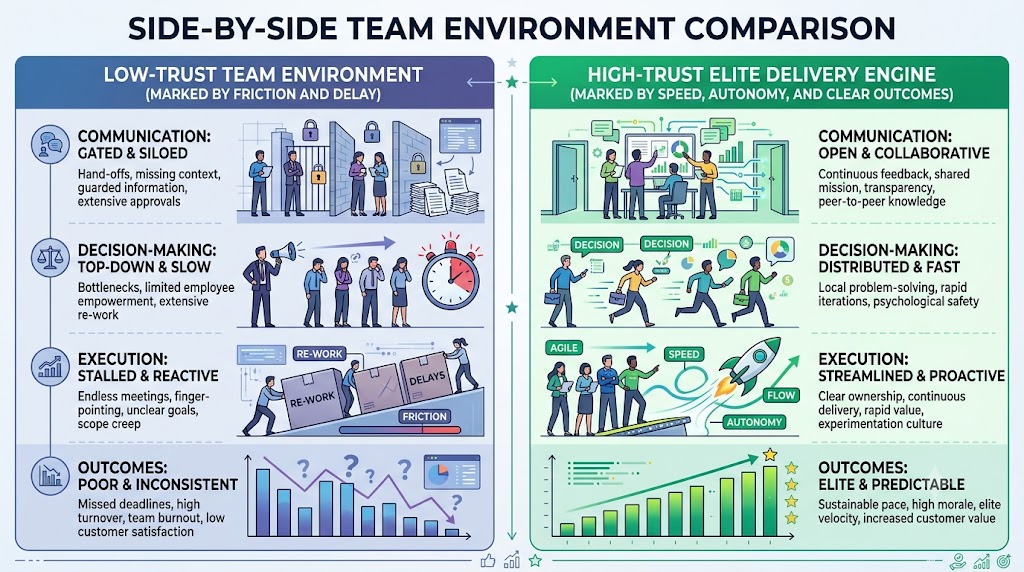
The Elite Delivery Transformation
When relational trust dynamics are deliberately engineered and protected, the operational shift is immediate and profound.
Life Before vs. Life After Trust Remediation
Imagine leading a team where sprint planning takes half the time because trust replaces endless debate. Imagine stakeholder updates where confidence is backed by predictable execution, and team members routinely go above and beyond because they feel protected, supported, and valued by their peers.
This transformation isn’t just a win for project delivery: it is a career multiplier for project leaders. Senior executives do not evaluate elite Project Managers solely on their ability to update Gantt charts. They promote leaders who can walk into chaotic, low-trust environments, restore relational trust dynamics, and build self-organizing delivery engines. Mastering this skill accelerates your leadership trajectory faster than any administrative framework ever could.
Master High-Impact Leadership with Skillsetify
Navigating team dynamics, rebuilding broken peer trust, and mastering modern execution methodologies requires more than basic project management theory. It demands battle-tested strategies, strategic frameworks, and real-world execution skills.
If you are ready to stop guessing, move up the corporate ladder, and learn project management the right way, reach out to Skillsetify. We do not just teach frameworks: we show you your exact career growth trajectory.
Take control of your professional growth today. Connect with Skillsetify and transform your leadership potential into operational mastery.