The Illusion of the Perfect Upfront Plan
Imagine this scenario: On Tuesday. Your engineering leads, senior system architects, and executive sponsors are gathered in a high-stakes war room. The project? A critical enterprise enterprise resource planning (ERP) cloud migration for a global financial institution.
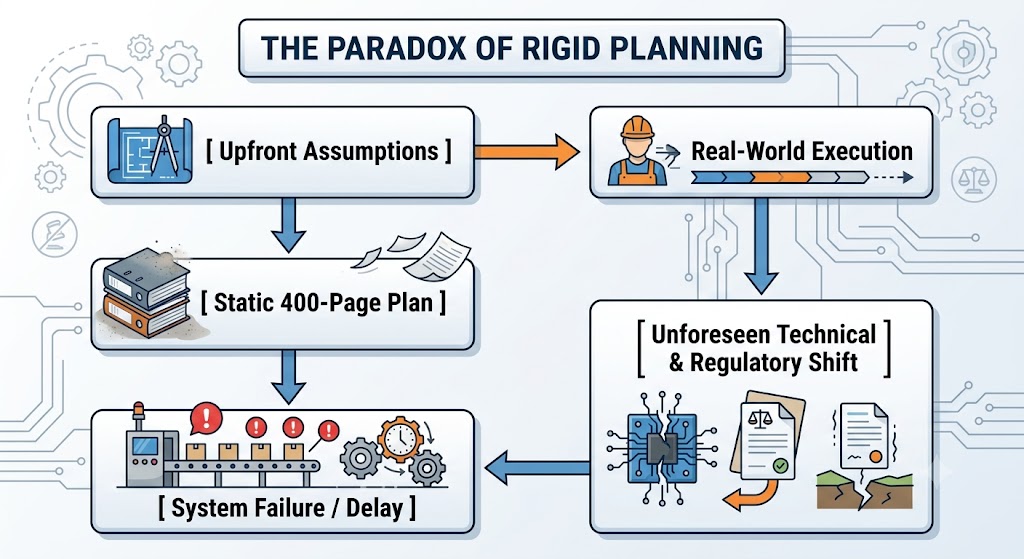
Six months ago, the delivery team produced a massive 400-page upfront planning document. Every single work breakdown structure (WBS) code, risk matrix, and task dependency through Month 18 was defined down to the hour. On paper, it was a masterpiece of corporate precision.
In reality, it was a ticking time bomb.
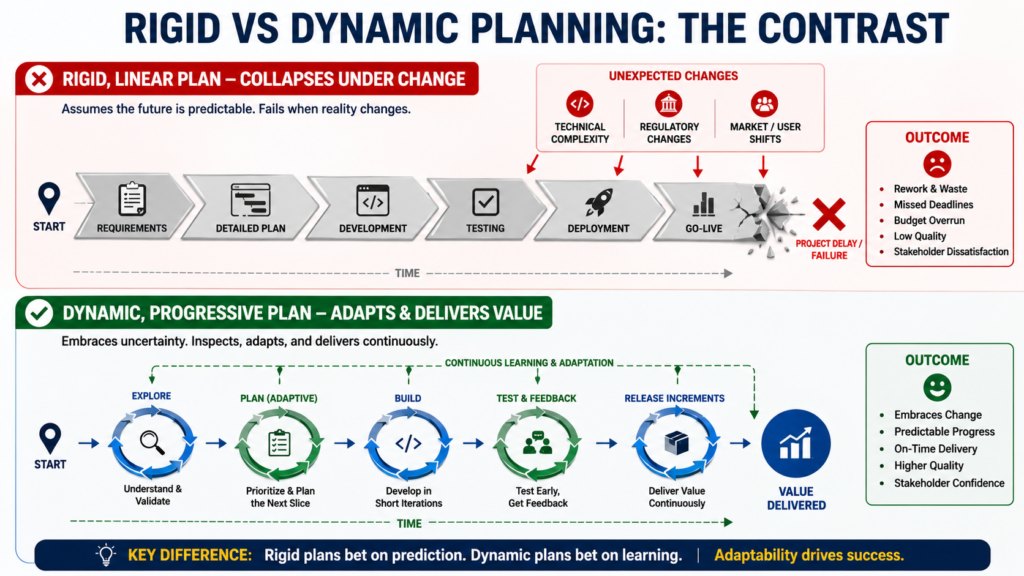
As soon as Phase 1 went live, unexpected legacy data structures emerged, cloud security compliance frameworks shifted mid-flight, and third-party API configurations failed under load testing. The rigid, upfront plan collapsed under the weight of real-world reality. Budget burn soared by 40%, deadlines vanished, and executive leadership began asking hard questions about who was responsible
Dispelling the Corporate Myth
The root cause of this breakdown is a persistent corporate myth: Detailed upfront planning guarantees project predictability.
Many organizations believe that if a project manager spends enough time calculating every variable before execution begins, uncertainty can be eliminated. In dynamic B2B environments, this assumption is false.
Planning every single detail 12 months in advance is an exercise in fiction. True project governance does not come from predicting the unpredictable: it comes from building an architectural framework that adapts as new data becomes available. This adaptive framework relies on Progressive Elaboration.
What is Progressive Elaboration?
At its core, Progressive Elaboration treats planning as an evolving baseline. Instead of forcing a team to guess technical specifications for deliverables due a year from now, progressive elaboration dictates that project details, estimates, scope bounds, and risks are continually fleshed out as real-world project data materializes.
Core Mechanics of the Methodology
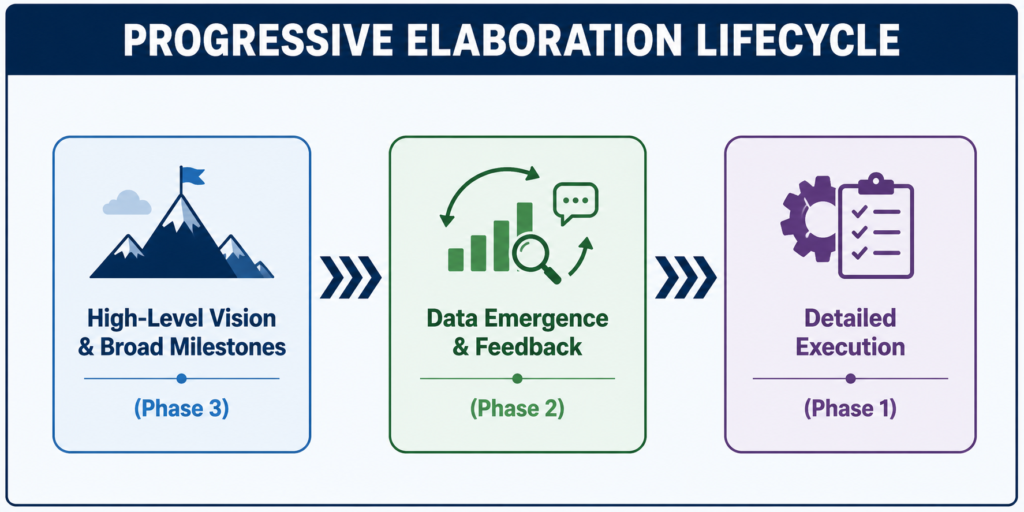
Progressive elaboration rests on three fundamental pillars:
Strategic Intent vs. Operational Execution: The overarching project goal, target architecture, and business outcomes remain anchored. The tactical steps required to achieve them are refined dynamically as work progresses.
Data-Driven Refinement: Every milestone completed yields operational metrics, performance data, and stakeholder feedback. This incoming data acts as the primary input to refine subsequent project phases.
Reduction of Uncertainty: As a project moves closer to execution, ambiguity decreases. Progressive elaboration optimizes effort by delaying granular planning until the team possesses the highest density of accurate information.
Progressive Elaboration vs. Rolling Wave Planning
In industry discussions, professionals often use these terms interchangeably. However, there is a clear distinction:
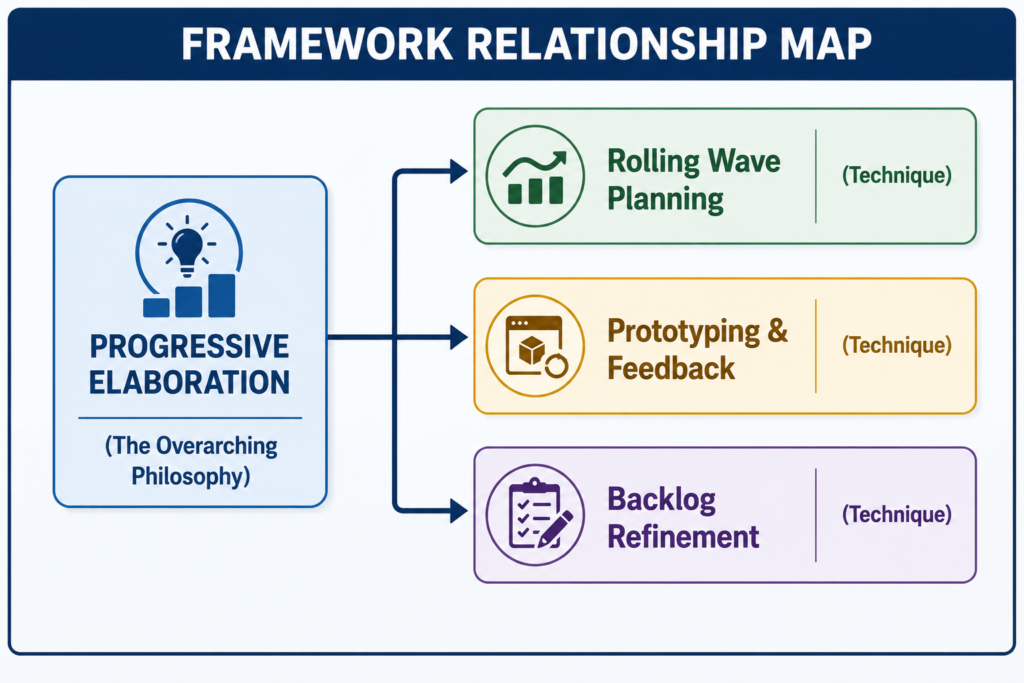
Progressive Elaboration is the overarching concept, philosophy, and continuous process of refining project documentation, scope, specifications, and estimates as work progresses.
Rolling Wave Planning is a specific execution technique under the progressive elaboration umbrella. It mandates that near-term work is planned in granular detail (e.g., Work Breakdown Structure tasks for the next 30 to 60 days), while long-term work remains at a high-level milestone package until the project rolls forward.
Step-by-Step Implementation Framework
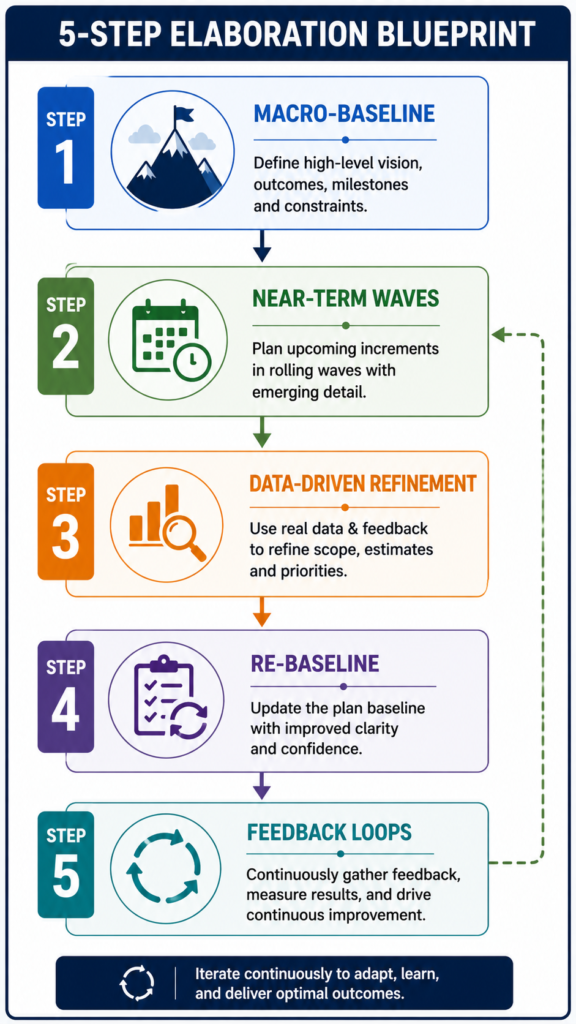
To implement progressive elaboration across enterprise operations, project leaders can apply this execution blueprint:
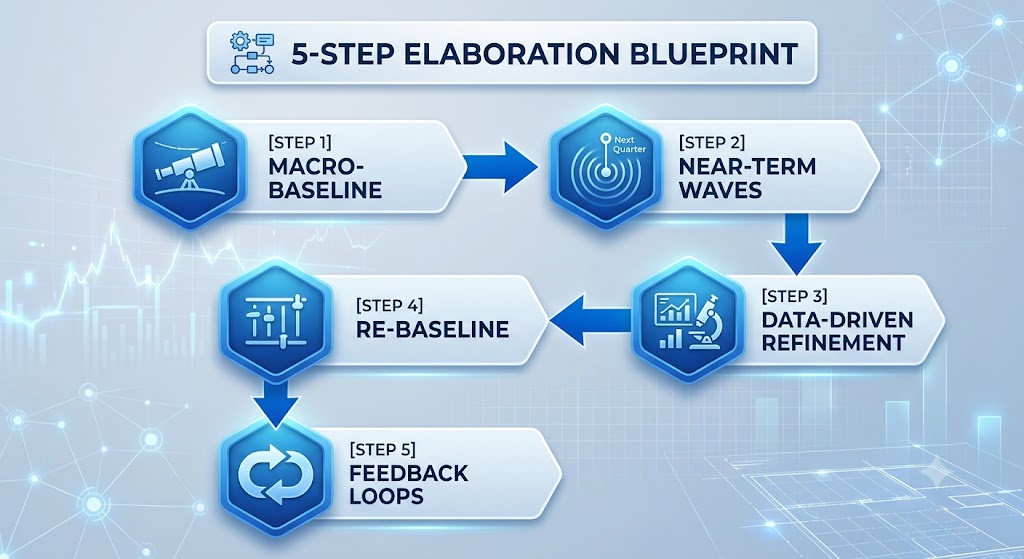
Step 1: Establish the Macro-Baseline
Define the project vision, final deliverables, target deadline, and primary budget caps.
Keep the scope broken down into high-level “planning packages” or macro-phases rather than micro-tasks.
Document explicit assumptions and constraint limits within the Project Charter.
Step 2: Structure the Near-Term Planning Waves
Select the immediate execution window (e.g., Sprints 1–3 or Months 1–2).
Deconstruct near-term planning packages into granular Work Breakdown Structure (WBS) elements, activity lists, and precise resource assignments.
Assign high-confidence estimations (such as bottom-up or definitive estimates) strictly to this immediate wave.
Step 3: Execute and Capture Real-Time Project Data
Launch execution on the detailed near-term wave.
Instrument tracking mechanisms to collect operational metrics: actual velocity, resource burn rates, vendor integration roadblocks, and architectural constraints.
Facilitate weekly cross-functional feedback sessions with key engineering, product, and business stakeholders.
Step 4: Refine and Elaborate the Next Wave
As the current wave approaches 50% to 75% completion, use incoming operational metrics to plan the next wave.
Convert the next conceptual planning package into detailed execution tasks.
Adjust future cost projections, schedule variances, and dependency maps based on real performance data rather than theoretical estimates.
Step 5: Formalize Governance and Feedback Loops
Route significant findings or necessary adjustments through an established Change Control Board (CCB) or Agile Backlog Refinement cycle.
Continuously update the master Project Management Plan baseline.
Communicate updated roadmaps clearly to executive sponsors to maintain strategic alignment.
B2B Case Study: Cloud Infrastructure Rollout
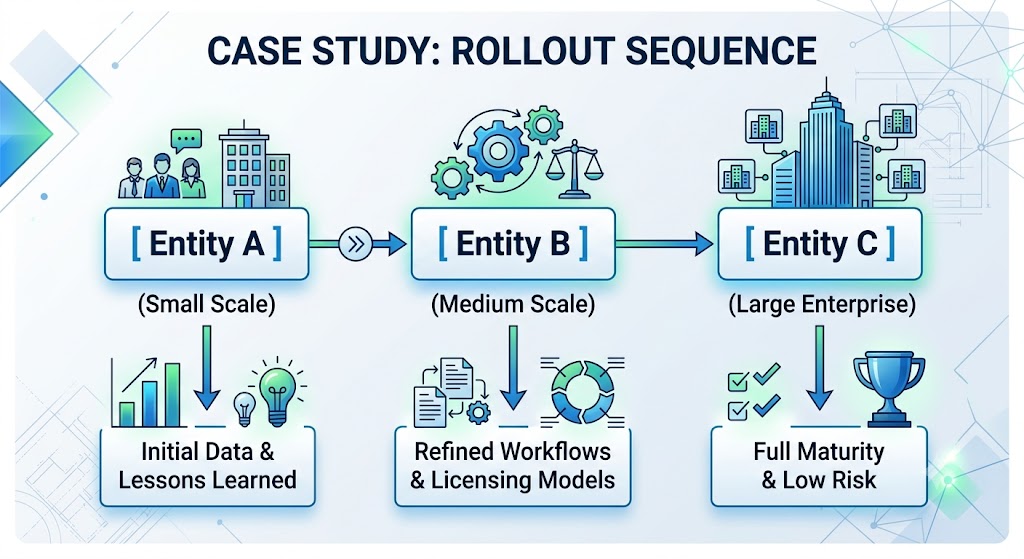
To see this methodology in action, consider a enterprise software deployment across three global business units: Entity A (Small), Entity B (Medium), and Entity C (Large Enterprise).
The Initial Mistake
The leadership team initially tried to lock down a rigid, 12-month scheduling baseline for all three entities simultaneously. They attempted to map out every custom API workflow, user role, and data migration script for Entity C before even touching Entity A.
The Pivot to Progressive Elaboration
Recognizing the high risk, the lead Project Manager shifted strategies:
Phase 1 Execution (Entity A): The team created a detailed execution schedule only for Entity A. Entities B and C were kept as high-level planning packages.
Data Emergence: During Entity A’s rollout, unexpected legacy software bottlenecks emerged, default workflows failed, and vendor licensing models needed restructuring.
Elaboration and Adjustment: Using the data gathered from Entity A, the project manager revised the architectural approach, adjusted the delivery timelines, and updated the budget baseline for Entity B.
Final Scaling (Entity C): By the time the team reached Entity C, the implementation plan was highly refined, accurate, and optimized for seamless execution.
By embracing progressive elaboration, the project avoided systemic failure, saved millions in emergency change orders, and delivered a stable enterprise application.
The Professional Transformation
Mastering progressive elaboration changes how project leaders manage complex initiatives.
When you shift from rigid, upfront assumptions to dynamic, data-driven planning, the entire delivery environment changes:
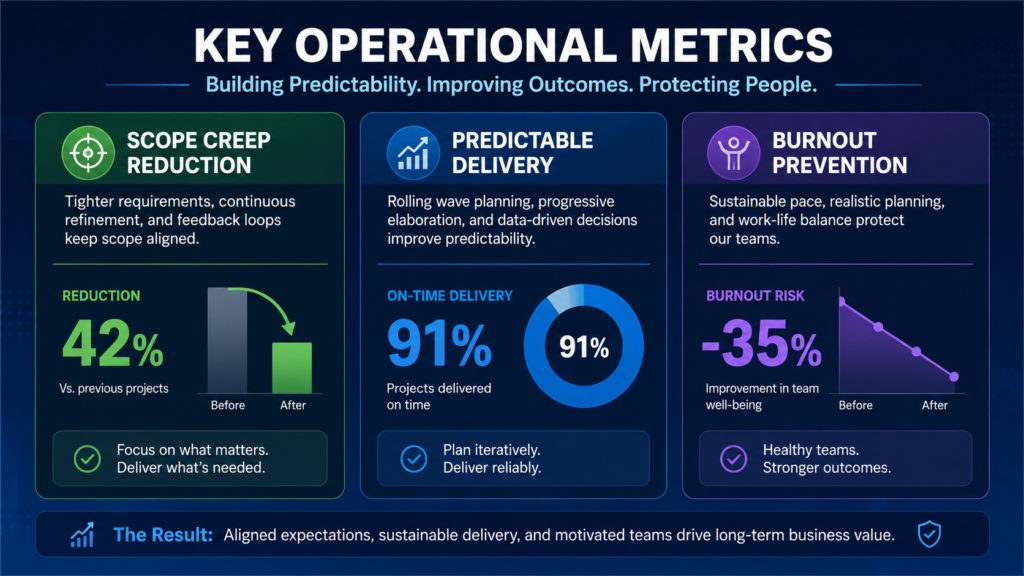
Eliminate Scope Creep Friction: Scope adjustments are no longer seen as project failures. They become managed, structured refinements supported by actual data.
Reduce Team Burnout: Engineering and execution teams stop burning hours attempting to meet arbitrary deadlines derived from outdated assumptions.
Deliver Predictable Value: Executive sponsors receive reliable updates, accurate forecasts, and transparent risk models grounded in operational reality.
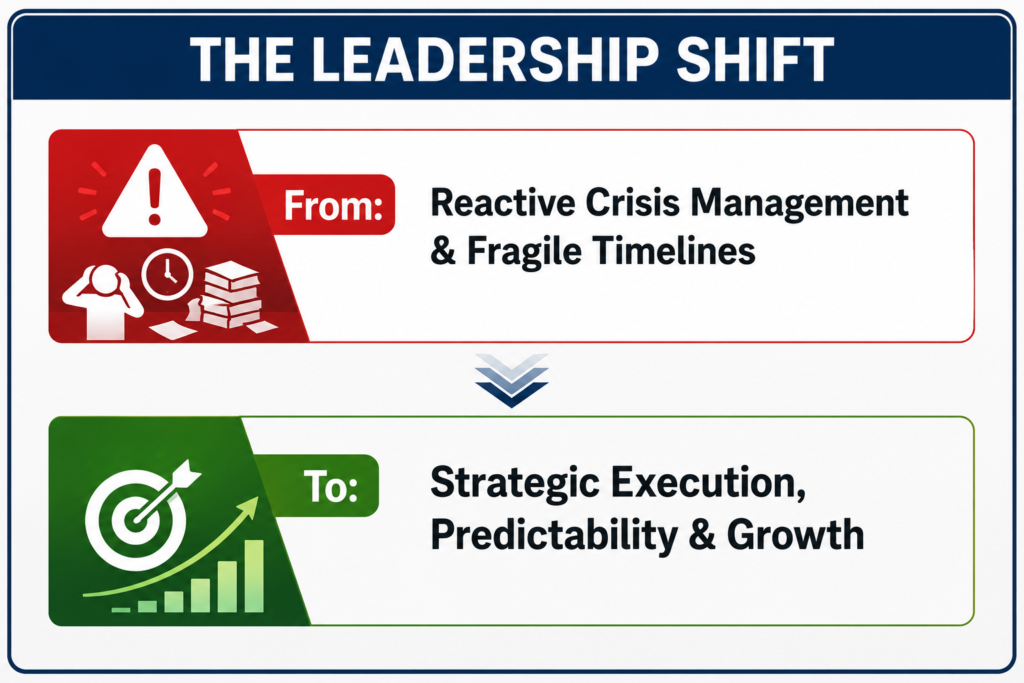
This evolution marks the transition from a tactical administrator to a strategic leader. Organizations do not evaluate high-value leaders based on their ability to create long, static Gantt charts. They value leaders who can navigate ambiguity, manage uncertainty, and guide complex projects safely to completion.
Build Your Career Trajectory with Skillsetify
If you are ready to stop guessing, move up the corporate ladder, and learn project management the right way, reach out to Skillsetify. We do not just teach frameworks: we show you your exact career growth trajectory.
At Skillsetify, our industry-led masterclasses and hands-on B2B delivery programs equip you with actionable methodologies to lead enterprise initiatives with confidence.
Transform your delivery capabilities and elevate your career today. Explore our executive project management tracks at Skillsetify.